
Is Your Senior Cat Bored? 10 Ways to Enrich Their Golden Years
Jump to: Our Top 10 Tips for Senior Cat Enrichment
If you’re a fellow cat parent of a senior cat, you may be noticing some changes in your kitty over the years such as decreased interest in play, sleeping all the time, and keeping more to themselves. So is your senior cat bored, or just aging?
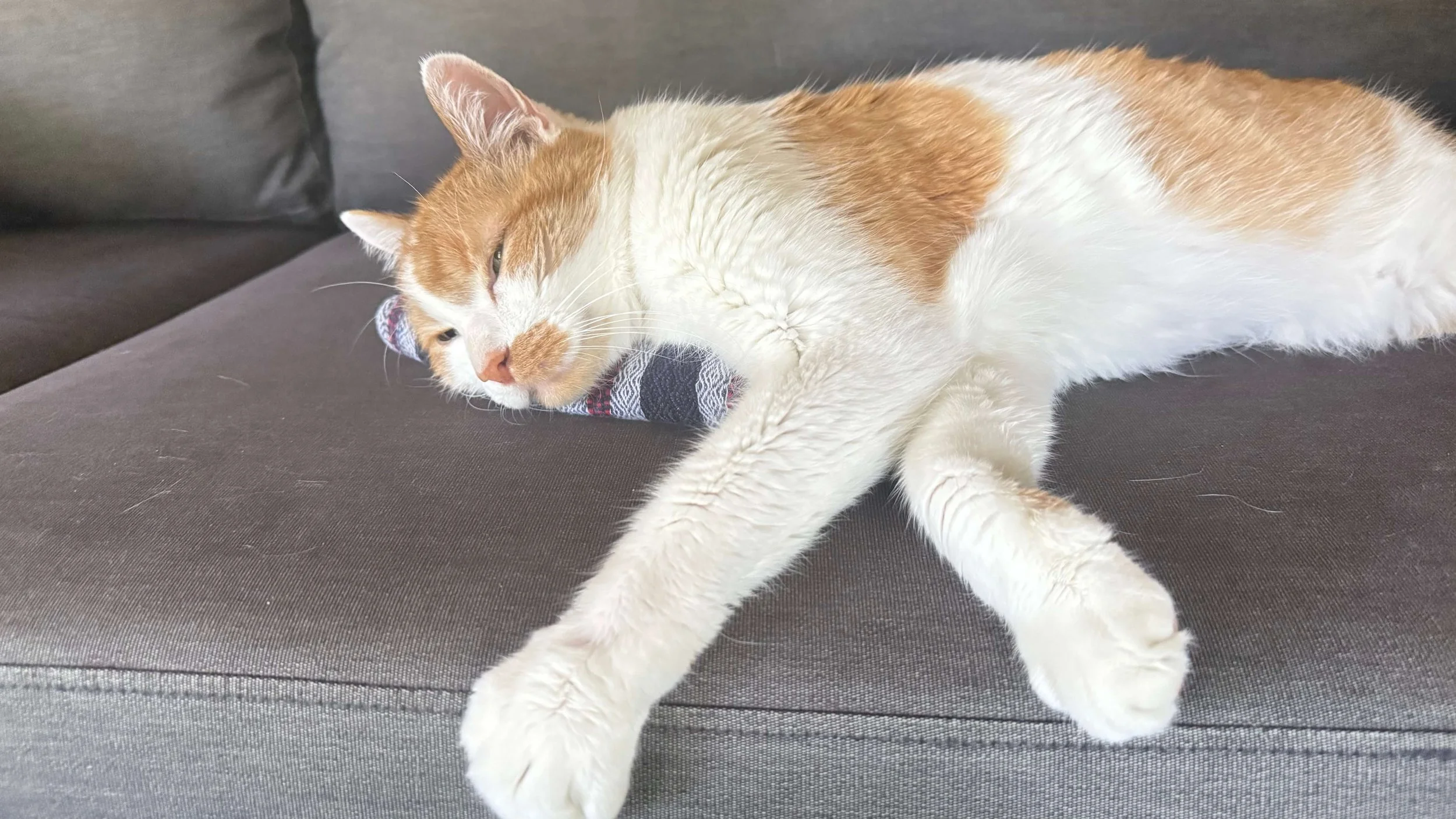
“Who are you calling aging?”
Of course, with any cat we need to make sure that a behavioral change isn’t due to a medical cause, but this is especially important in senior cats. They’re much more likely to have chronic health conditions like inflammatory bowel disease, chronic kidney disease, hyperthyroidism, high blood pressure, cancer, dental disease, and arthritis that lead to malaise or pain.
Just like with people, emotional health and physical health are intertwined, and the first step is to investigate medical conditions in partnership with your veterinarian. Once cats reach age 10, I recommend a blood pressure check, exam, and comprehensive senior labwork at least every 6 months for baseline screening. It’s also helpful to be monitoring your aging cat for changes in mobility that would be difficult for your brick-and-mortar veterinarian to appreciate without videos.
Assuming your cat’s medical issues are well-controlled, how do we rethink mental stimulation and enrichment for our senior cats? To answer this question, we’ll want to break down feline enrichment further.
Categories of Cat Enrichment
Environmental enrichment. These are additions to your cat’s environment that let them express natural cat behaviors like climbing, perching, hiding, scratching, hunting, playing, and grooming. Arthritis can make it difficult for senior cats to perform many of these normal behaviors. Senior cats are also more likely to develop cognitive dysfunction syndrome (CDS), a progressive condition that has been estimated to affect around 28% of cats 11-14 years of age and 50% of cats at least 15 years of age. In older dogs, a 2024 study showed that environmental enrichment was helpful in improving cognitive scores, and enrichment is typically recommended as part of a treatment plan for management of feline cognitive dysfunction syndrome provided we work within the limitations of the individual cat’s CDS symptoms.
Sensory enrichment. Sensory enrichment stimulates your cat’s senses of sight, smell, touch, touch, or taste. As your cat ages, they’ll experience a decrease in smell and taste, and they may also have a decline in their vision and hearing.
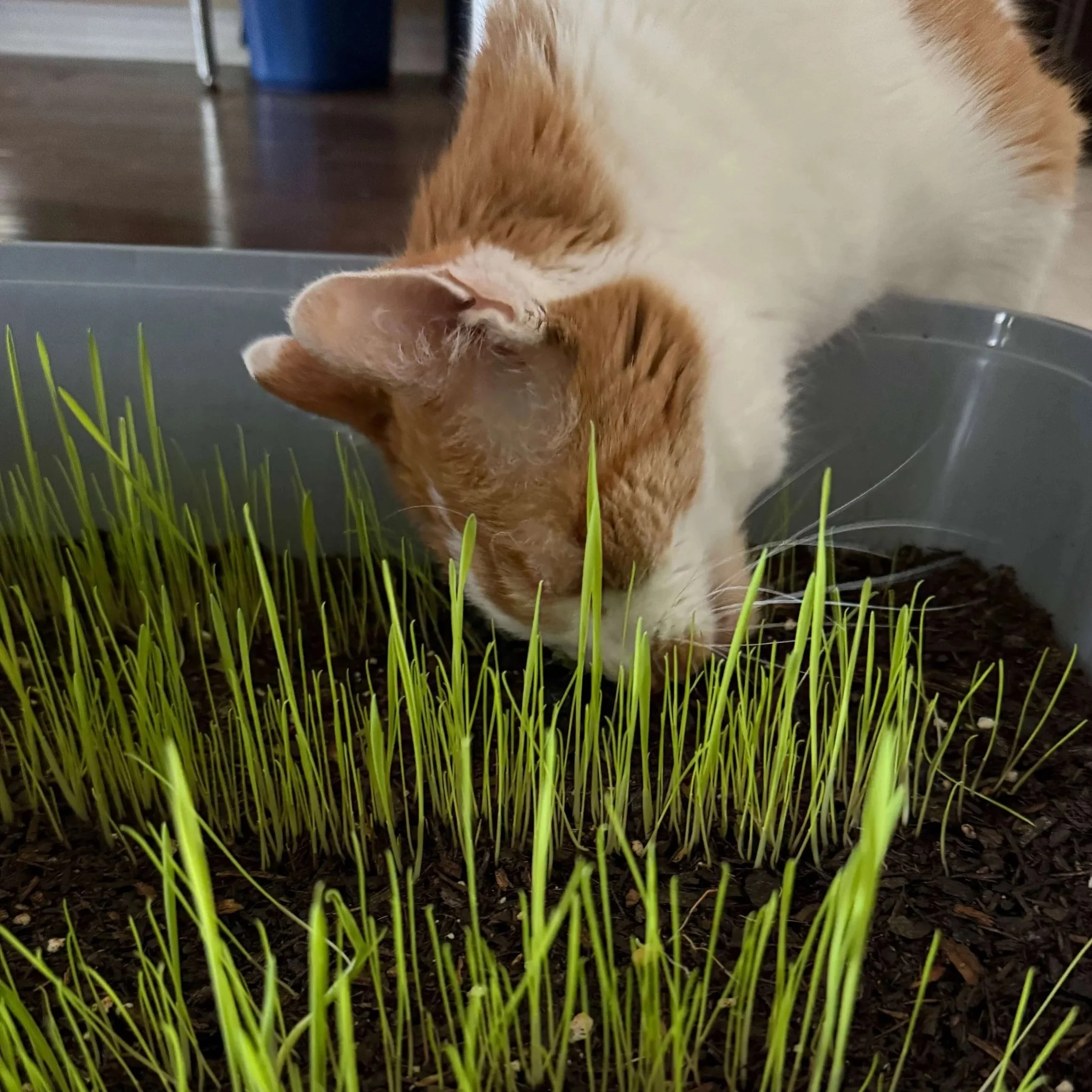
My 18.5 year old, super senior cat Puff munching on some cat grass
Food-based enrichment. Hunting and foraging are natural behaviors for cats, and form pillar number three of the FelineVMA’s five pillars of a healthy feline environment: provide the “Opportunity for Play and Predatory Behavior”. Without supplemental feeding from people, unowned cats may spend up to 12 hours a day on the hunt, making 10-20 kills per day. Dental pain, arthritis, and declining senses can make play and food enrichment more challenging for our seniors without adaptations.
Social enrichment. Senior cats get social enrichment from interacting with bonded housemates, whether it’s from animals or people. Cats do best on a routine regardless of age, and when it comes to interacting with our senior cats, we want to respect pillar number four of the five pillars: provide “Positive, Consistent, and Predictable Human-Cat Interaction”. Changes to a senior cat’s routine can increase stress, including impacting when they’re expecting interaction with others.
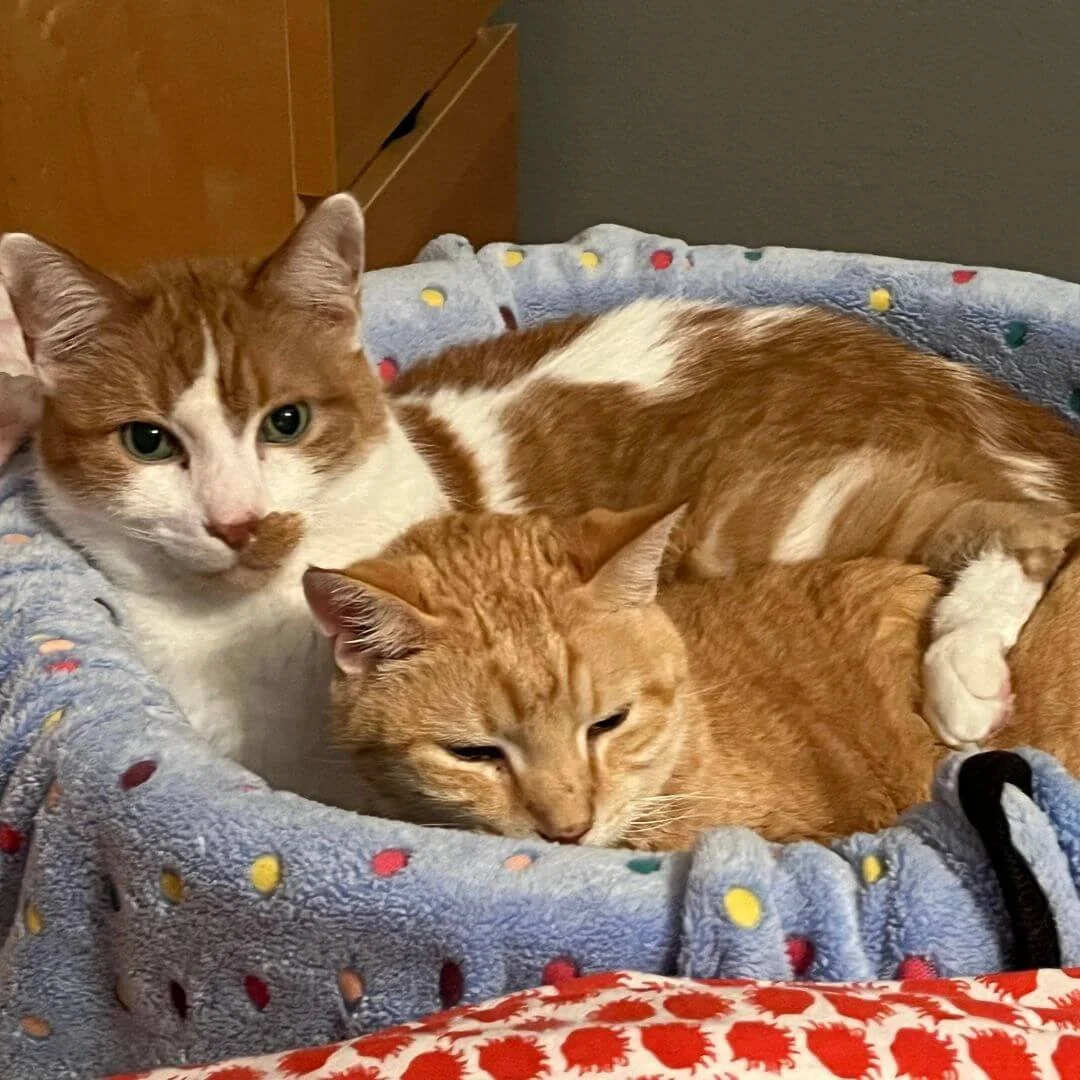
Puff snuggling with his frenemy, the late Mr. Bundles
Cognitive enrichment. Problem solving and mental challenges via cat training and food puzzles can help fulfill this category of cat enrichment, and if you’ve ever tried to keep your cat out of the treat cabinet you know how much they love a challenge. Even if your cat is a senior, cats are never too old to train. I didn’t do any real training with my cat Puff until he was around 14 or 15 years, and I continue to do training sessions with him even though he’s almost 19.
I should also note that in the veterinary behavior space, I’m hearing more mentions of rethinking the term enrichment. To paraphrase a gem I heard from UK veterinarian and veterinary behavior specialist Dr. Sarah Heath at a feline conference years ago, enrichment implies that these are extras you can do for your cat. Instead, we should be thinking of them as essentials that every cat needs for their physical and emotional wellbeing.
And now with that background, let’s move onto enrichment ideas for senior cats!
My Family Cat’s Top 10 Tips for Senior Cat Enrichment
1. Provide mobility friendly access to cat perches.
Being elevated helps cats feel safe, but arthritis can limit the ability of our senior cats to reach their favorite high spots. Placing non-slip pet stairs, cat ramps, and ottomans next to window perches, people beds, couches, and cat towers opens up the world again for your cat so they can look outside, rest in a cozy spot, have the opportunity for social interaction, and get other enrichment.
One of Puff’s favorite perches is on my dining chair, where he can receive TLC and attention. I added these cat stairs next to my chair, and Puff literally goes up the stairs 10 to 15 times a day. Often it’s to get in my lap, but sometimes it’s just to sit on the top stair so he can survey his kitchen domain for potential treat opportunities.
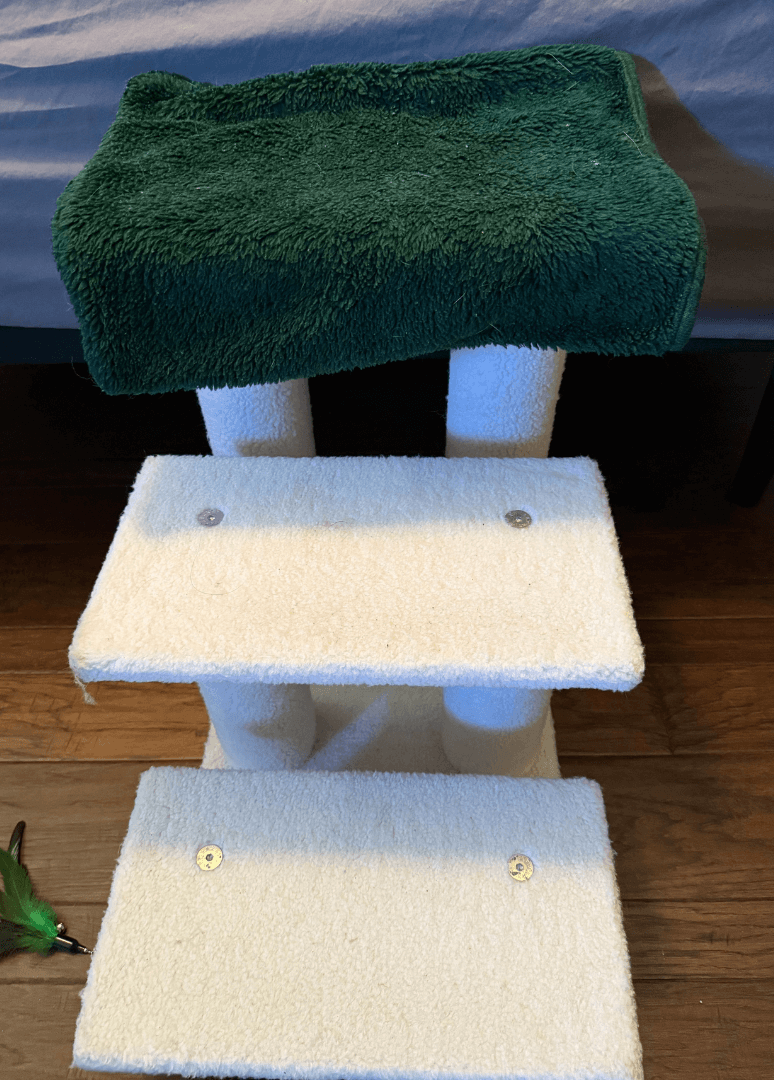
Cat stairs help your cat reach their fave resting spots, and carpet provides a non-slip surface
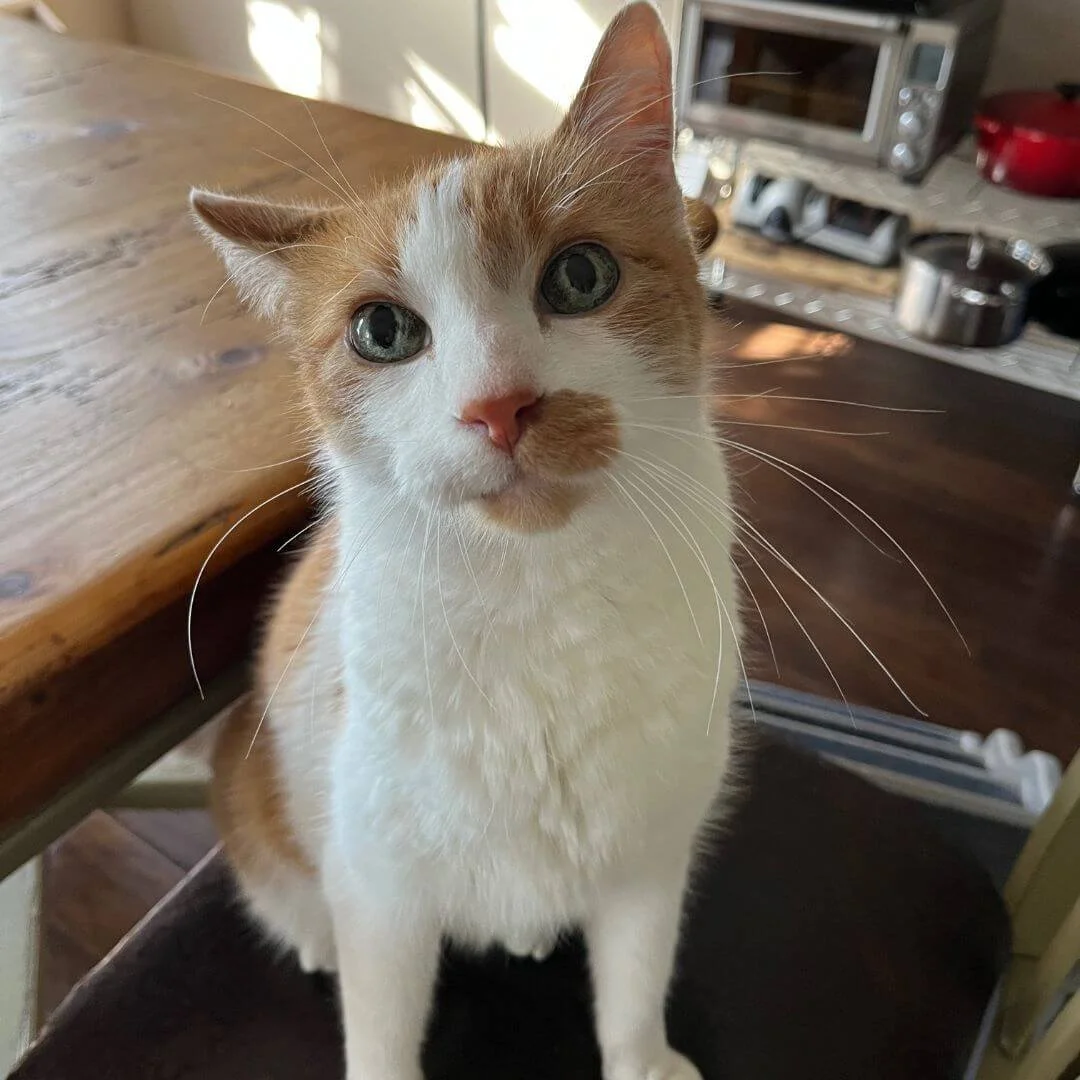
“It’s me again! These cat stairs are the best.”
2. Try low and slow cat play.
If your senior cat has mobility issues, “traditional” play may be uncomfortable and even painful. Asking them to perform gymnastics by jumping, reaching up to grab a toy, or sprinting towards some feathers you’re dangling may be too much for a cat with arthritis in their shoulders, elbows, hips, or spine. Try keeping the toy low so play stays comfortable and fun for your senior cat.
Cat toys are also usually designed to resemble a certain type of prey animal–think feathers on Da Bird, or the insect-like, erratic movements of a Cat Dancer. Moving the toy like a prey animal by varying your speed, dragging a toy under a thin blanket, or inside a SmartCat Peek and Play Box to “hide” from your cat can be super stimulating and enriching. Even if your senior cat has excellent mobility, it’s good to change up your speed and style of play.
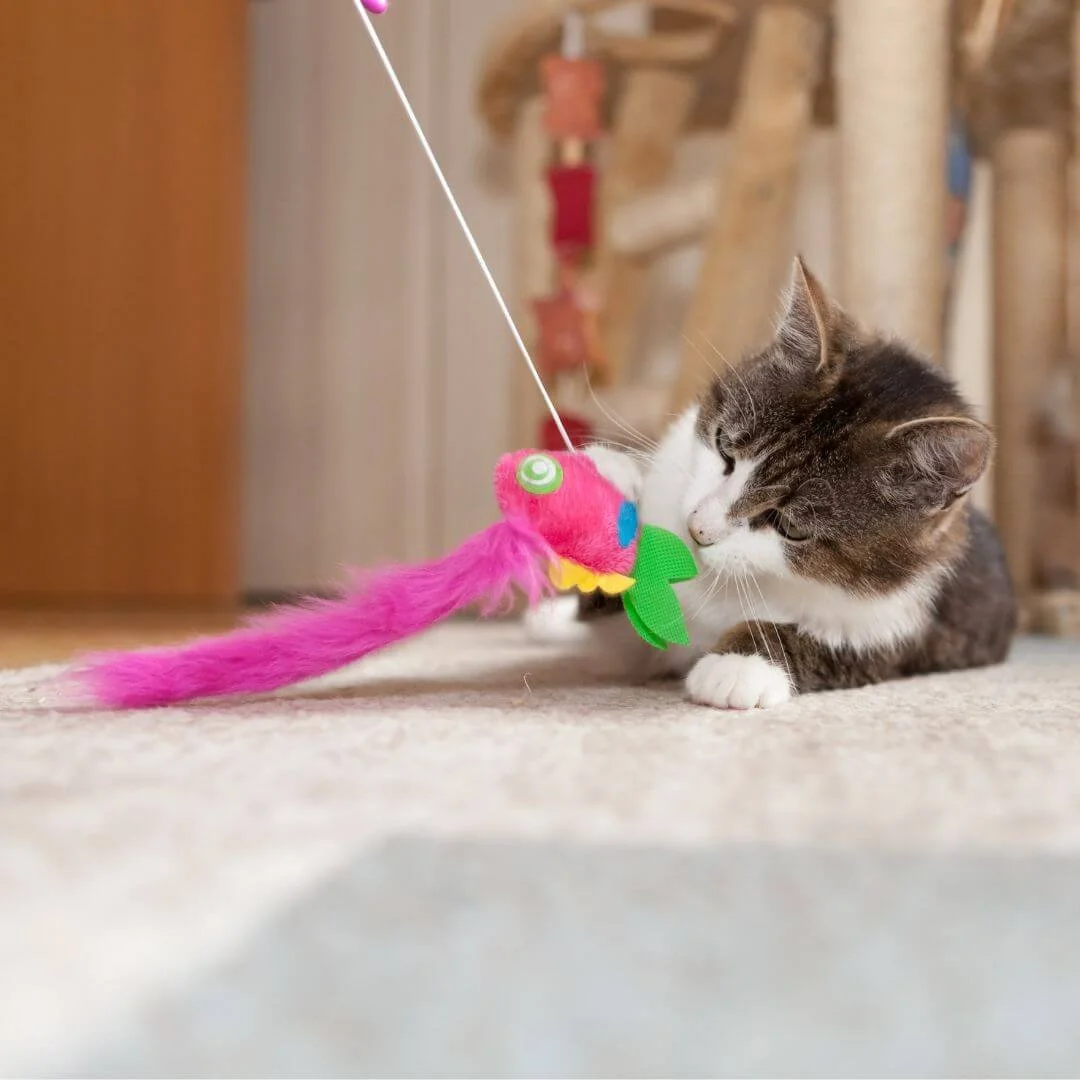
Ground level play can be much more comfortable for senior cats with arthritis
Bonus tips for cat play in all ages: if you’re trying to engage your cat in play, resist the temptation to hit at them with the toy or make it crawl over their body. This is likely going to annoy them vs. creating a positive experience. It’s also helpful to rotate your toys every few days to keep things fresh and interesting.
3. Engage their sense of smell.
Maybe you’ve heard of letting dogs go on a “sniffari” when taking them for a walk, or have seen scent work used by a dog trainer. Scent enrichment tends to be very underutilized when it comes to cats. Even if there is a decrease in your senior cat’s ability to smell as they age, it doesn’t mean you should avoid this category altogether. Easy ways you can start scent enrichment for your senior cat:
Bring the outdoors in. Assuming you’ve completed tip #1 and made those window perches accessible for your senior cat, open your window regularly and let your cat smell all of the different plants, animals, and insects through the screen. Windy days can be particularly stimulating on the scent front, and on sunny days, a windowsill helps your cat bask in direct sunlight. You can even look into getting a window catio box for your indoor kitty.
Try a snuffle mat. I love these mats because they’re mobility friendly with adjustable difficulty levels, and the snuffle mat brand that Puff uses is heavy duty so doesn’t tend to lift off the ground when he uses his claws. With scent enrichment novices, you can simply scatter a handful of kibble or treats onto the mat so your cat can use their eyes to help them. With pros like Puff or vacuum cleaner cats, you can jam the treats near the bottom of the mat so they’re not visible at all, making your cat rely exclusively on their nose to find the treats.
Offer plant enrichment. I was gifted a catnip plant by a client, and every day part of Puff’s routine is getting 1-2 leaves that he munches on like a tortoise. Cat grass is another fun and easy option. If your cat tends to vomit after eating plant material, try catnip toys like Puff’s favorite catnip dynamite or silvervine sticks.
Hide Easter eggs for your cat. Similar to snuffle mats, placing treats in your cat’s environment for them to sniff out and find can be really enriching, and is also adaptable for our cat’s mobility level. What I love about this scent enrichment tip is that you only need your cat’s own kibbles or treats.
For beginners, place the treats in easy places, such as in the middle of your cat’s favorite bed. As they start to become foraging masters, you can take away the visual cues by poking them in the creases of their bed, in the corner of a cat cubby, or under a blanket or pillow. If your senior cat has mobility issues, placing treats in different spots at ground level helps make scent enrichment accessible. You can even let the treats do double duty with positive carrier training by incorporating your cat’s open carrier as a foraging site!
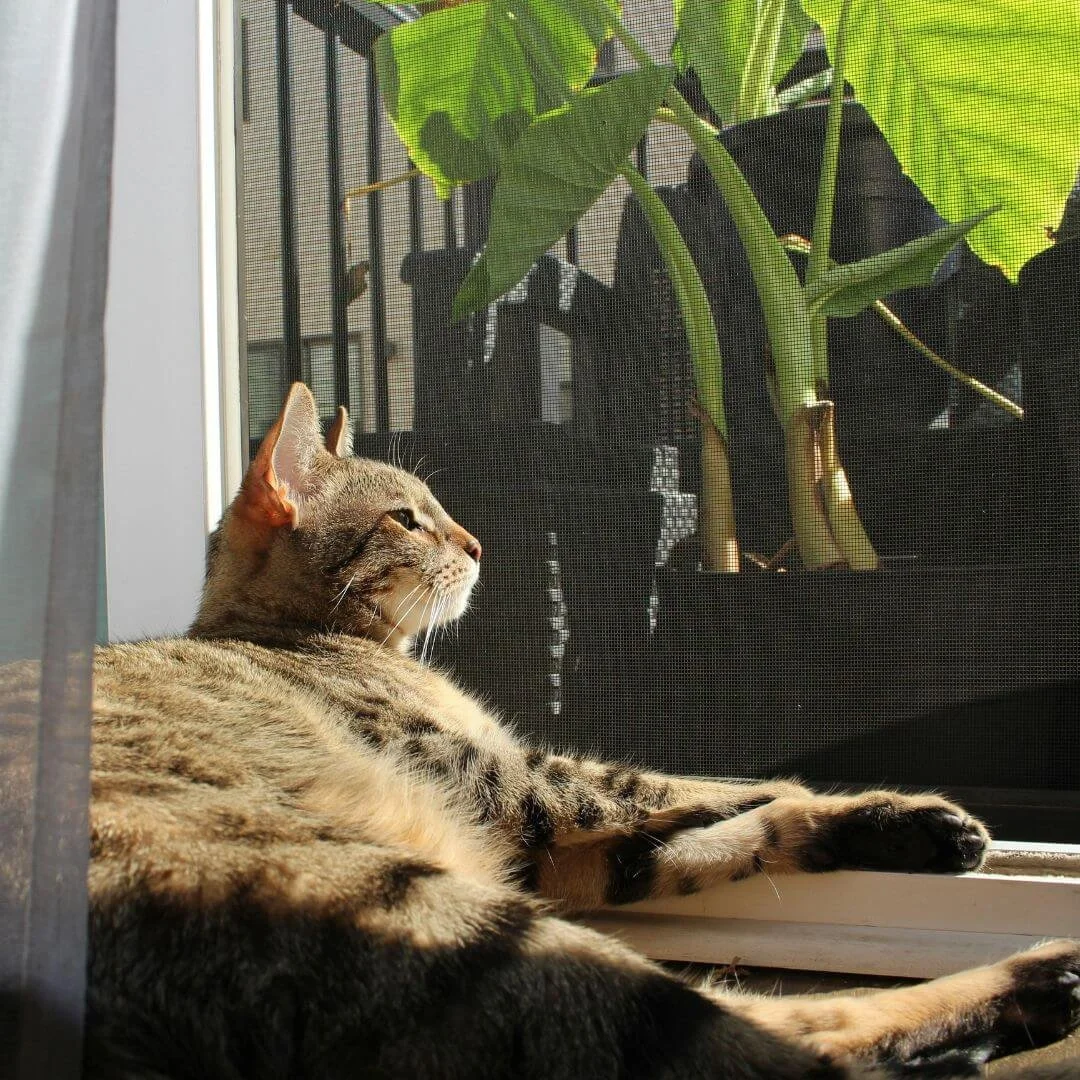
Senior cat sunbathing and enjoying outdoor smells/sounds through a screen door
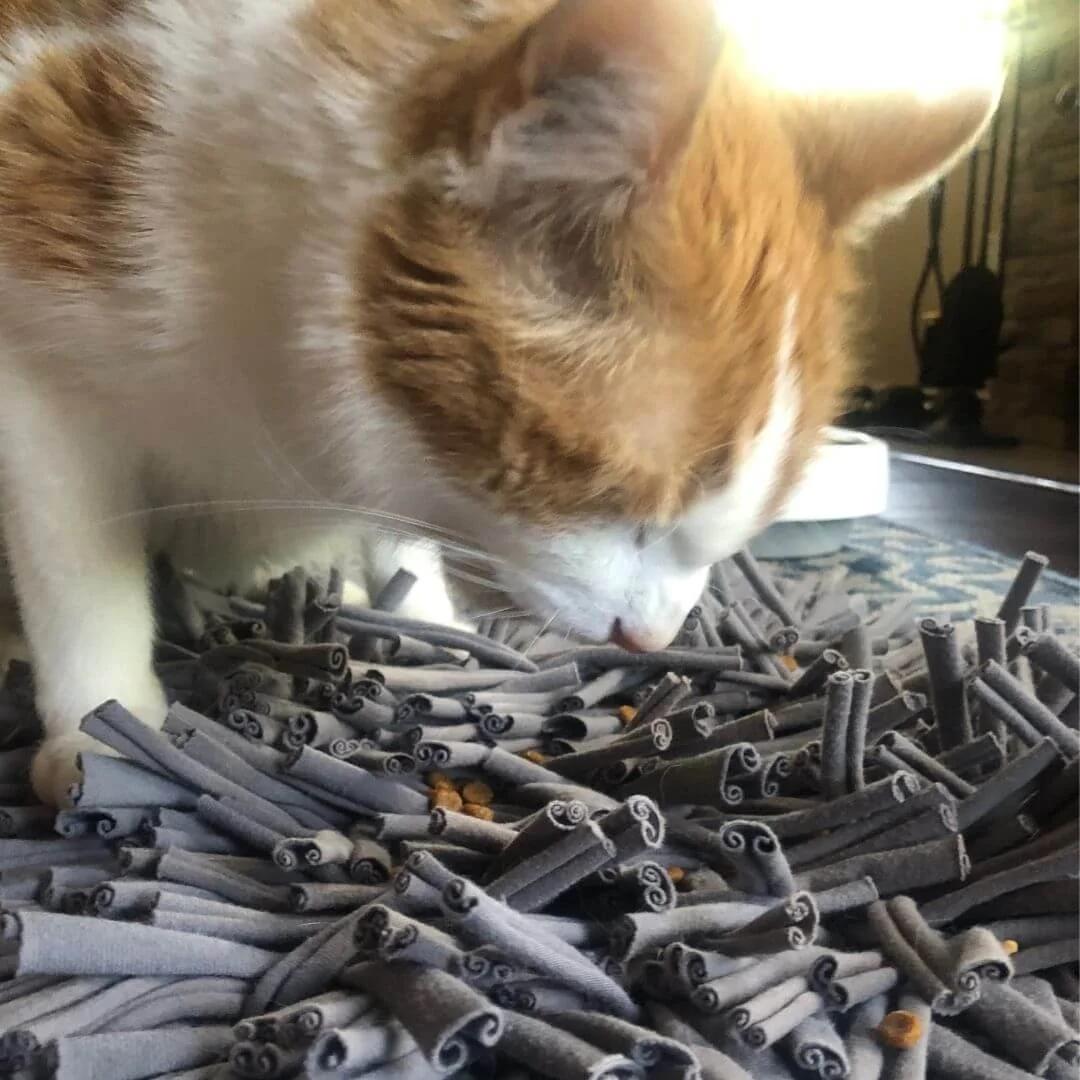
Puff the dry food addict going to town on his snuffle mat
4. Use other senior friendly food enrichment.
As I mention in my cat food puzzle blog, I’ve been using food enrichment for my cats for years to manage boredom and provide enrichment. Puff even became a food puzzle master with his Buster Cube, but began struggling with it a couple of years ago due to his arthritis. It also became harder for him to reach inside his SmartCat Peek and Play Box to get his goodies. I retired those cat food puzzles and began relying on his snuffle mat and other types of food enrichment. Try these food enrichment tips for your senior cat:
Make a foraging box. Super easy DIY cat food puzzle, and cats love it! Just save a cardboard box and some brown packing paper, coil the paper into a snake in the box, and scatter in a handful of kibbles or treats. You can make it more challenging by putting some of the kibbles inside the creases of the paper so your cat has to get them out of the fold. Make sure the box is shallow enough for easy entry if your cat has arthritis.
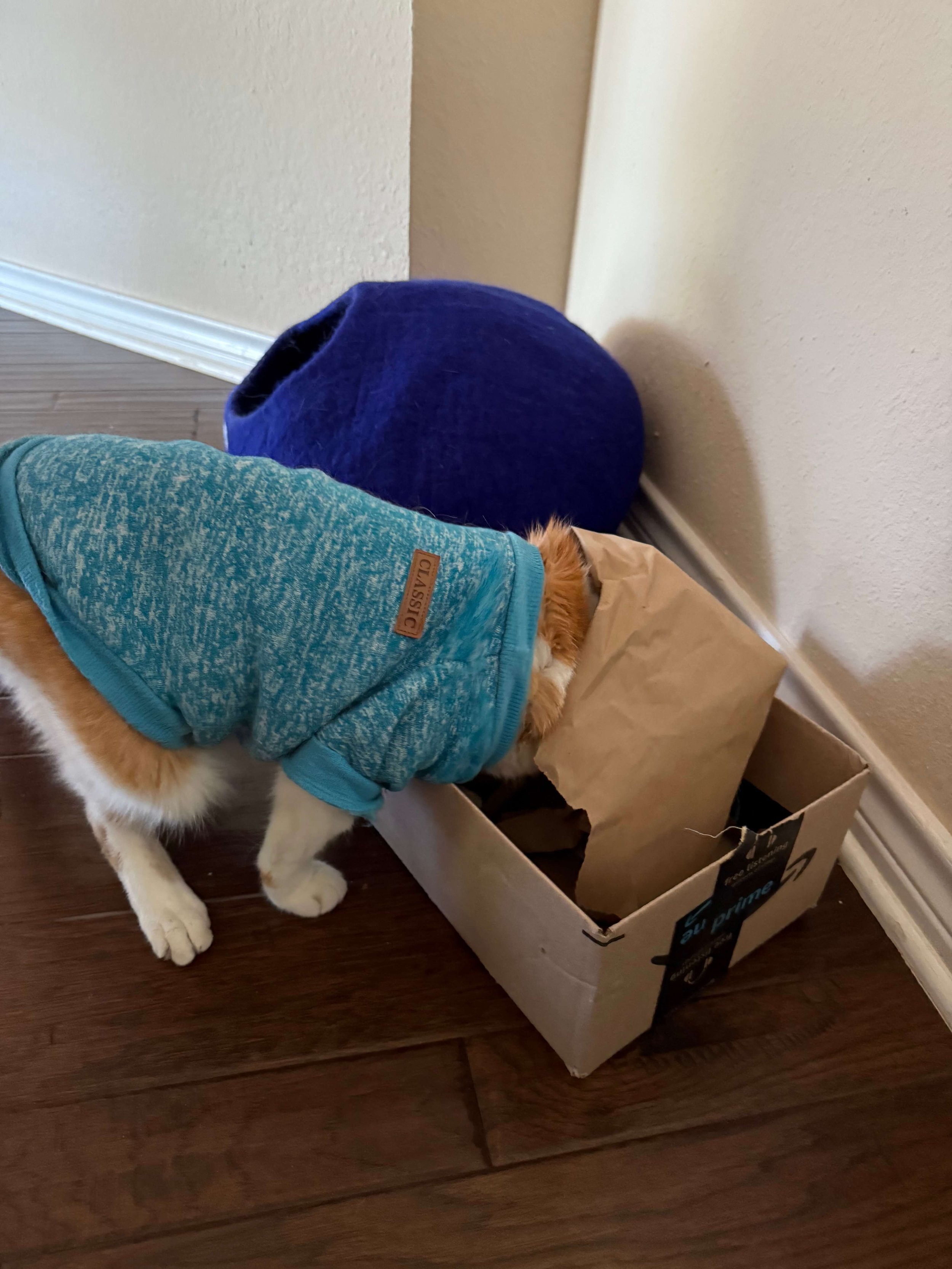
“I know I smell a treat somewhere in here.”
Swirl a blanket. Again, another simple DIY option. Toss some kibbles into a towel and either wad up the blanket or shape it into a swirl so your cat has to use their nose or paw to unfurl the towel.
Adapt commercial cat food puzzles for mobility. Many food puzzles for dogs can be repurposed for cats provided they’re big enough for their face or paw. Puff loves his bone puzzle, but as his arthritis worsened I made a simple adaptation of turning his bones upside down so it only took 1-2 swipes before his treat was revealed. I also like Doc and Phoebe mice because Puff only has to push them around with his face to make food come out, and I can adjust the difficulty level by sliding the door bigger or smaller.
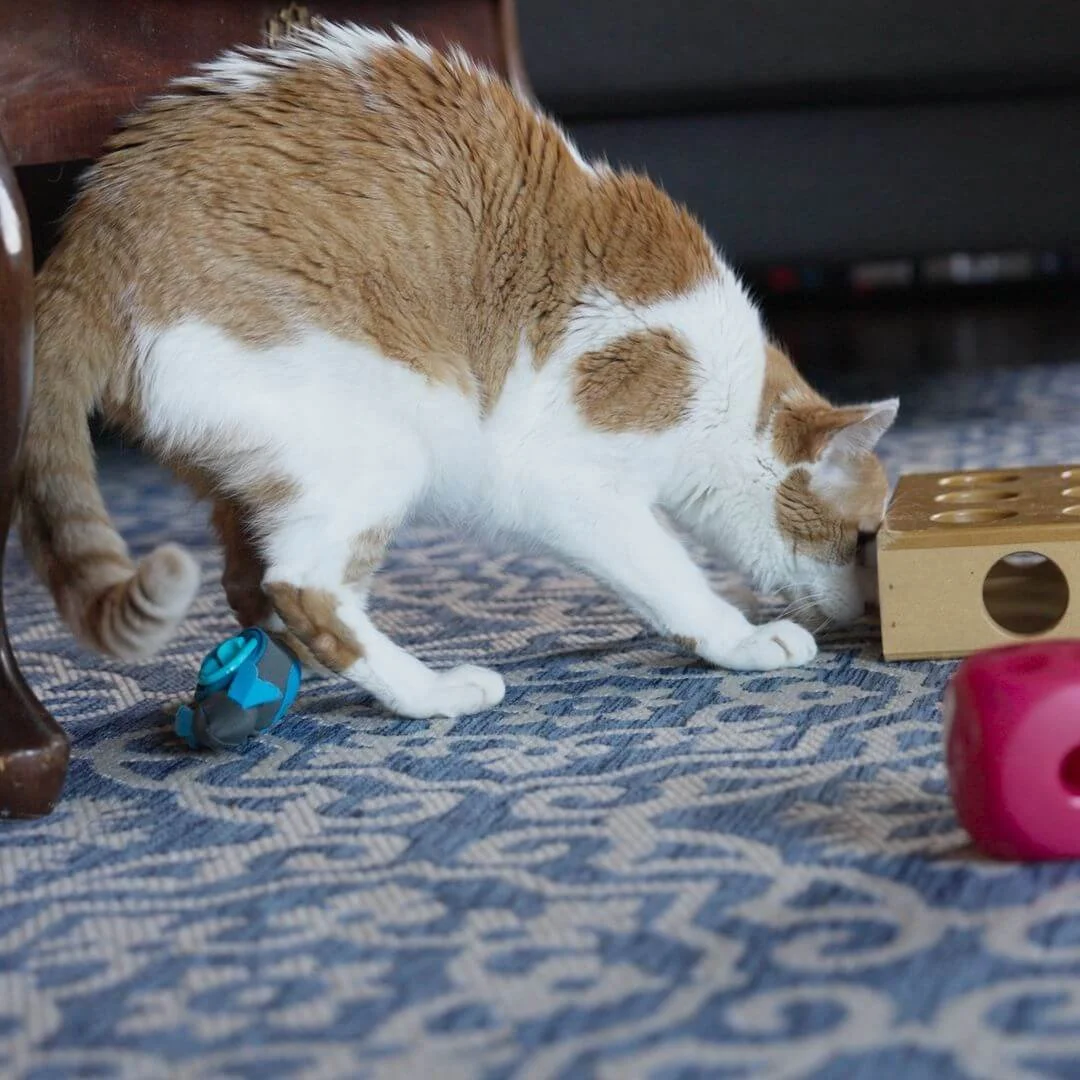
Puff hunting in his SmartCat Peek and Play Box. If too difficult, try the blue Doc and Phoebe mouse toy pictured on the left. If too easy, add cat toys to the box as additional obstacles to make the hunt more challenging.
5. Turn on Cat TV.
Providing natural and artificial creatures for your senior cat to view is a really nice way to offer enrichment for your little hunter. This could be turning on TV programming for cats (my fave: @Birderking on YouTube), or planting pollinator plants outside your cat’s favorite windows to attract hummingbirds and insects. Some cats also enjoy seeing birds or squirrels at a feeder, or fish via a small aquarium in your home. Always monitor your cat initially as inability to get to their prey can be frustrating for some cats, and I’ve had some housecall clients tell me their cat actually attacked their TV. Feeders can also attract community cats, which can be a stress trigger for indoor cats so approach with some caution.
I got a great CatTV tip from a client when I walked into her home and she had aquarium TV streaming. Regular CatTV with birds and squirrels was overstimulating for her cats, and they were calmer when watching footage of fish swimming by lazily to a classical music background.
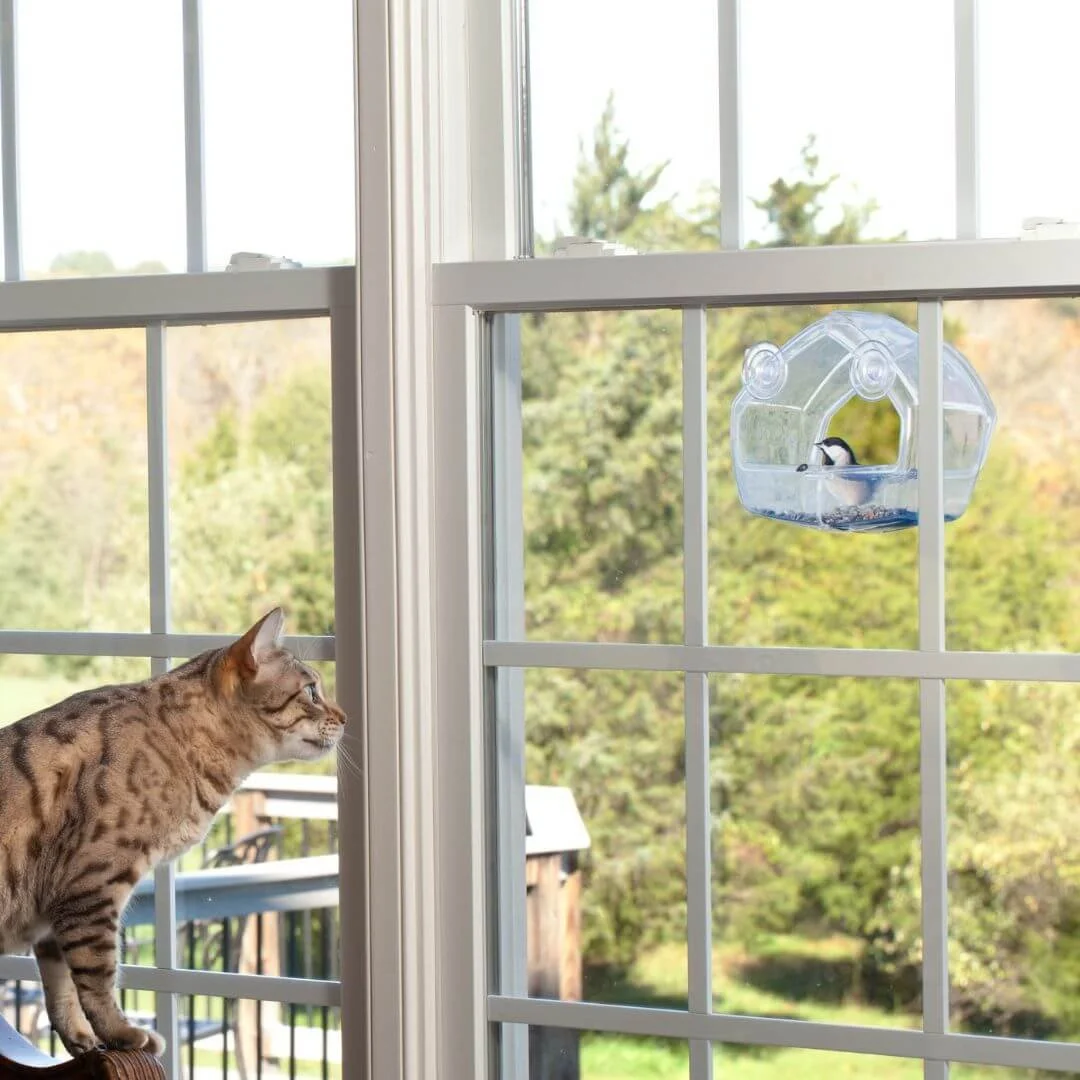
Use window feeders under supervision at first! Your cat may get frustrated when they can’t get the birds.
6. Offer tactile and pheromonal enrichment.
What’s your senior cat doing when they brush their face and body against corners, doorways, objects, and you? Feline facial rubbing helps deposit pheromones from the facial glands, which are located on their cheeks, chin, bald areas above their eyes, and around their mouths. Pheromones are species-specific chemical messengers that help cats communicate, and these deposits help your cat feel safe in their environment.
We can encourage cats to perform facial rubbing with environmental additions such as self-grooming brushes for corners. Facial rubbing can also leave behind brown smudges. Resist the temptation to clean these so you can support the five pillars of a healthy feline environment and pheromonal deposition.
Self-grooming arches are another way to provide this type of enrichment, allowing your senior cat to deposit more pheromones from the scent glands at the base of the tail. If you have a senior cat with arthritis or who’s overweight, grooming from the mid portion of their back leading to the tail can be difficult, leading to a dull hair coat and matting. Many cats also dislike brushing. Self-grooming arches support the five pillars while providing husbandry, and give your cat the ability to control how they are touched/ groomed on their head, back, and sides.
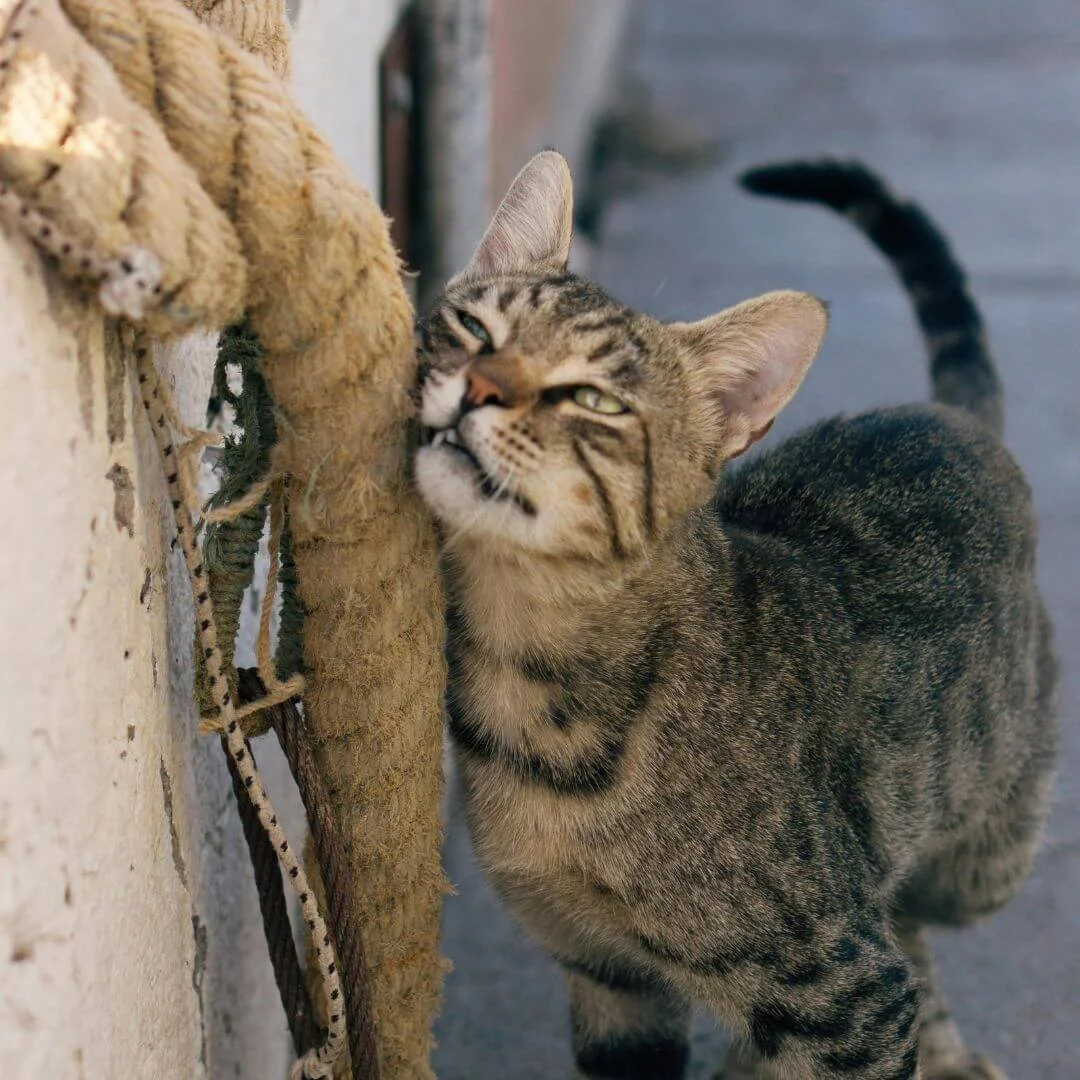
“I was here!”
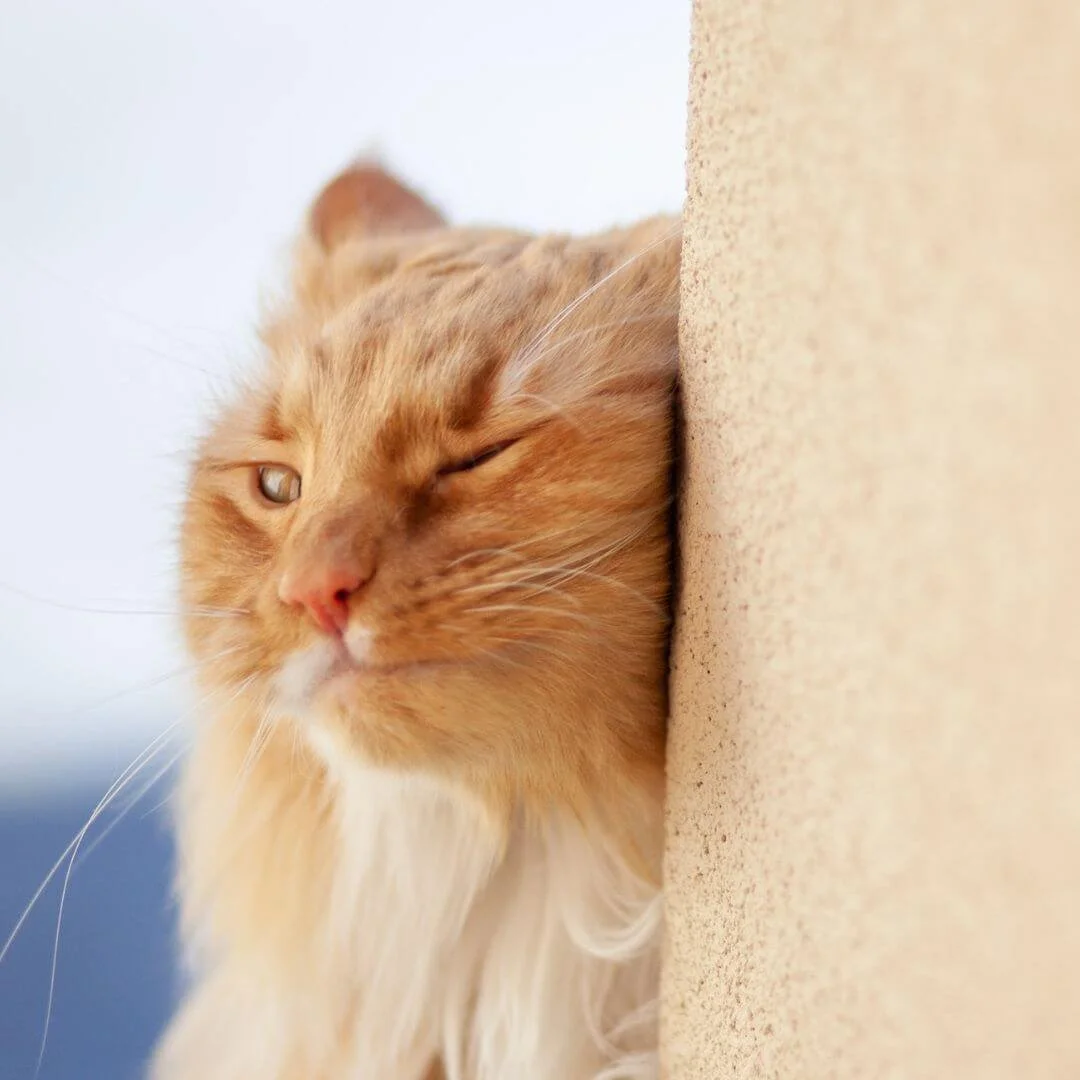
“Me too!”
7. Add hidey holes.
Like being elevated, hiding also helps cats feel safe. Many cats will go under the bed or couch if they hear a scary sound like thunder, or when visitors come to the home. They may also have a favorite deep cat bed with high sides for napping, with high sides to help them feel hidden. Adding more hiding spots for your senior cat around the home gives them more choices, especially if you place them at different levels according to their preference.
Easy DIY hiding options are to drape a blanket over your coffee table, chair, or partially over the cat cubbies on their cat towers. You can also purchase cat caves and place them at ground level if your cat has arthritis. In addition, the caves can double as a foraging spot. I like this multilevel cat cave to give an option for hiding or for being elevated. You can allow your senior cat to hide further by partially covering the lower part with a blanket, and make the entire cat cave warmer by placing it under a sunny window.
Cat carriers are another great hiding option that can double as cat furniture. I recommend hard plastic carriers with removable tops to help facilitate an in-carrier exam for scared cats at the vet. Taking the carrier door off and adding a bed will create another cozy cave while helping with positive carrier training.
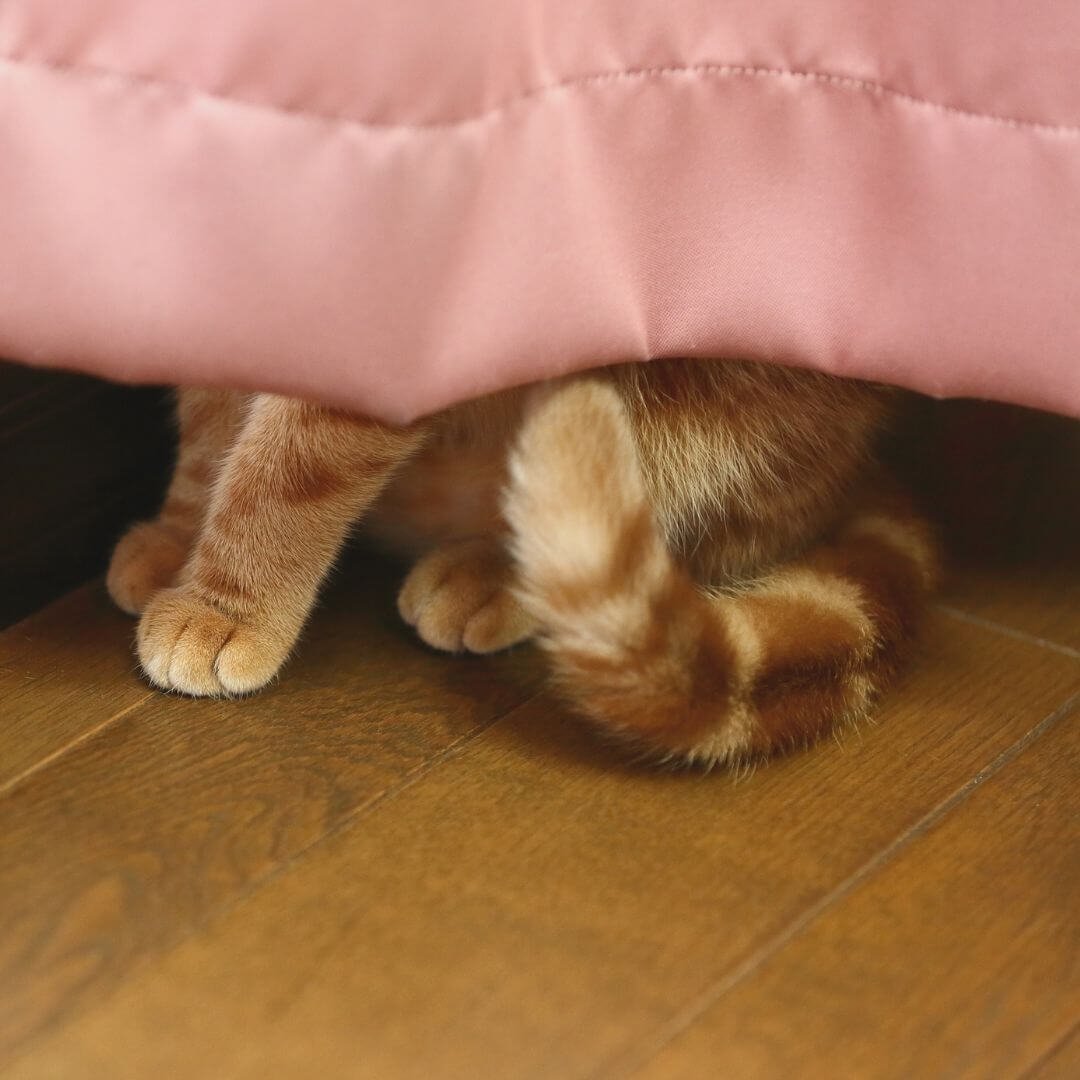
Help your senior cat feel more secure by adding more hiding spots
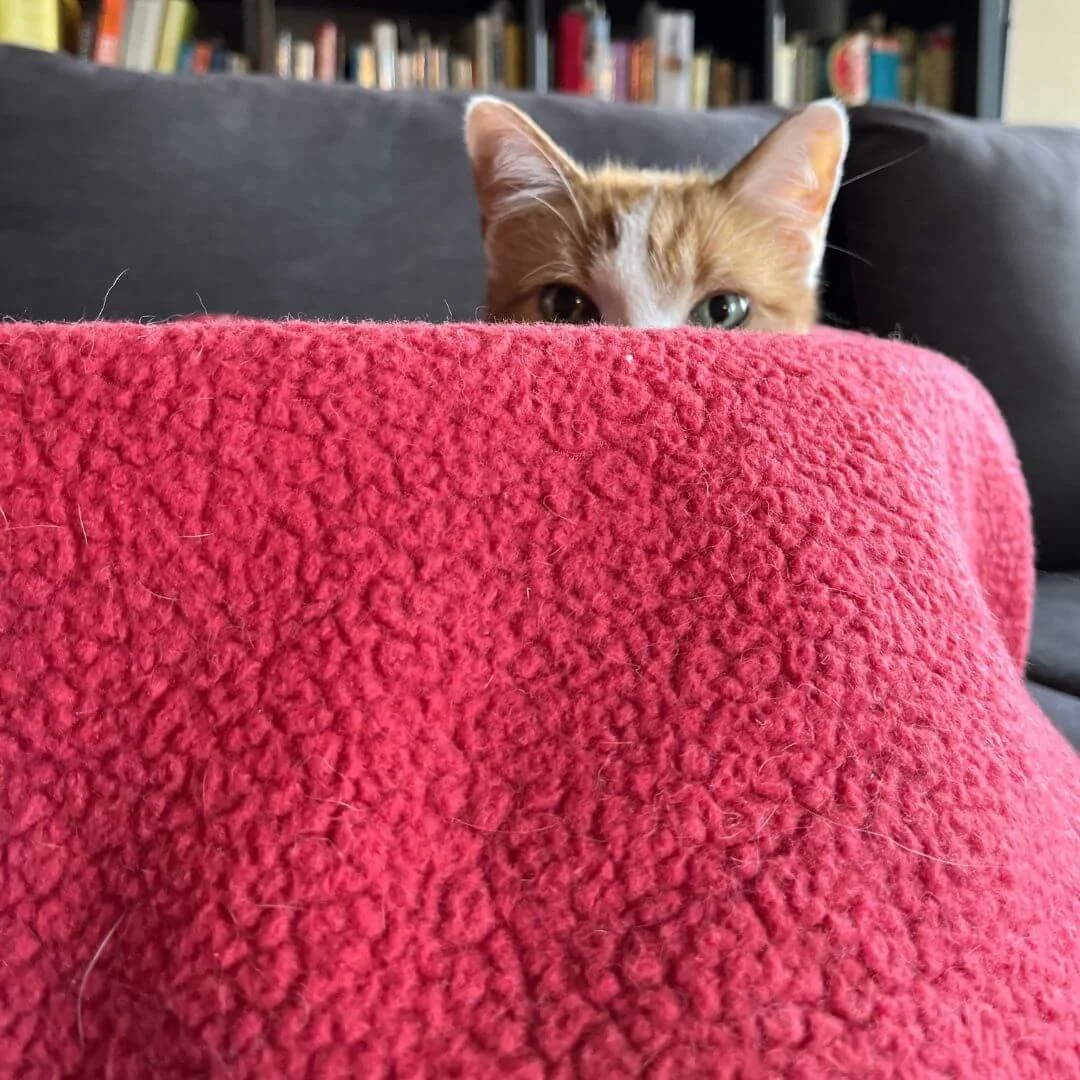
“You can’t see me but I can see you.”
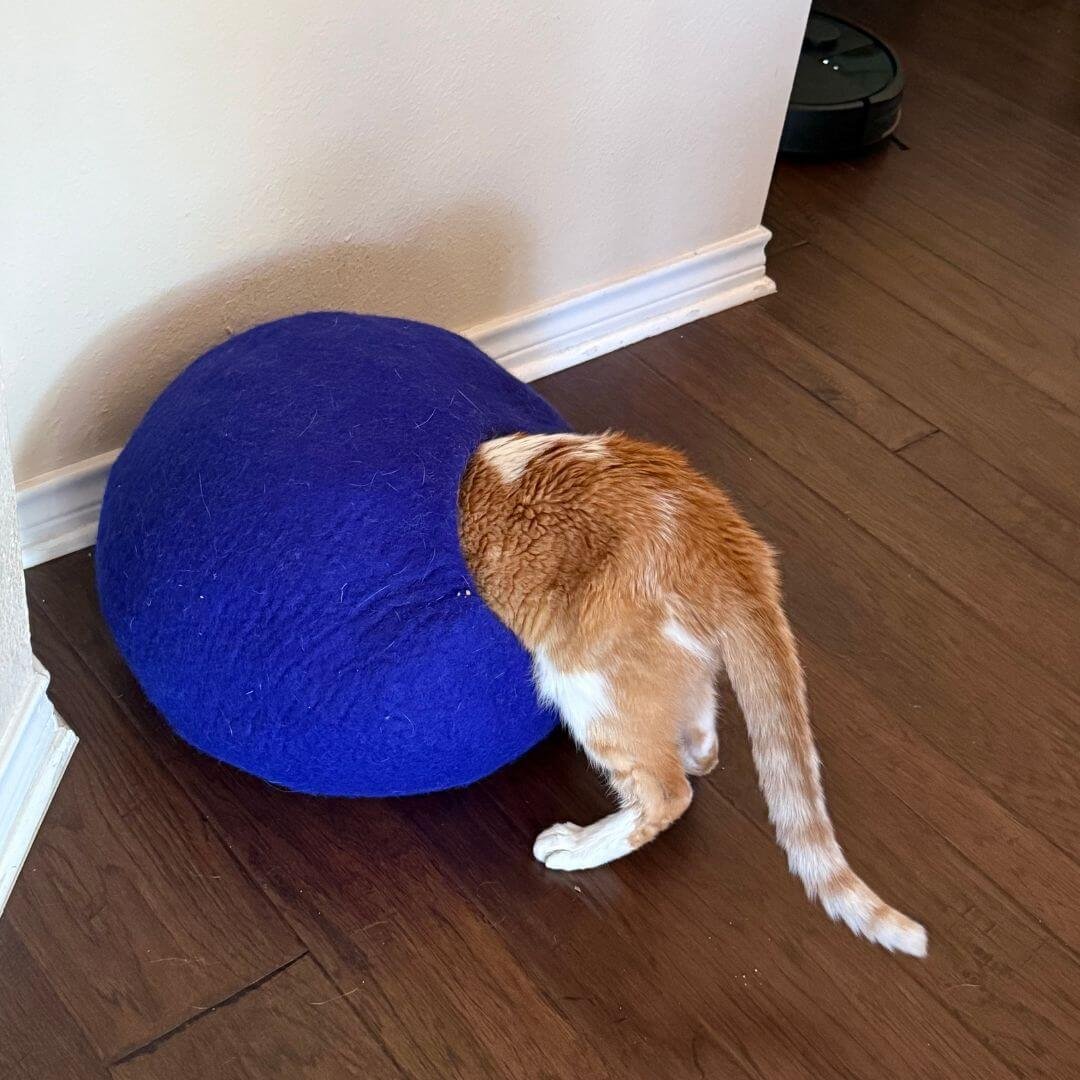
“Are my treats hiding from me in here?”
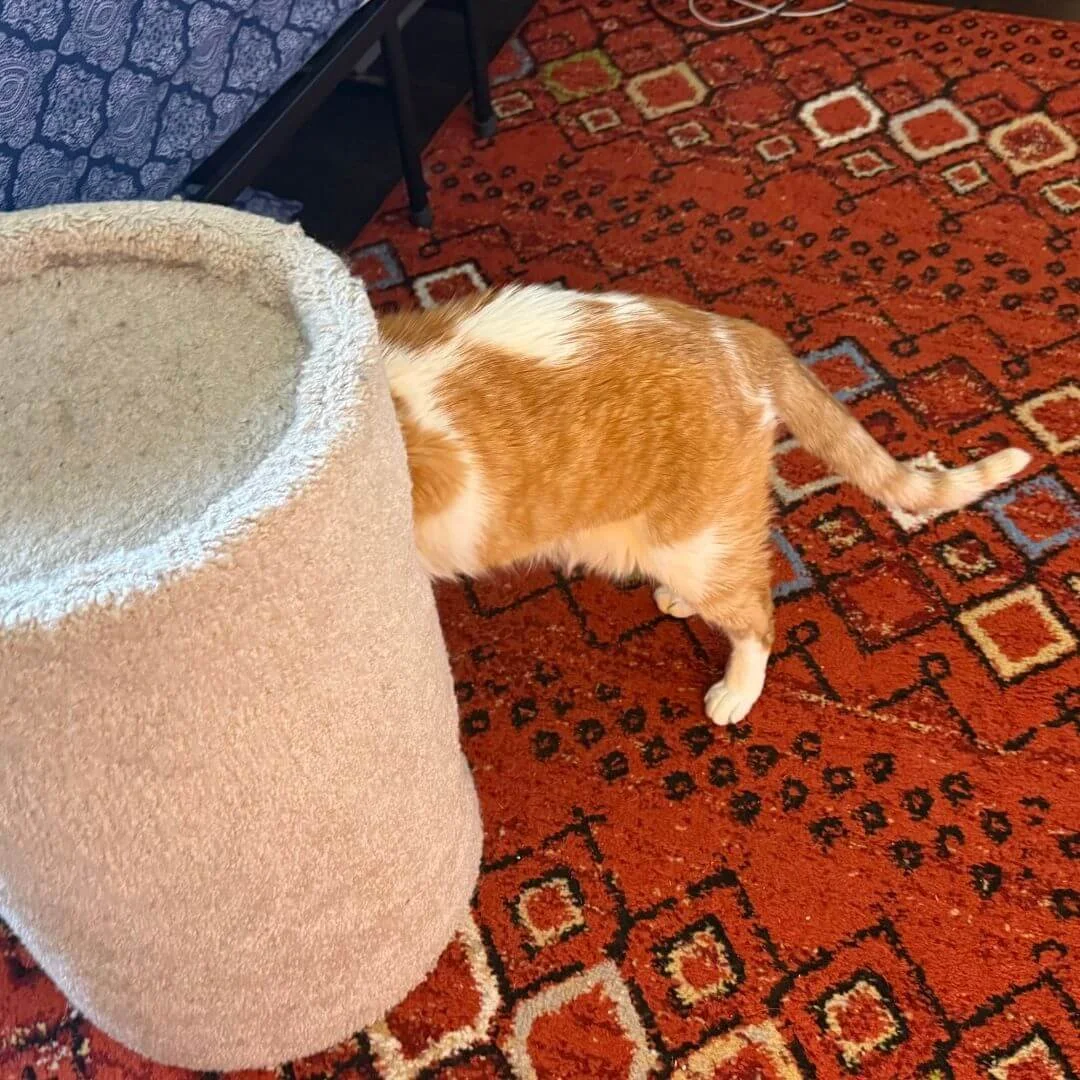
“What about in here?”
8. Revamp your cat scratchers.
Scratching is a natural behavior for cats. It helps with claw maintenance and lets them stretch. Scratching also helps cats communicate by leaving a visual marker created by claws and by leaving pheromones via scent glands on their paws. As cats age, their scratching behavior may change, making it more difficult for them to reach up and scratch on vertical surfaces such as sisal posts. Most senior cats also develop thicker, more brittle nails. It’s vital for all cats to have regular nail trims (typically every 4-6 weeks) and surfaces that meet their scratching preferences, but this is especially important for senior cats because inadequate scratching and nail trims can cause a very painful condition where the nails puncture and overgrow into the paw pads.
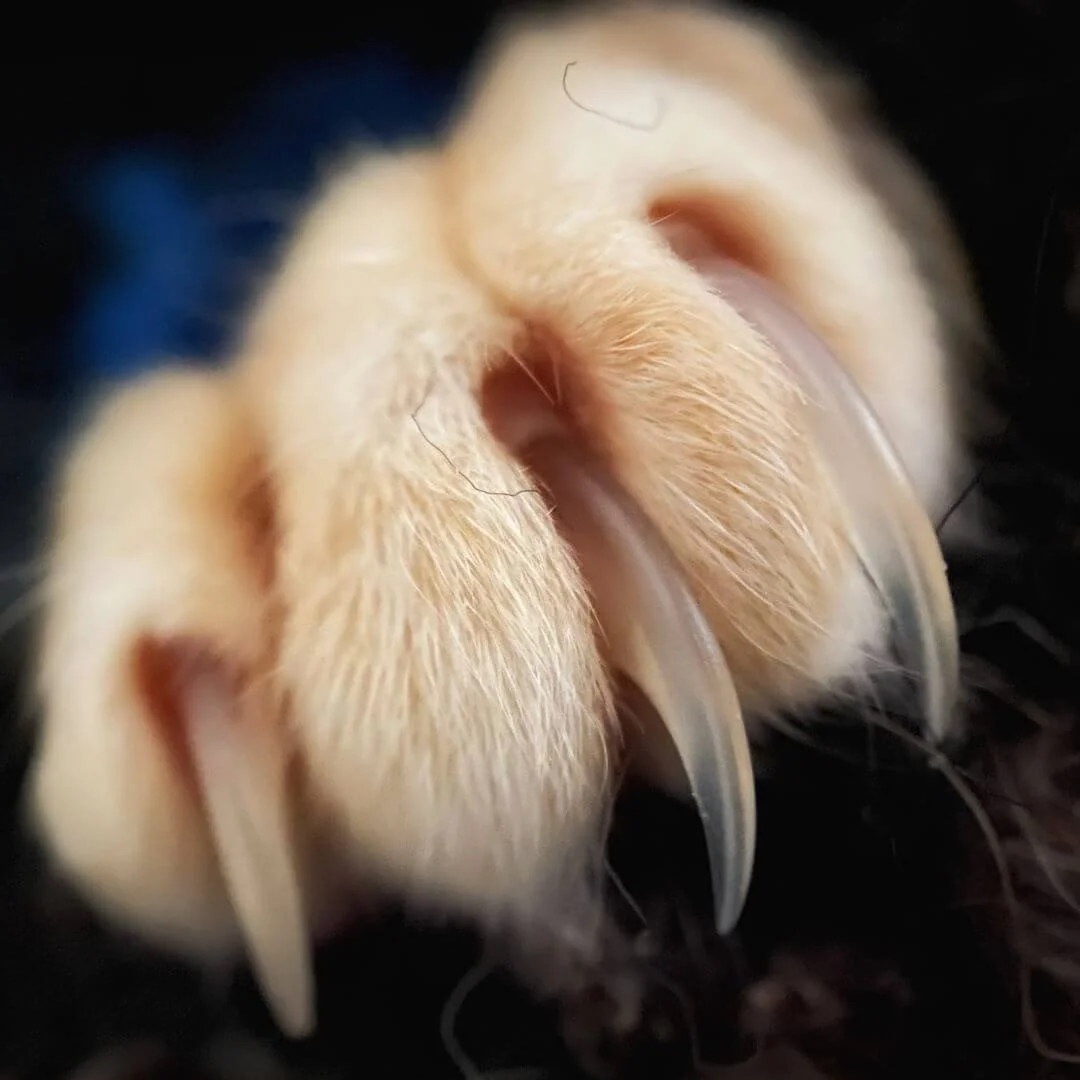
Even with regular scratching, cats usually need nail trims every 4-6 weeks. Positive nail trim training helps make them less stressful for everyone involved!
You can set your senior cat up for scratching success by doing a walkthrough of your home and replacing any worn scratching surfaces, such as threadbare sisal posts. Note as well the height of the surfaces that are most worn. For example, if only the lower portions of the vertical scratchers are getting used, this might be a sign that it’s uncomfortable or painful for your senior cat to stretch their arms or legs up to scratch higher. Arthritis in senior cats is common, and if you’re a senior cat parent you’ll want to pay attention to these types of changes in behavior that may warrant a vet visit.
Every senior cat has different preferences for their scratching substrate as well as their preferred scratching angles and locations. As with hiding spots, providing your senior with choices will support their emotional and physical health. Horizontal cardboard scratchers and loungers, sisal pads, and diagonal cat scratchers are good mobility friendly options. Resources such as scratchers should be separated and distributed throughout the home to support the five pillars of a healthy feline environment.
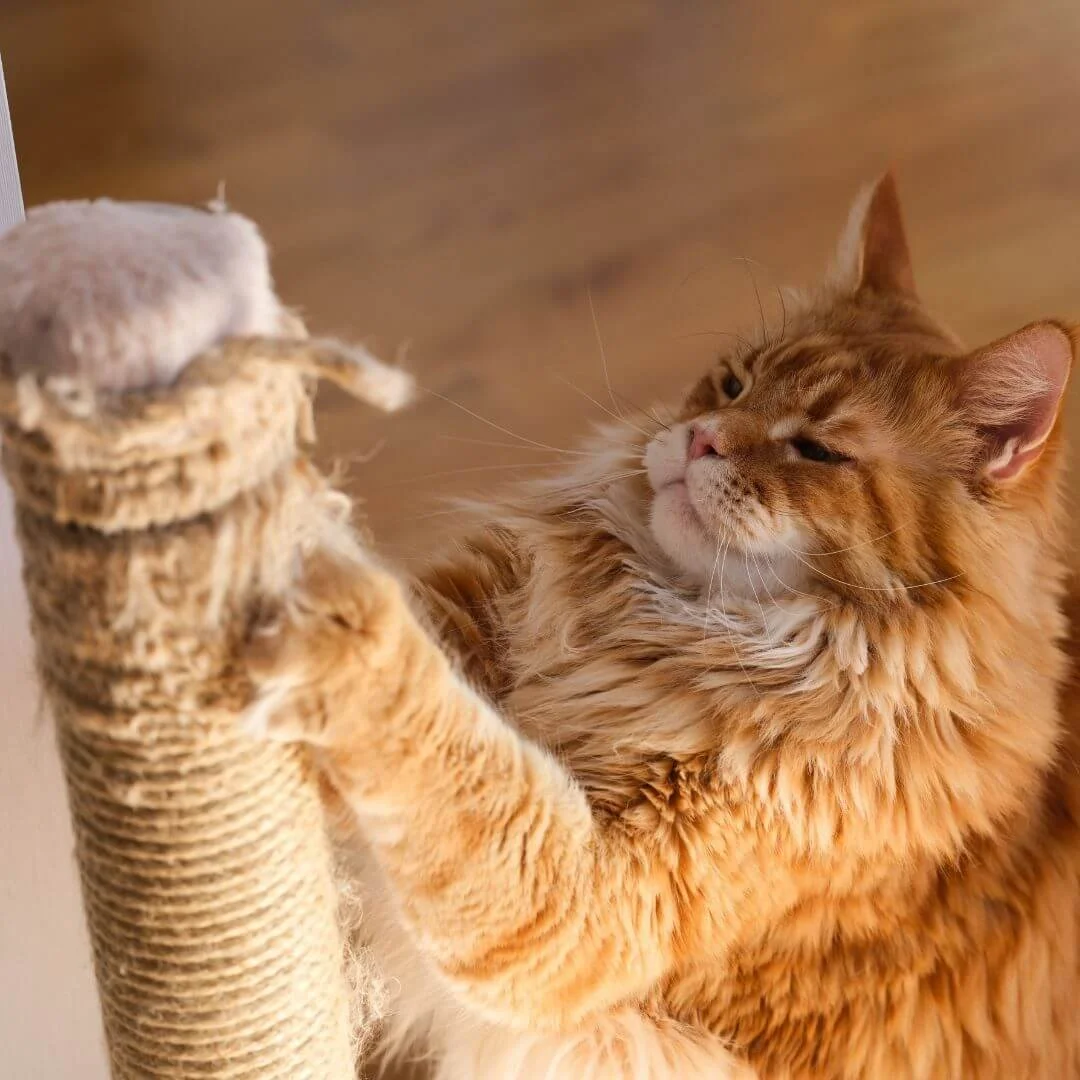
Does your senior cat prefer vertical scratching…
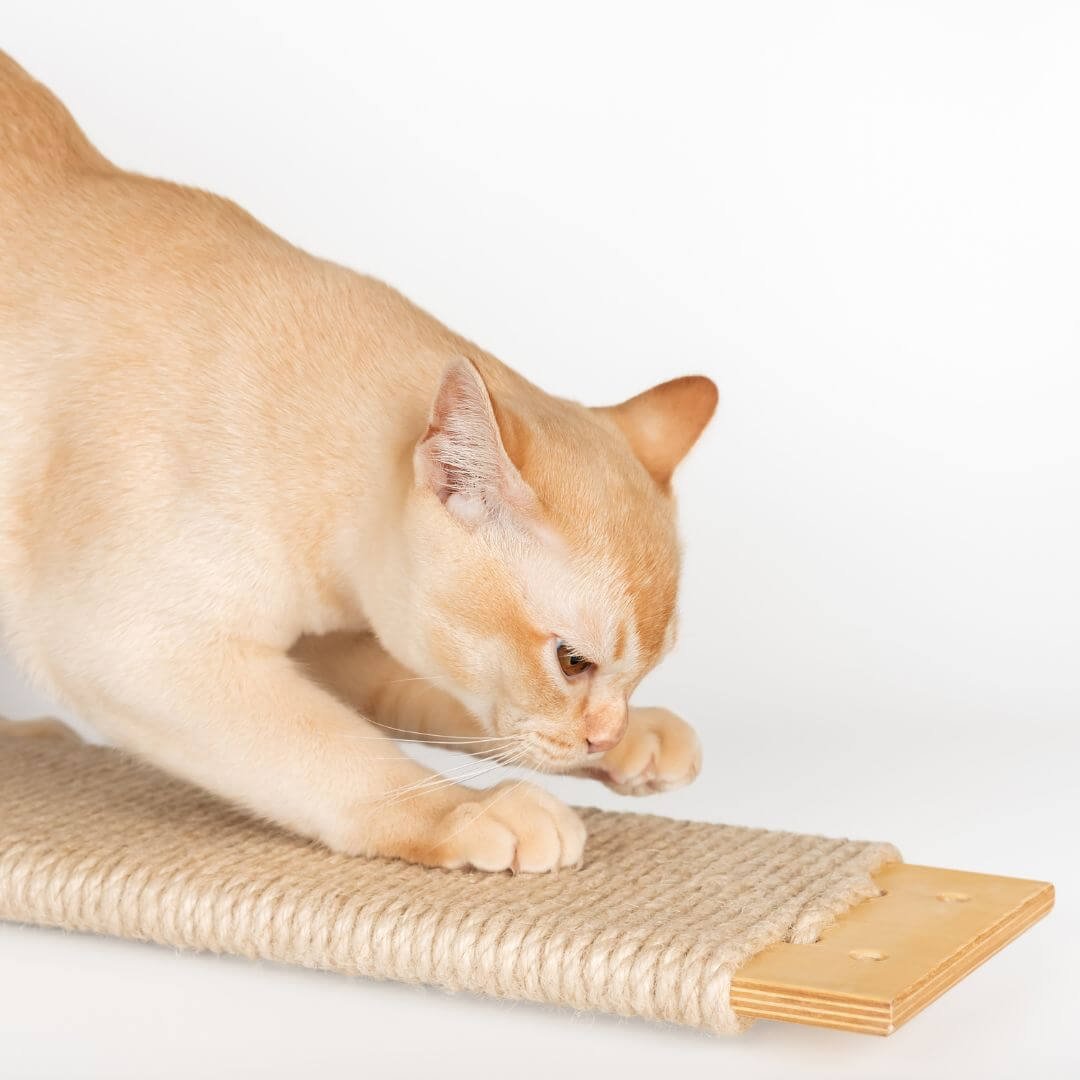
…or horizontal?
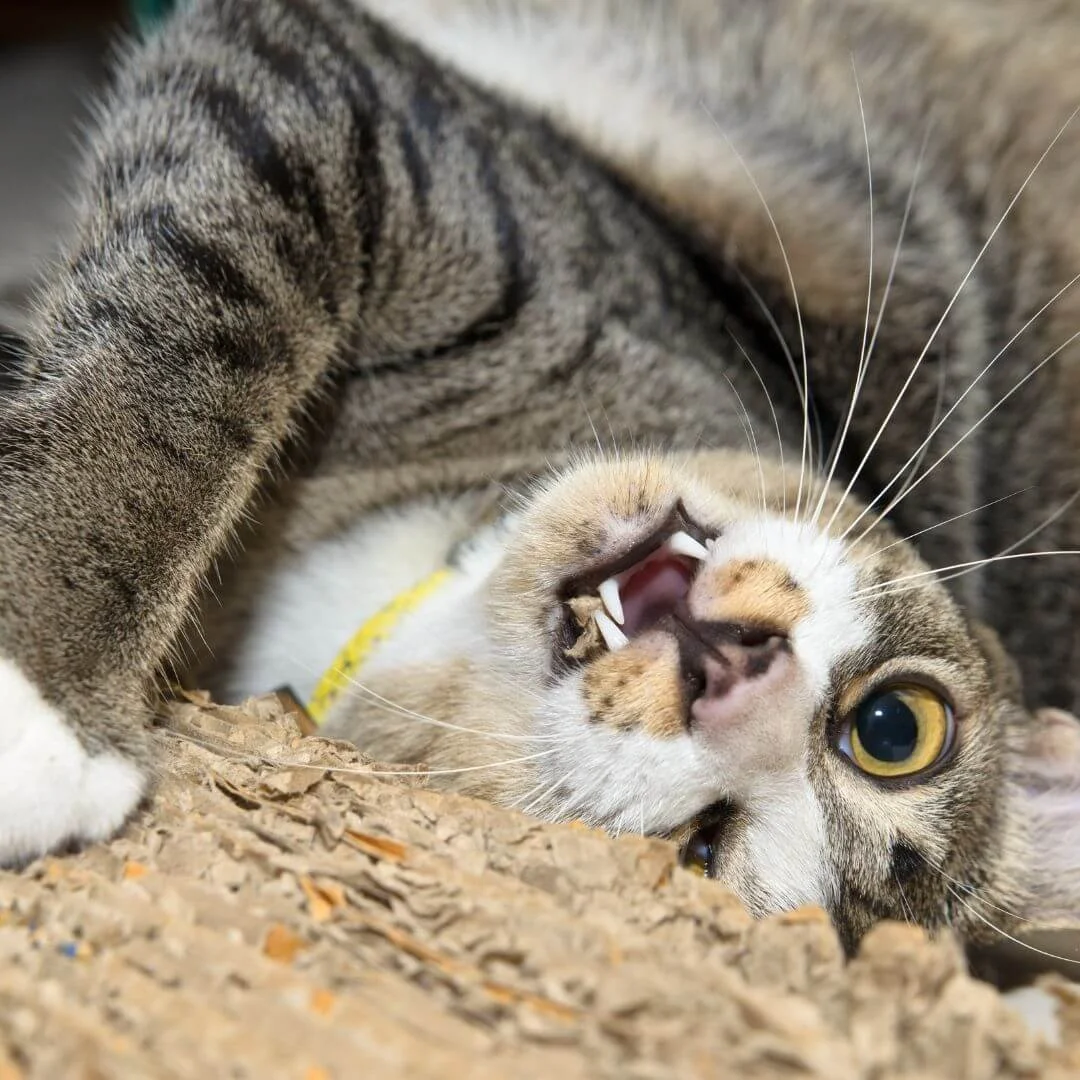
This scratcher could use a replacement
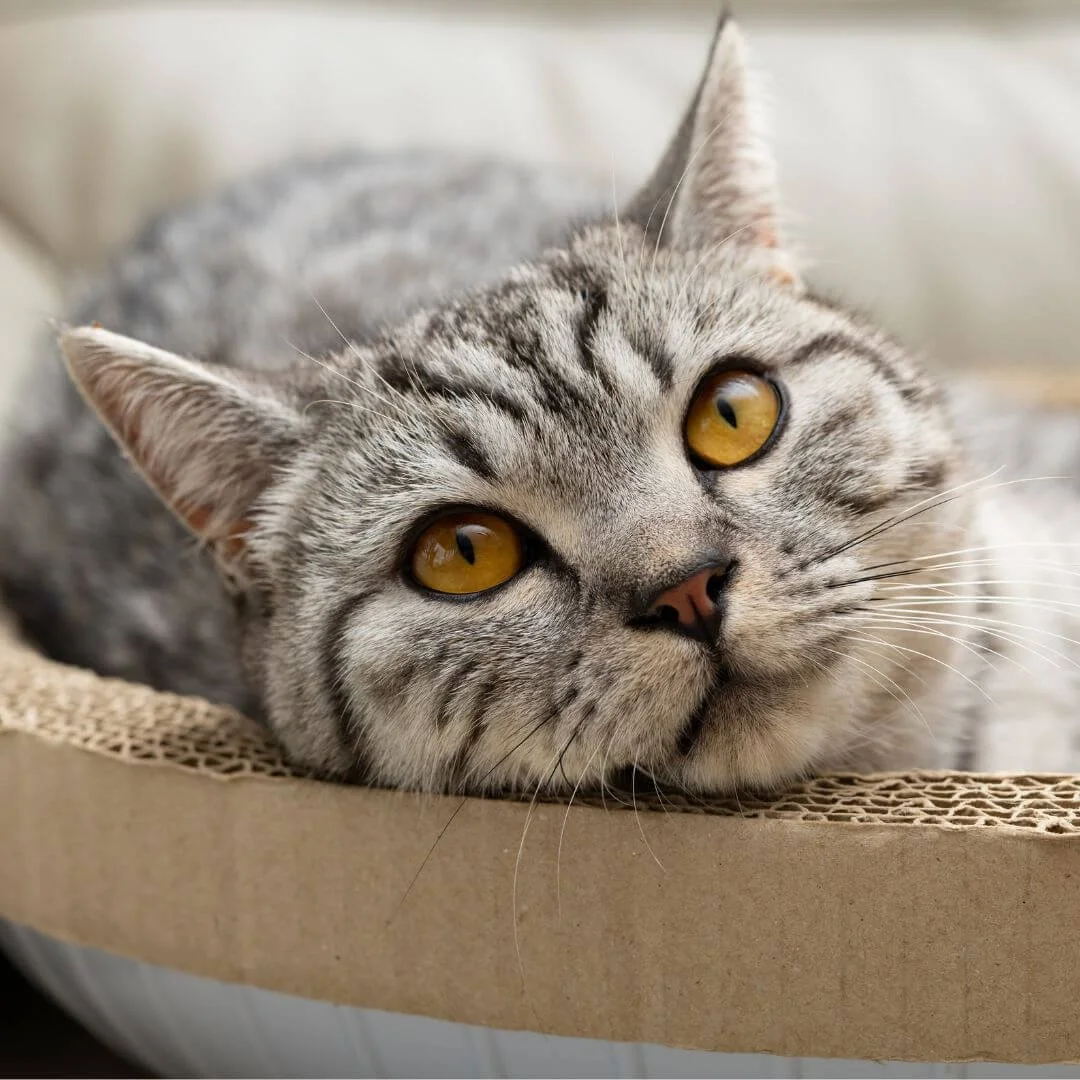
Try a cardboard scratcher lounger!
9. Start a cat training routine.
As I mentioned earlier in this blog, cats are never really too old to train. Positive reinforcement-based training is fun for cats and people, and really supports the human-animal bond. You can train for a certain medical goal, such as training your senior cat to take oral medications via gel caps, or to accept an Aerokat inhaler for their feline asthma. You can also help train your cat to positively accept their carrier or work on desensitizing and counterconditioning them to scary things like unfamiliar people coming to the house or storms. Many people start training their cat to do tricks for fun, enrichment, and one on one bonding.
Since Puff was around 14 or 15 years, I’ve done positive training with him that’s included: stationing to create a medication station and prevent countersurfing; targeting; teaching him a hand signal to come when called since he’s losing his hearing; gel cap training; and insulin injection training when he was diagnosed with diabetes at 18.5 years. He also knows how to shake, which is a mobility-friendly modification of his “high-five” trick that doesn't require him to reach up with his paw, which could be painful with shoulder arthritis.
If working towards a medical goal, I recommend working with a positive reinforcement-based trainer, particularly one with a specialty of cooperative care. Other great training resources are Cat School (check out their free YouTube channel) and the Train your Cat! course from the Karen Pryor Academy.
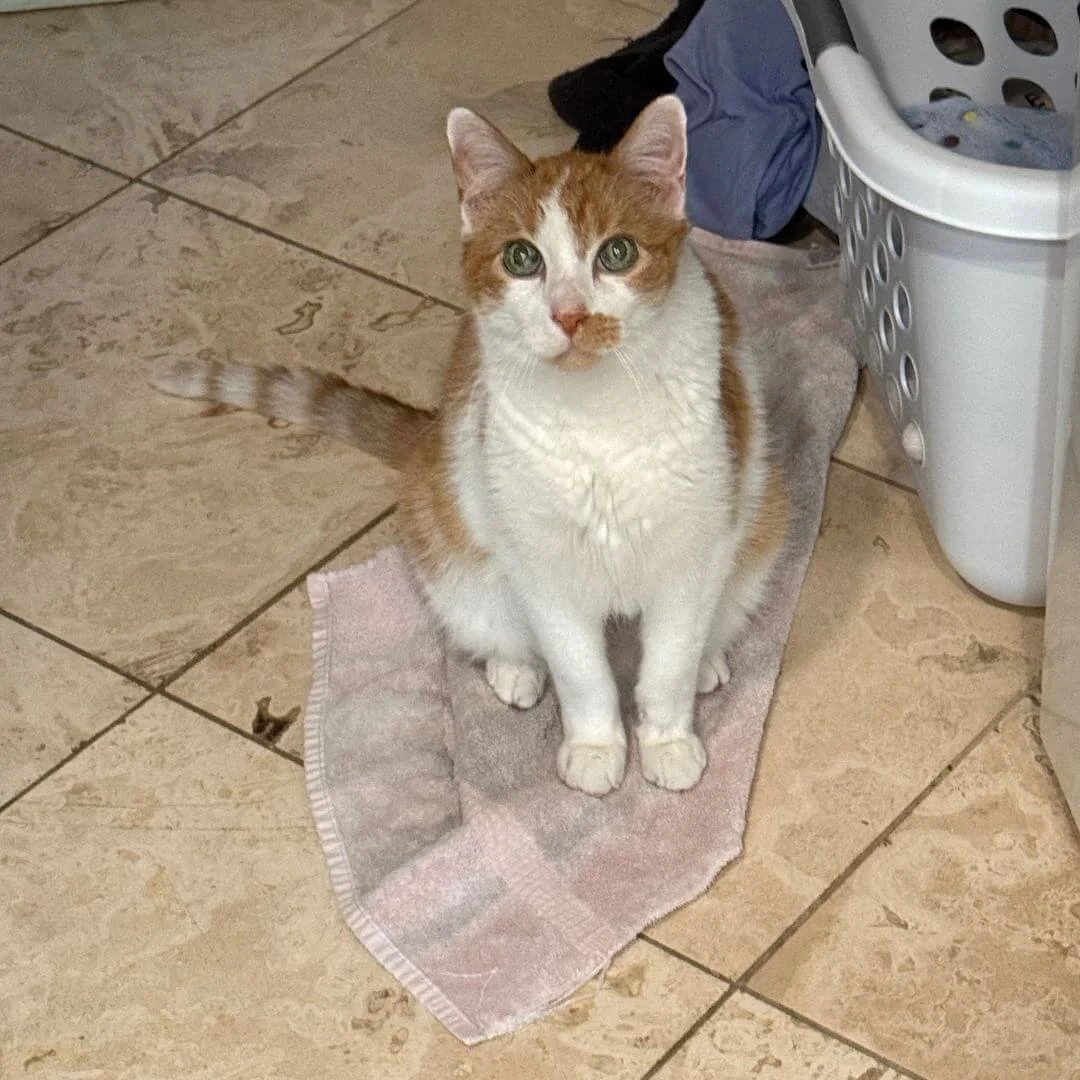
“I’m such a training pro, if you accidentally leave a towel on the floor, I’ll station on it!”
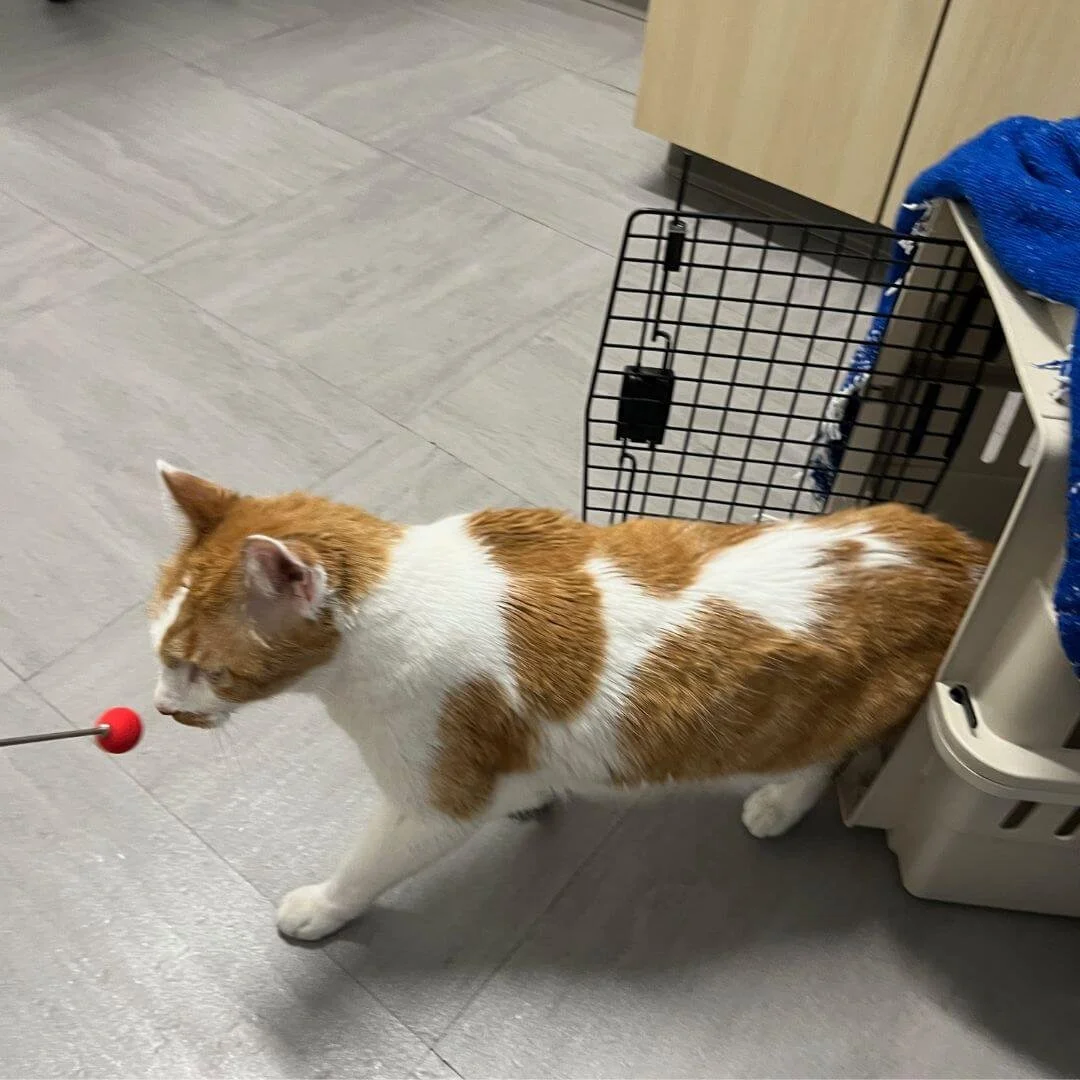
Puff being targeted to come out of his carrier at the vet. This cat training technique supports choice and is so much less stressful than forcing him to come out!
10. Wild card cat enrichment.
For this last tip, think: what does your senior cat really enjoy doing, and what did they enjoy doing 5 years ago? Puff has always loved hopping into laundry baskets. It doesn’t matter whether they’re empty, full of dirty clothes, or contain a clean stack of your partner’s newly de-haired black T-shirts. We only do laundry a couple times a week, so last year I got him his own laundry basket that he can access whenever he wants. It’s now one of his most reliable napping places after lunch, and sometimes he goes in there to get attention.
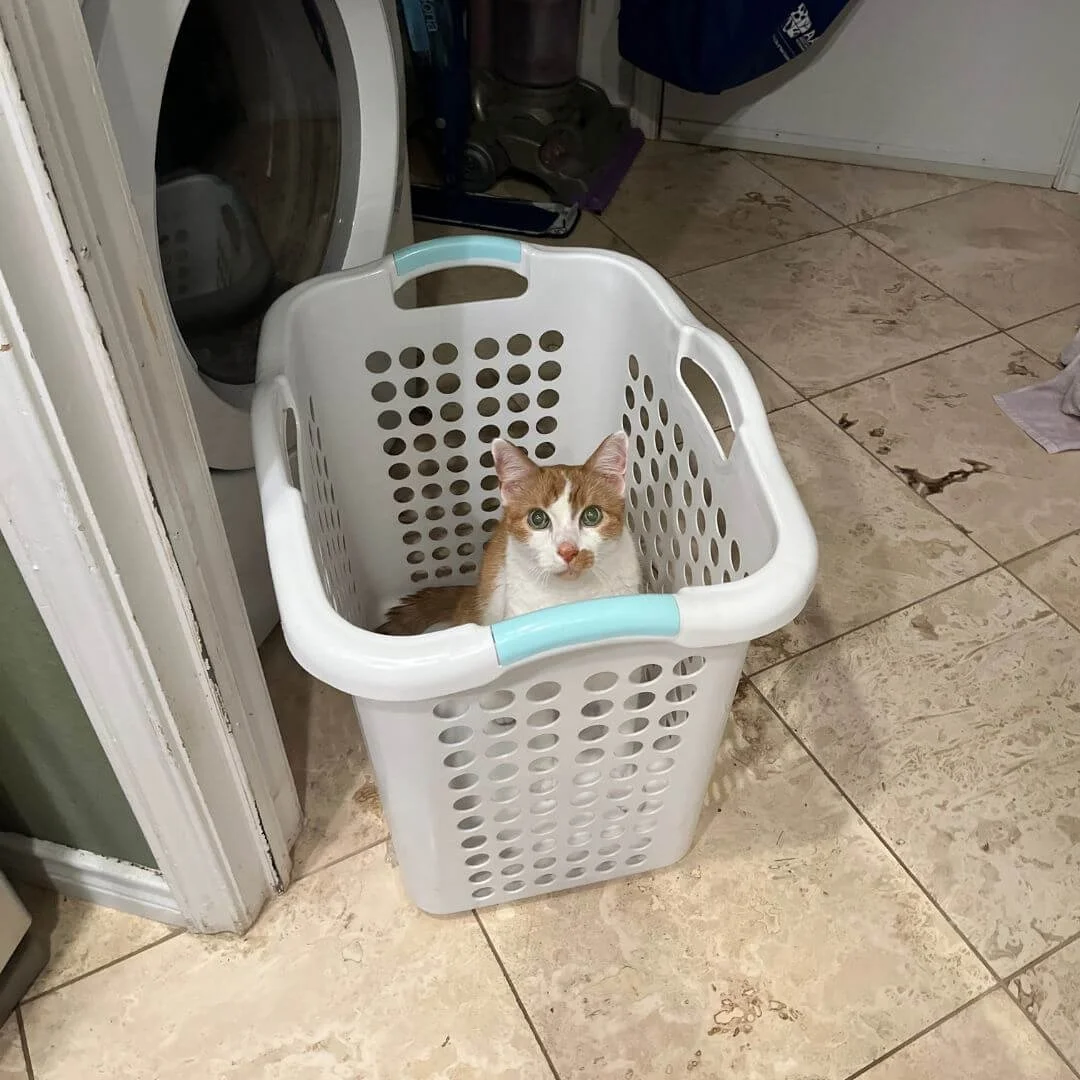
“Will I get attention for going in here?”
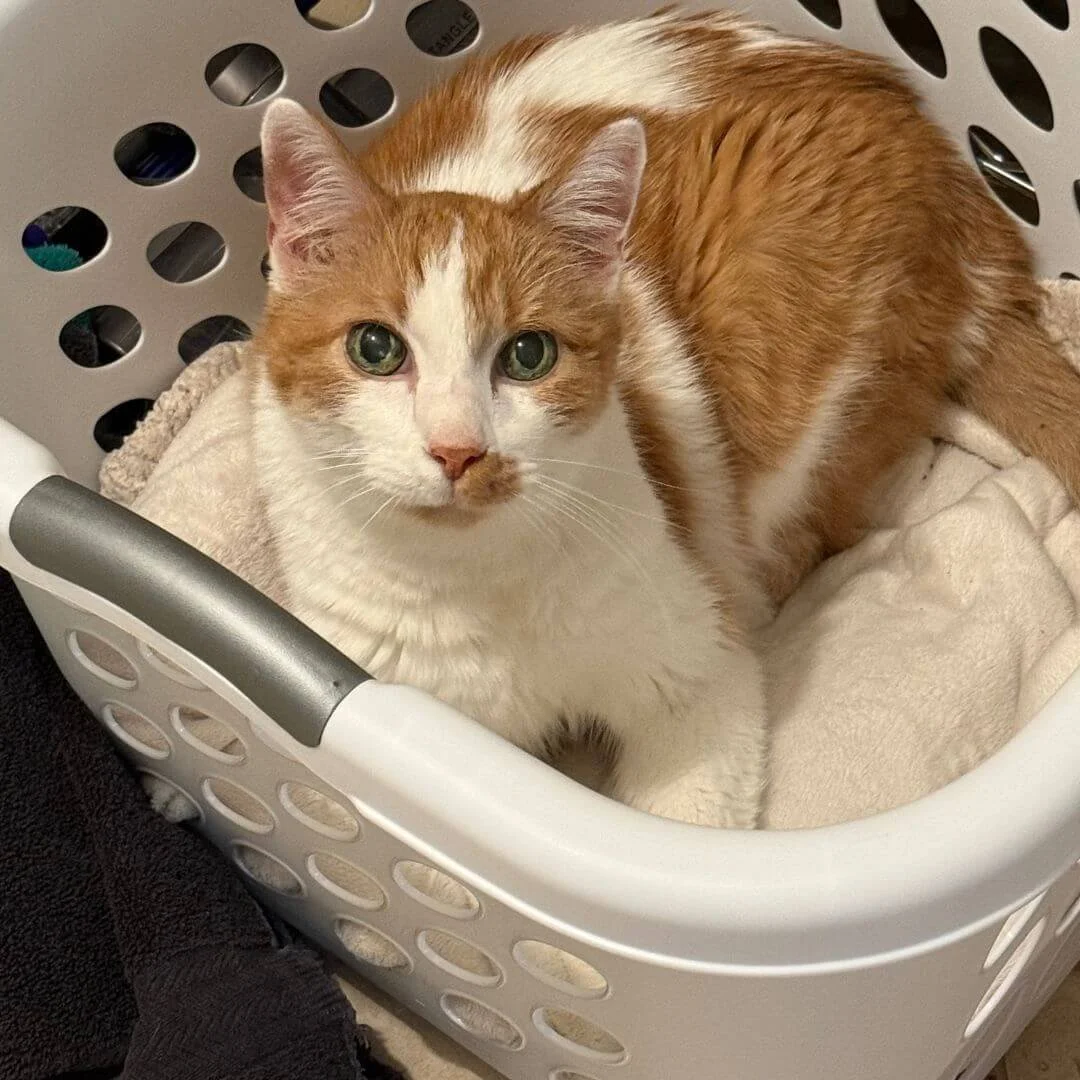
“Yay, now I get my own!”
Other enrichment that he loves is the cat cot I have by my desk in my home office. Puff was always trying to get into my lap when I was working, which ended up being a distraction because he can’t be in my lap without putting his arms up onto my forearms. After training him to station, it was a breeze to get him to start using the cat cot that sits 3 feet from my desk. I made it even cozier for him by making sure there’s always a cat bed with high sides on which he can rest his arms. Now he’s my constant companion whenever I’m working from home, lounging and snoozing and getting attention in a more desirable location.
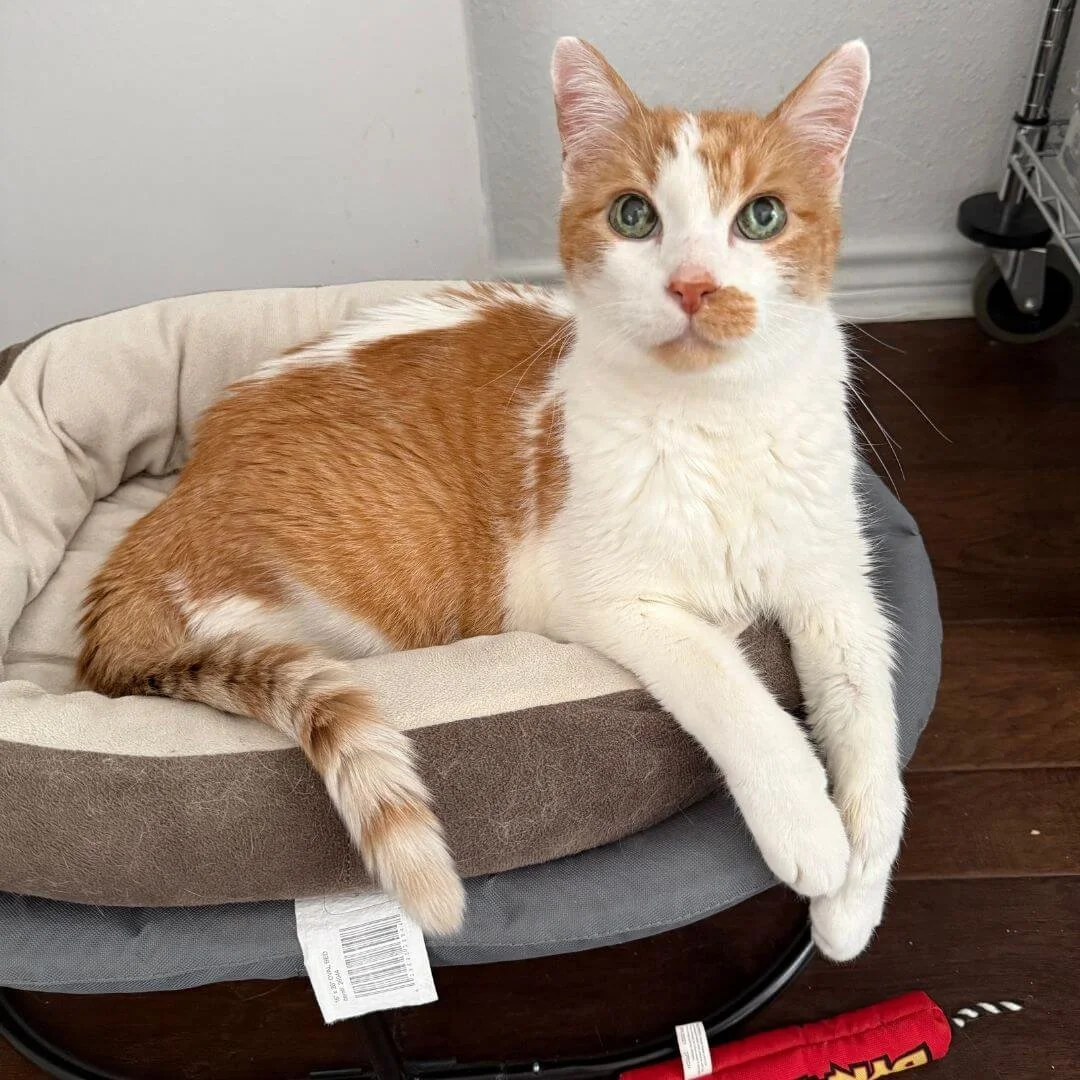
“Thanks for giving me an elevated bed where I can prop up my arms!”
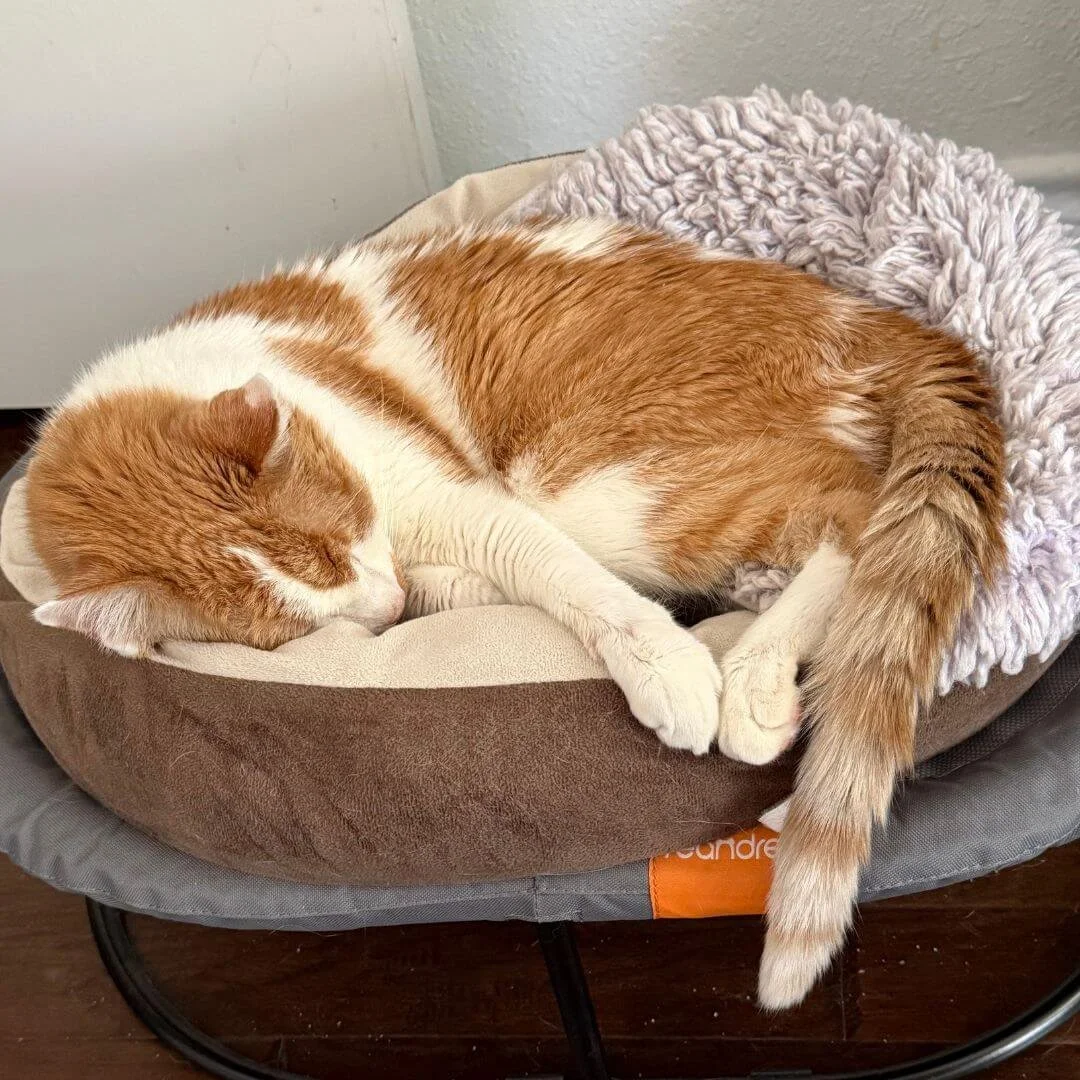
“Starring in my mom’s blog has been exhausting. Excuse me while I get back to sleeping 22 hours a day.”
That wraps up our top 10 enrichment tips for senior cats!
Need more behavioral help with your senior cat in the Austin area? Check out our cat behavior housecall services, and our Silver Panther Package where we help your senior cat age well at home. And for more tips on helping the emotional health of your cat, follow My Family Cat on Instagram and Facebook!