
Feline Feedback: Intro to Cat Body Language and Communication
My first veterinary-related job was working as a vet assistant at a one doctor canine/ feline practice in St. Paul. I had no idea what I was doing. We had dogs growing up, but I had never really interacted with cats and I didn’t know anything about them. I also didn’t receive much training from my supervisor, an irritable young woman my age who would get even more irritated if I didn’t know something, which was constantly.
My training was cursory, and I still remember the panic I felt when I was told to go into an exam room with a waiting dog parent and discuss vaccines. I’m sure the flop sweat emanating from my face and armpits really inspired confidence in the services that the client was about to receive. It was stressful, but I needed to get some clinical experience before applying for vet school, so I persisted.

Um…vaccines? What are those?
One day, I was cleaning out the kennels at work when I saw that the litterbox in an upper cat cage needed to be changed. Without looking at the cat, I opened the kennel door and took out the used litterbox. As I began moving my arm back into the kennel with a clean litterbox, the cat jumped onto my forearm, clung to it upside down like it was a tree branch, and bit me multiple times on my arm and hand while I stood there in shock. I shook the cat off and after washing my wounds I was sent to urgent care and started on a course of antibiotics. My arm still got painfully swollen, to the point where even flexing or extending my wrist 5 degrees sent pain shooting up my arm. It was the most severe injury I ever sustained from a cat, and it seemed to come out of nowhere.
In my next job as a vet assistant, I was bitten on the lip by a dog when I bent over him to pick him up so a vet could examine him. Like the cat bites to my arm, I was in complete disbelief because it seemed like there was no warning. My lip swelled grotesquely and once again I had to go on antibiotics. In the ensuing years as I graduated from vet school and went into clinical practice, I was injured or almost injured by several other patients whose aggression came as a complete surprise.
I was also bitten in the hand at home by my own late dog Dorie when I had given her a slice of cucumber in her playpen, then reached down to move the cucumber. Even though Dorie had an established history of resource guarding, I didn’t think twice about bending down to move one of her favorite treats because I was so focused on the task itself. The bite didn’t break the skin, but being injured by my own dog felt like an unpredictable betrayal. How could she have done this to me? How could this have happened?

You didn’t set me up for success, mom!
Why didn’t you look at my body language instead of the cucumber?
Over time, very slowly, I started to notice different ways my patients were behaving when they were in the exam room with me, and began recognizing signs of stress. At first it was big things like panting or hiding under the chair, but eventually became more subtle signals. I also started to watch how my own pets were behaving at home. I realized that pets are constantly communicating with us whether we realize it or not, and in the instances where I was injured or had near-misses, the pets were giving multiple cues for me to back off before they had to escalate to aggression.
The cat who bit me on the arm years ago probably looked like this before I stuck my hand into her kennel:
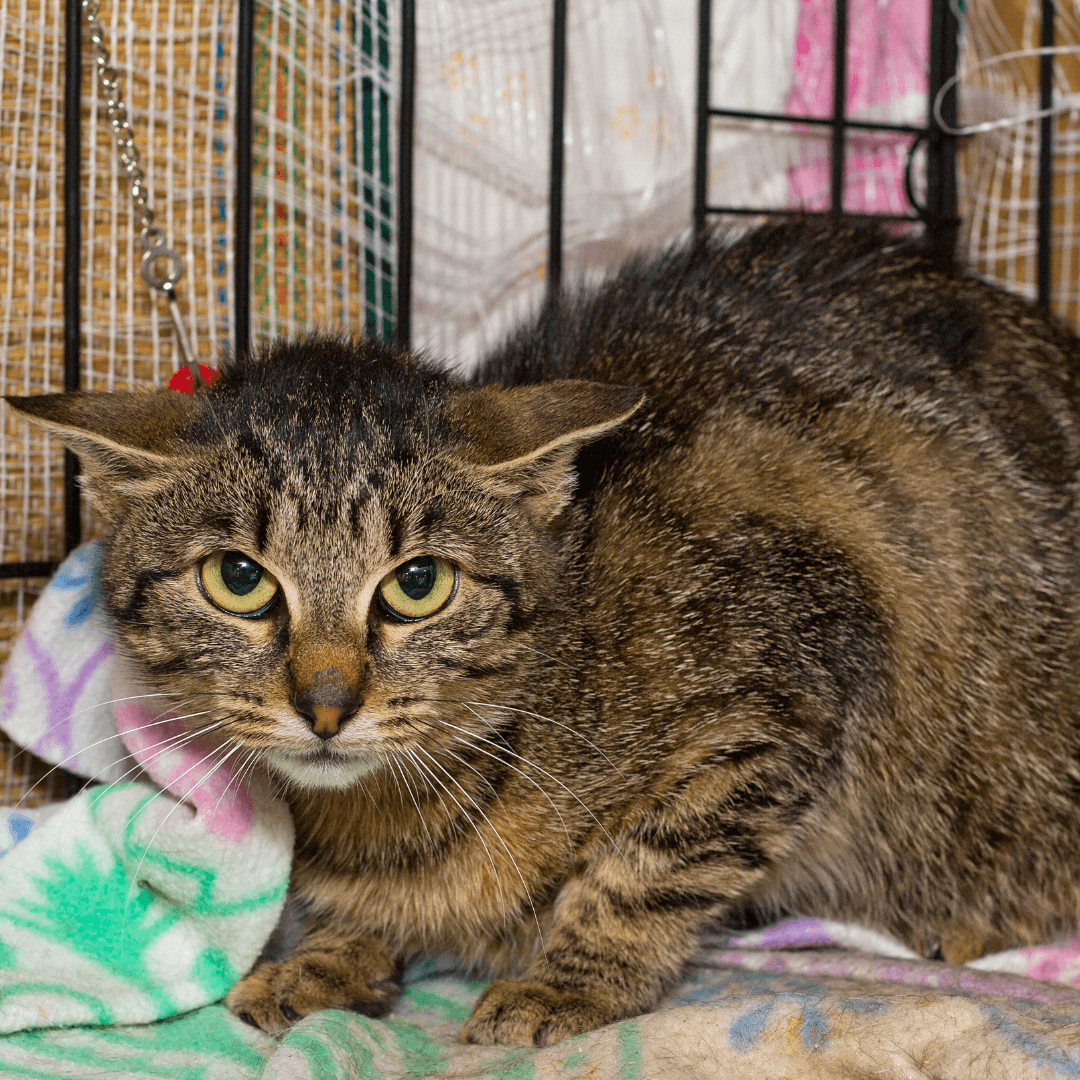
And the dog who bit me in the face may have looked like this before I bent over to pick him up:

The more I began learning about the body language of cats and dogs, the more invested I became in the emotional health of pets, and the safer my interactions became. By the time I launched my cat behavior housecall practice My Family Cat in November 2023, it had been years since I had been injured by a patient. Now that I regularly speak with cat parents about their cat’s behavior concerns, every single initial consult includes a discussion of the importance of feline body language. Understanding your cat’s body language is fundamental to helping them communicate effectively with you, which supports their emotional health and strengthens the human-animal bond. It will also help keep you safe, and provides valuable feedback when your cat is overwhelmed emotionally at home or feeling stress at the vet clinic.
The 4 F’s of fear/anxiety/stress (FAS) in cats
Learning the body language of cats is like learning a new language–it may seem insurmountable at first, but the more you practice, the easier it gets! Even if you don’t have a cat yourself, watching cat videos on Instagram, Facebook, or TikTok will quickly teach you that MANY of the cats on social media are experiencing fear/anxiety/stress (a Fear Free term abbreviated as FAS). From a macro perspective, it’s helpful to start with a general concept that’s often known as the 4 F’s of fear/anxiety/stress: fight, flight, freeze, and fidget.
Fight
This is probably the most obvious sign that your cat is experiencing fear/anxiety/stress. Fight is signs of aggression: hissing, growling, swatting, lunging, scratching, trying to bite. Your cat isn’t trying to be mean; these are often distance-increasing behaviors because something is scaring or stressing them out, and they want the threat to back off.

Scared cat hissing and swatting
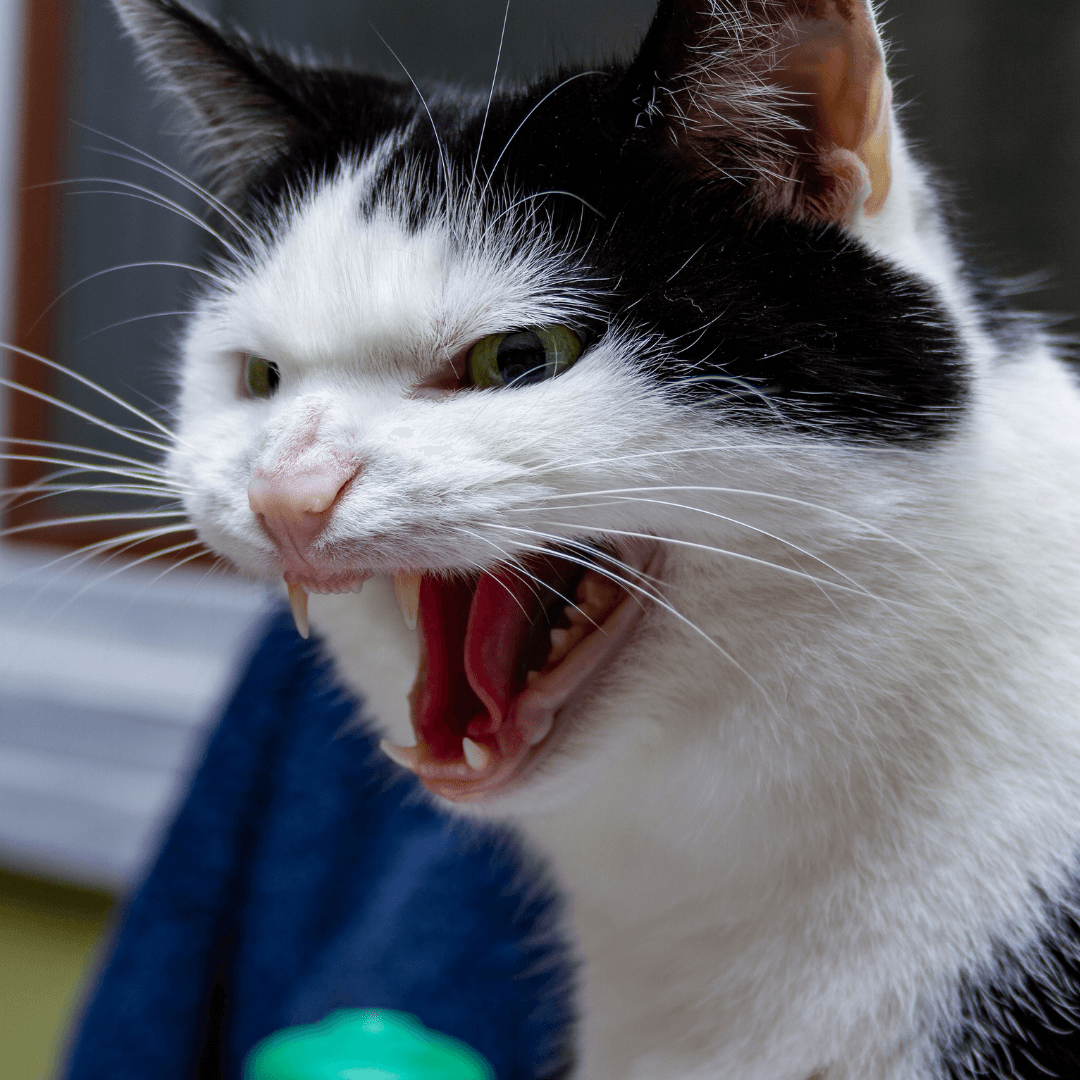
Scared cat hissing at stressor
At the vet clinic, the threat is likely the vet professional trying to handle your cat. At home, this could be you when you’re trying to do something your cat finds stressful such as giving medications, loading them into the carrier, brushing their fur or their teeth, trimming their nails, picking them up, or petting them. We also see it commonly with high levels of tension between cats, or when a cat is experiencing pain or illness and wants to be left alone.
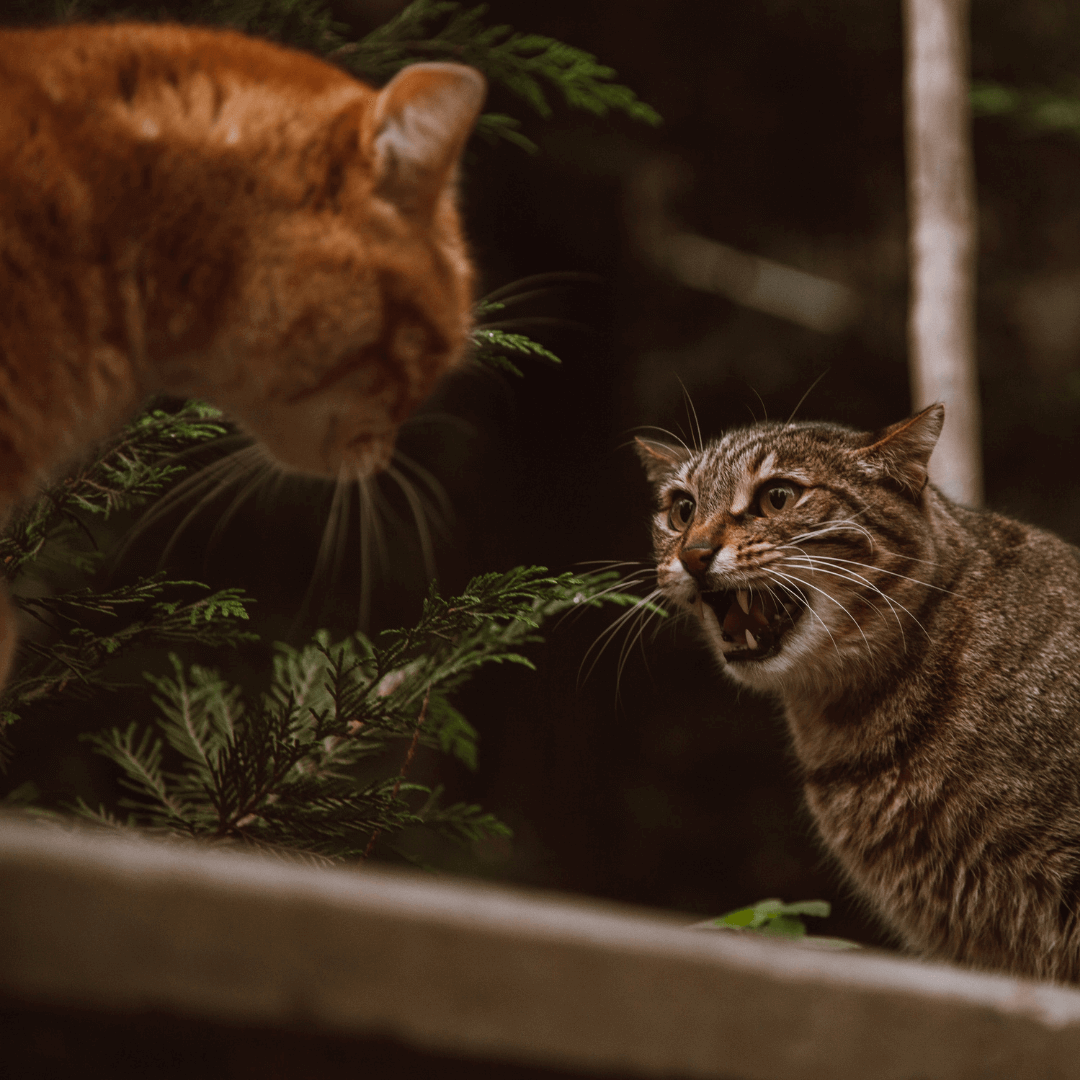
Cats showing a fight response during intercat tension
Cats who show aggression are at the top of the feline fear, anxiety, and stress spectrum, which means that you've likely missed multiple, more subtle signals along the way. This happened to me when I was severely injured by a cat years ago at work–I wasn’t even looking at her, and even if I did look at her, it wouldn’t have helped me because I didn’t understand cat body language. It never even occurred to me that from the perspective of that terrified cat, it could be even more terrifying to have a giant monster reaching towards her into her space.
If your cat is showing a fight response with handling at home, it’s a signal that they’re over their FAS threshold and it’s best to change your approach. That usually means backing off and stopping what you’re doing immediately. As everyone who’s worked with cats professionally knows, a growl may escalate to a swat or bite if you persist.
(Side note: if you’re noticing a sudden behavior change in your cat, medical issues should always be ruled out first with a visit to your veterinarian. This includes acute onset of aggression. If going to the vet is too stressful for you and your cat, seeking out a mobile vet to provide in-home care is a great alternative. Just keep in mind that many mobile vets will not be able to provide imaging such as X-rays or ultrasounds.)
Flight
When I step into a home for a cat behavior consultation, flight is one of the most common signs of stress that I see. Flight looks like avoidance behaviors and hiding.
How might a cat avoid you when they’re scared?
Looking away
Leaning away–even something as simple as a subtle shift in body weight away from you
Moving away, including backing during attempts at restraint. For my cat Puff, this is his default stress response.
Running away
Bracing their arms stiffly against you to create distance so they can make an escape

Scared cat leaning away from stressor with flattened ears
Scared cat showing fight (appears about to growl and swat) and flight response (leaning back). Note additional stress signals of dilated pupils and tight muzzle.
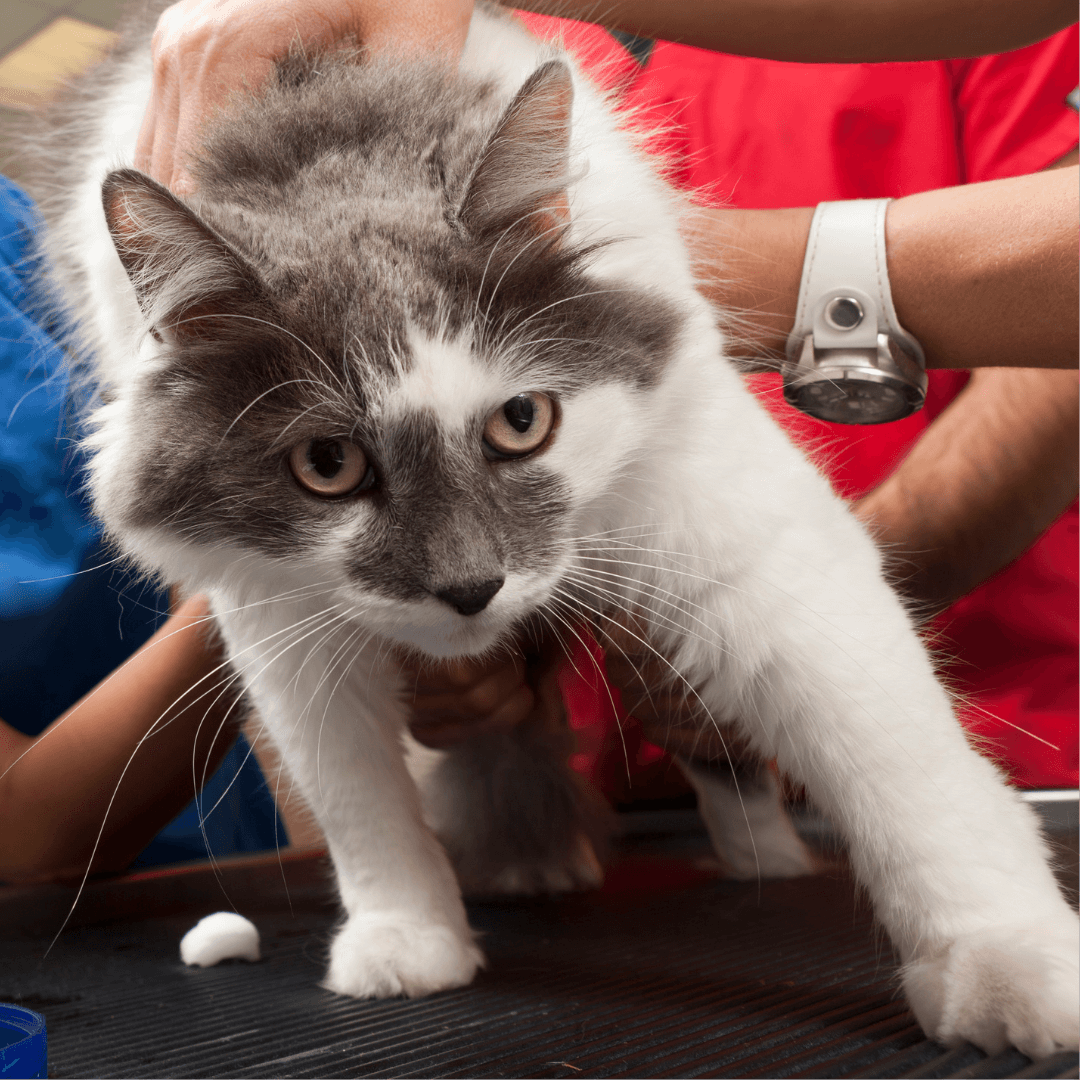
Scared cat at the vet clinic moving forward away from veterinarian
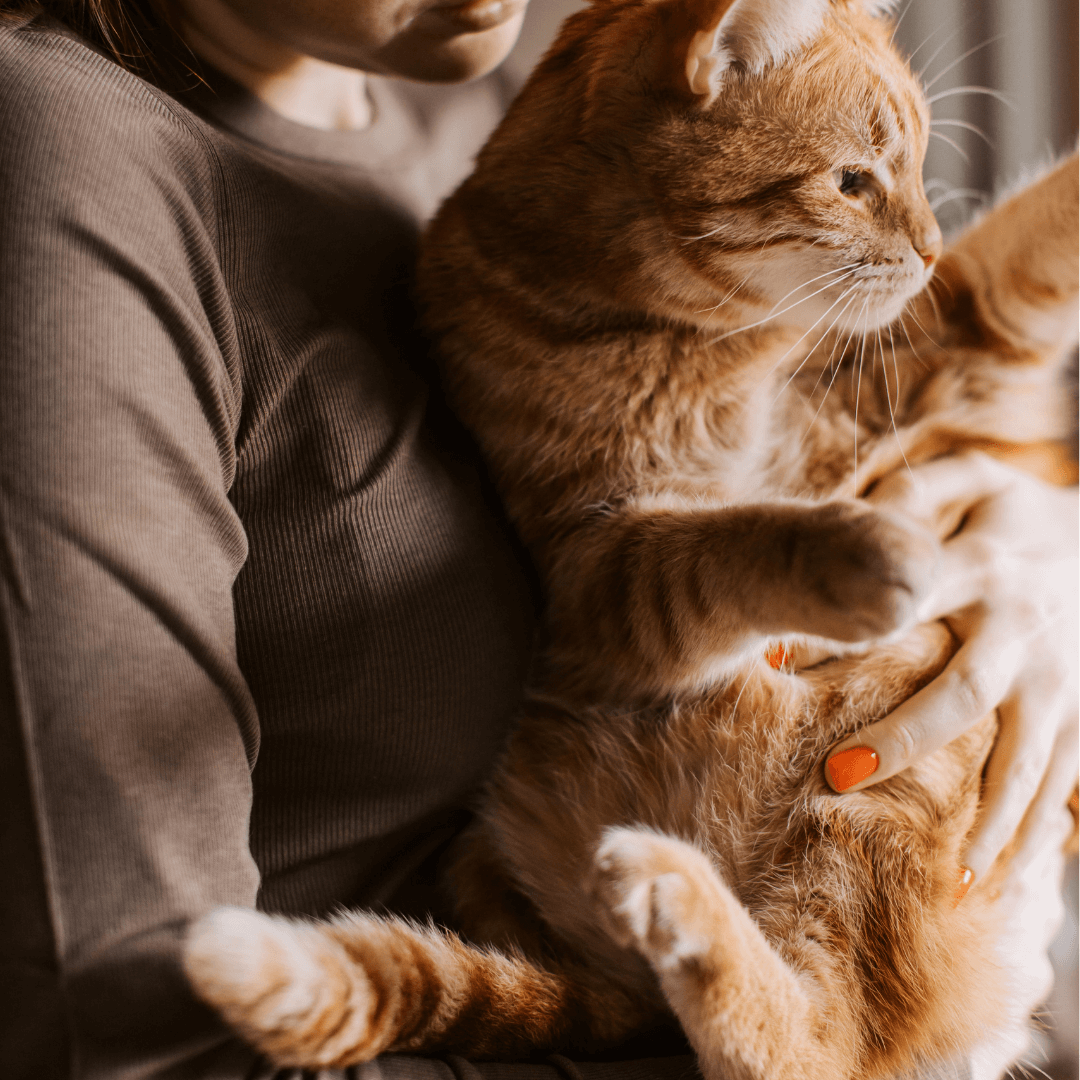
Stressed cat avoiding being hugged and held. Many cats don’t like to be hugged.
Common hiding places for cats at home when they’re scared:
Under the bed
Under the couch
Under the coffee table
On a chair that’s pushed up under a table
In their cat bed, ducking down low
In a cat cubby on a cat tree
In the deep recesses of your closet
Under a blanket or comforter
Inside any private nook and cranny into which they can squeeze, such as the boxsprings of a mattress or a tight space between the couch and the wall
On top of any elevated surface far from the threat, such as a high cat shelf, the top of a cat tower, or on top of the fridge or bookshelf
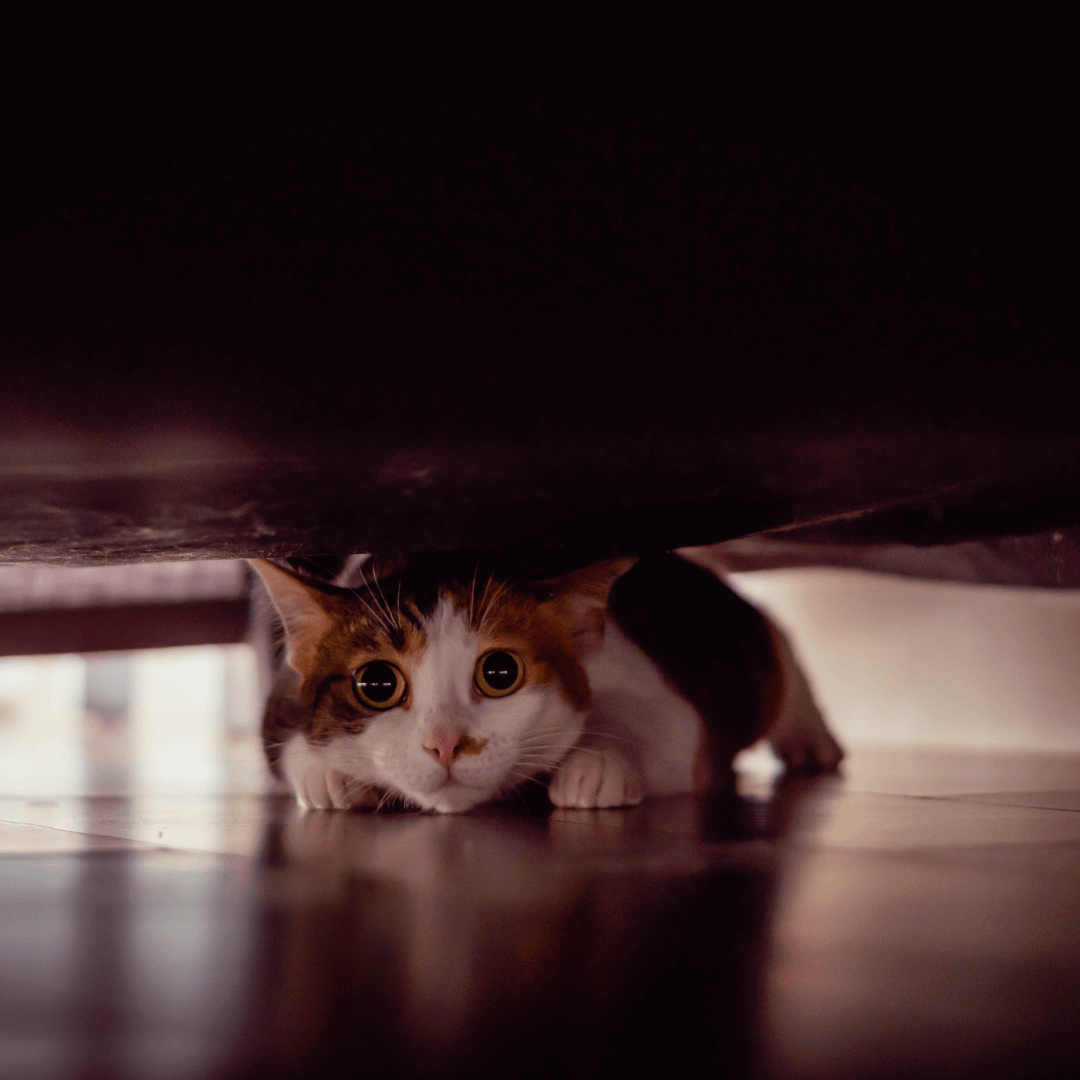
Scared cat hiding under bed

Scared cat hiding on chair under table
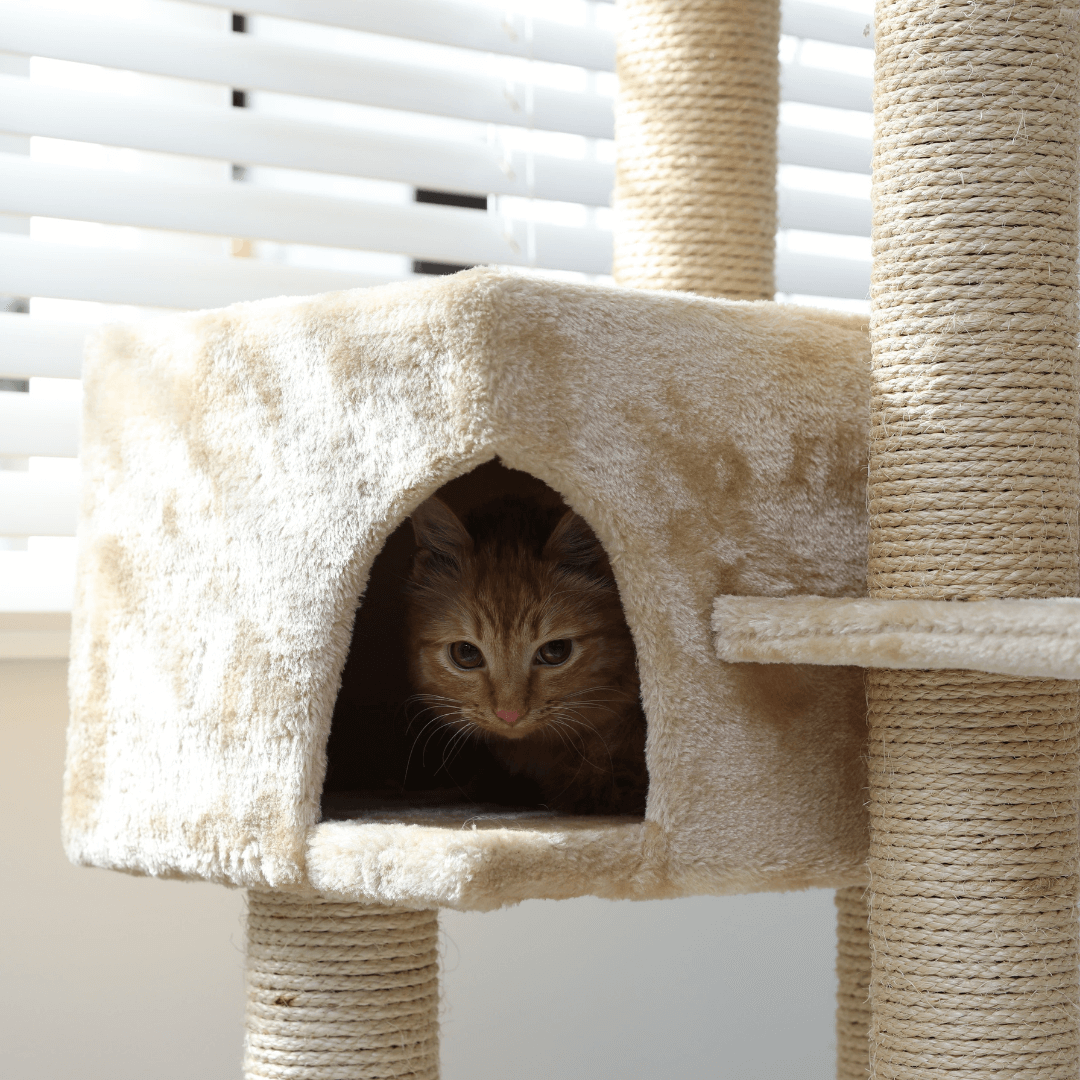
Scared cat hiding inside cat tree cubby

Scared cat hiding under duvet
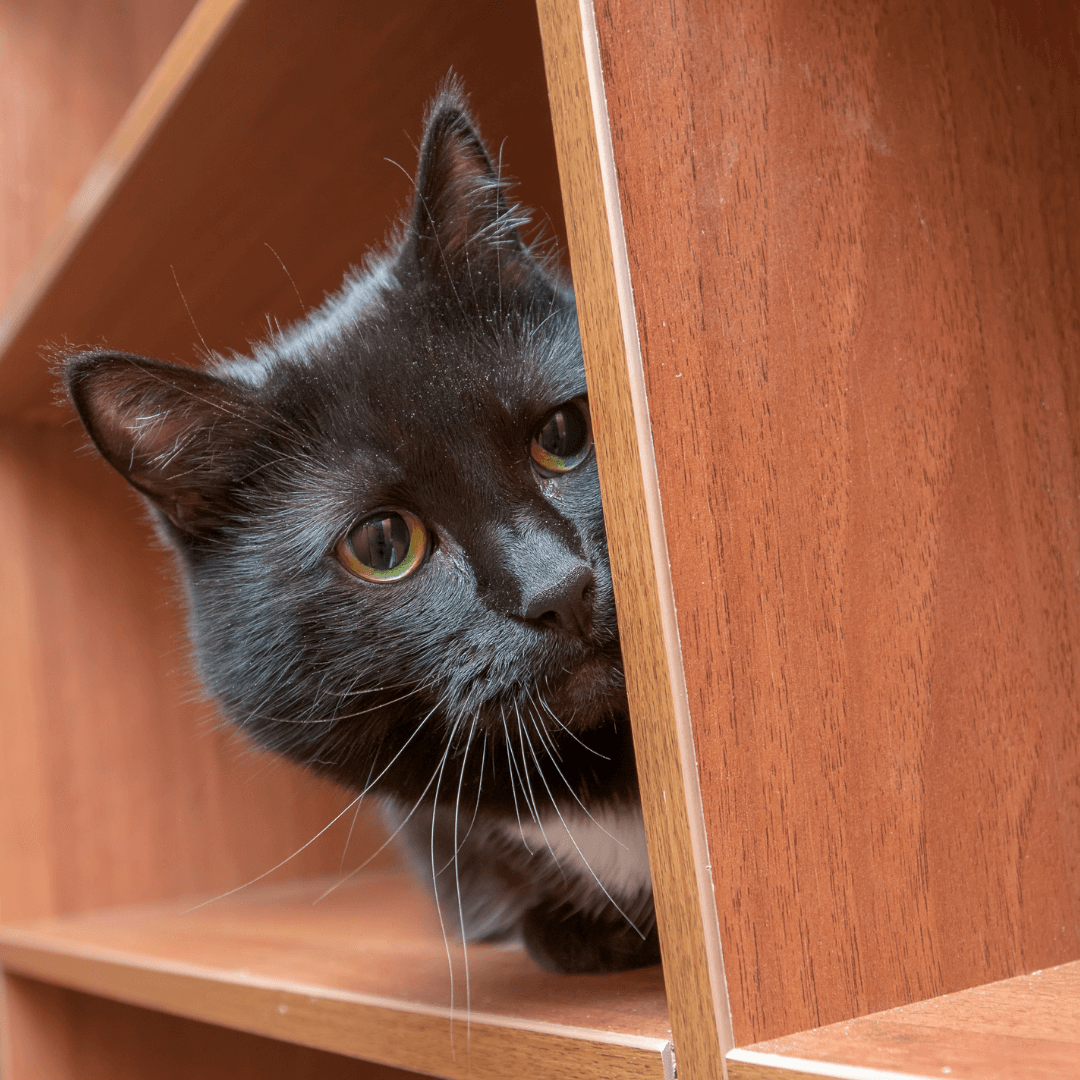
Scared cat hiding inside cubby
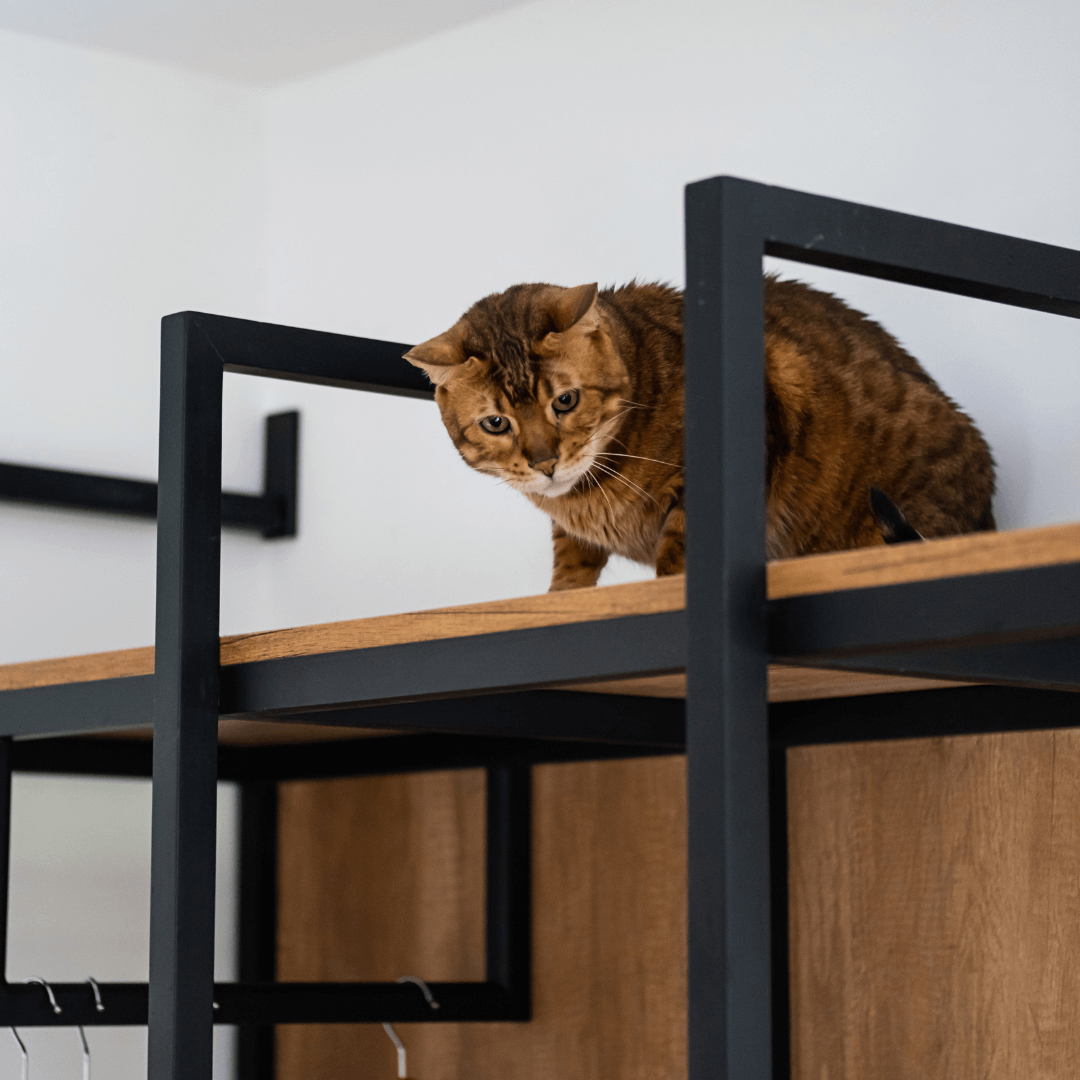
Scared cat on top of closet, creating distance from the stressor
What about at the vet clinic? Common hiding places for fearful cats during a vet visit:
In their carrier, too scared to come out. This includes burrowing under their carrier bedding to hide even more
In the sink
Behind the computer monitor
In the cabinets
On top of the cabinets
Under a chair or bench
Behind you if you’re sitting down
Inside their litterbox if they’re staying at the vet clinic
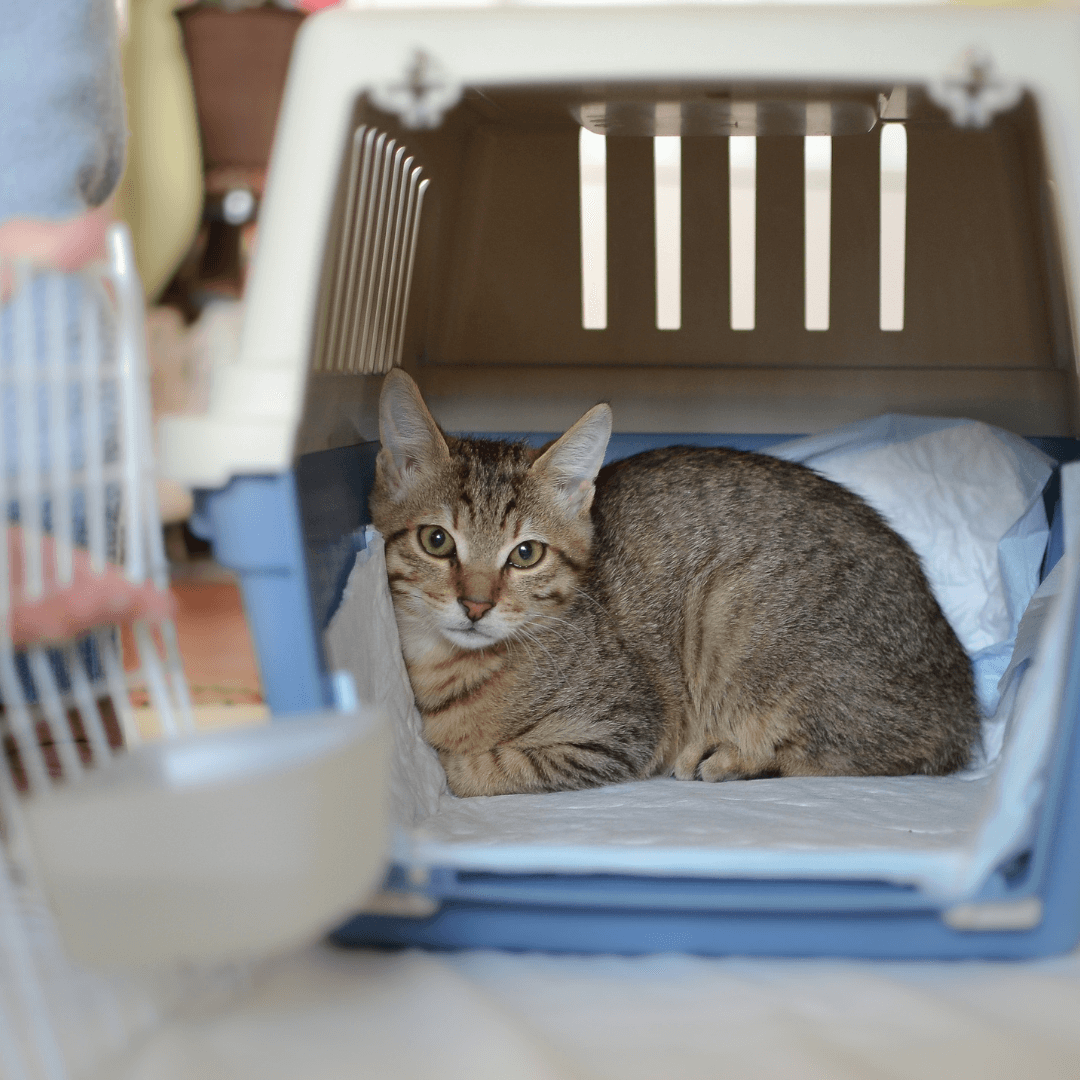
Scared cat at the vet clinic, too scared to leave the back of her carrier
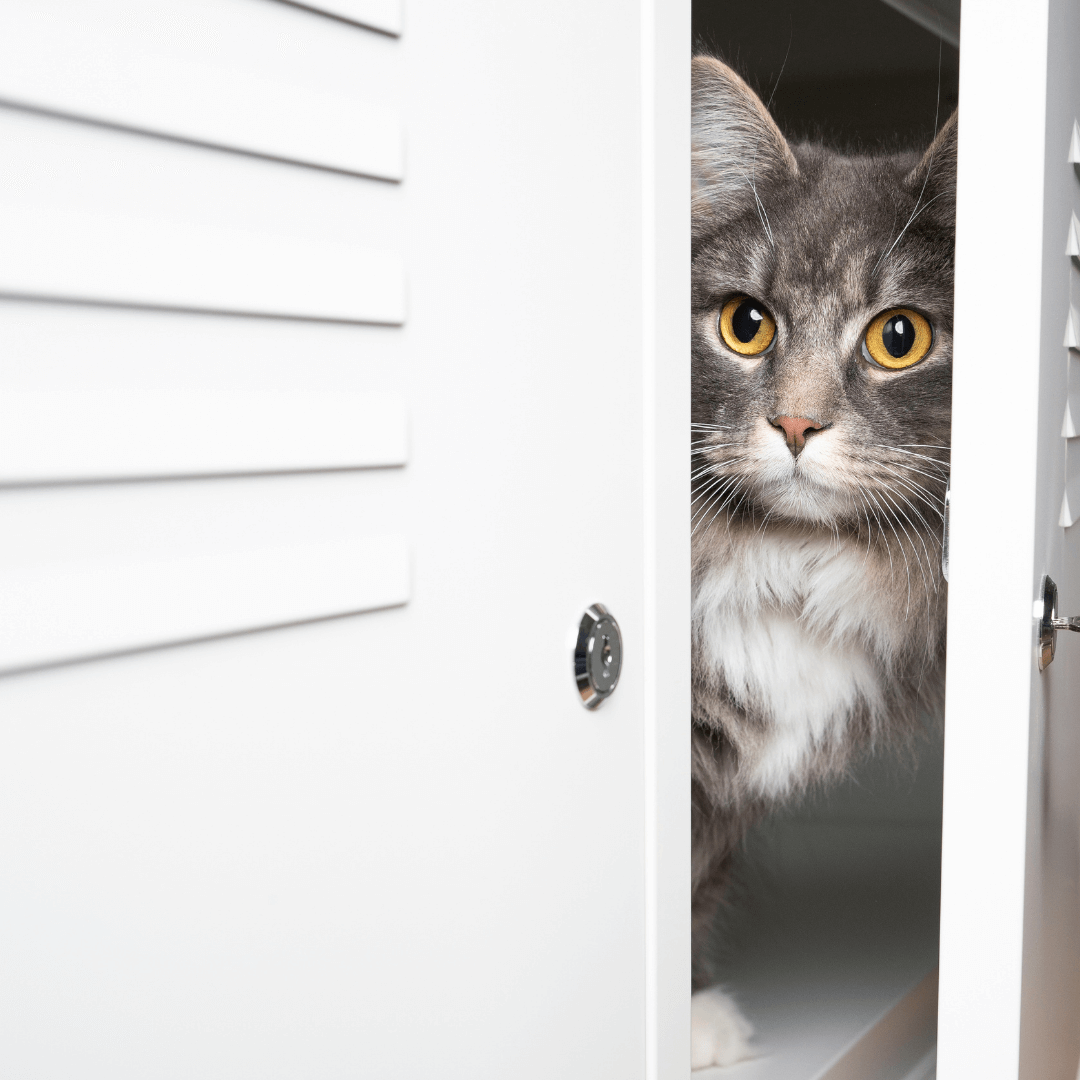
Scared cat at the vet clinic hiding in cabinet
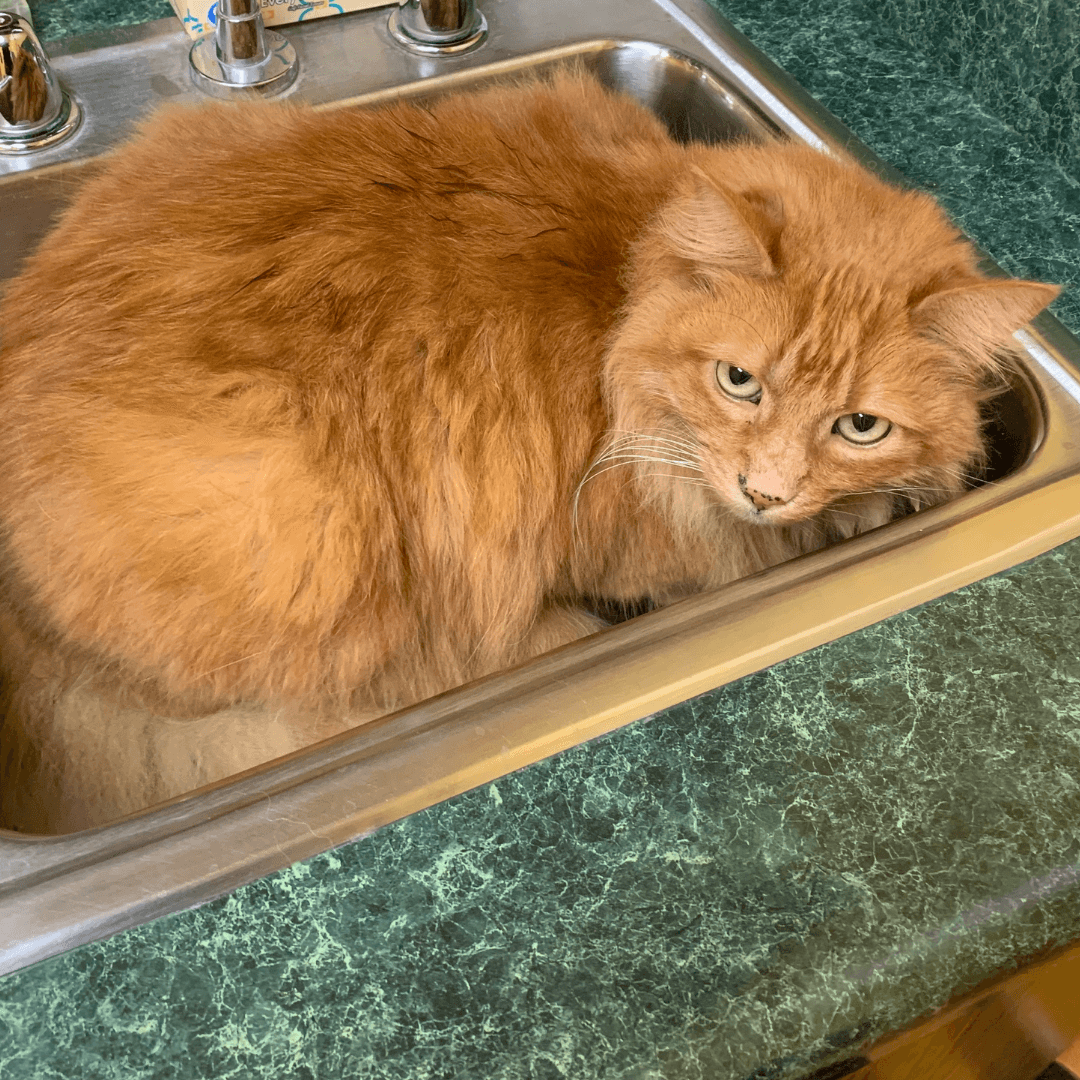
Scared cat at the vet clinic, trying to hide in the sink
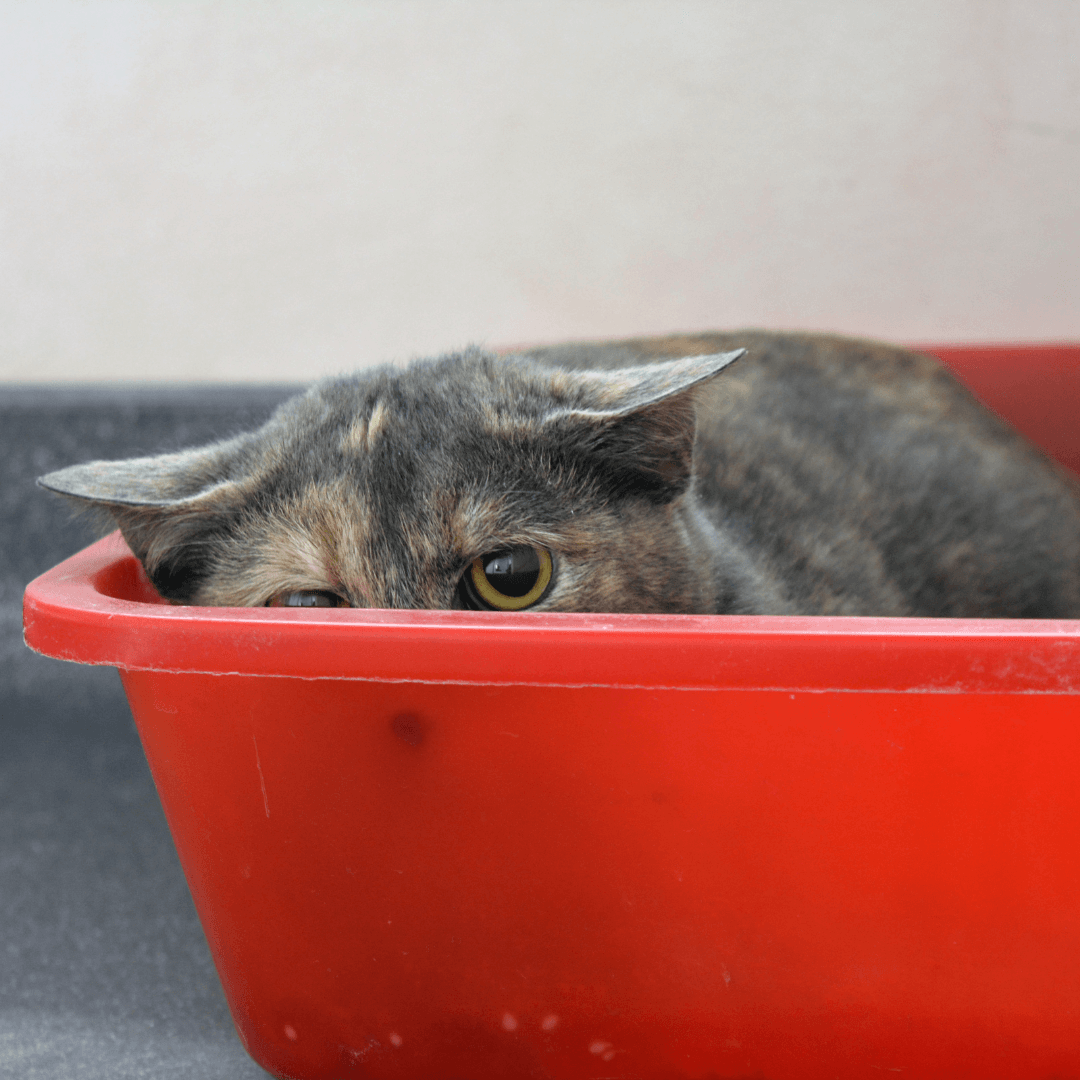
Very scared cat at the vet clinic trying to hide in her litterbox. Note other signs of fear including flattened ears, freezing, and dilated pupils.
When cats are scared, I usually see hiding in conjunction with freeze, which we’ll cover in the next section.
If you’re attempting to handle your cat and they’re showing active avoidance, it’s good to pause and change your approach or your goal. The more you attempt to restrain/ handle/ touch your cat, the more their FAS levels will increase and the more likely you are to see fear-based aggression.
Similarly, removing a cat from their hiding spot will have the same risks. Hiding is a stress coping mechanism for cats, and if you’re able to facilitate hiding you can help their fear/anxiety/stress (FAS) levels decrease. For example, one approach I commonly use with scared cats at the vet is removing the top of their carrier, covering them with Feliway-infused towel, and doing their exam with the cat in the bottom of their carrier. This allows them to stay in their safe space and feel hidden. If you’re bringing your cat to the vet, in addition to positive carrier training, covering their carrier w/ a blanket that you’ve pre-sprayed with Feliway 15-20 minutes in advance can reduce FAS while minimizing scary sights and sounds. Occasionally cats want to see out, so you can always move the blanket slightly to the side to give them the option to remain hidden or peek out.
Freeze
Freeze is when your cat is too scared to move, with tense muscles and a tense face. You may see freeze in your cat during storms or fireworks, when you’re vacuuming and your cat is under the bed, or when you’re driving your cat to the vet. You may also notice other body language of FAS including dilated pupils, staring, and a lowered head.
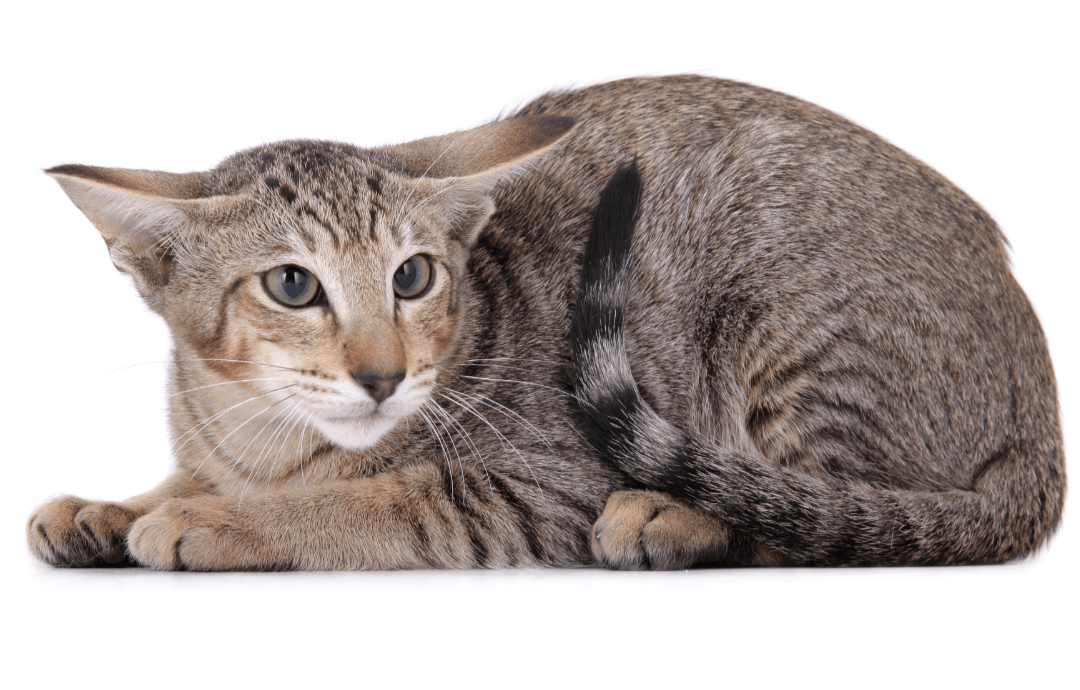
Scared cat showing a freeze stress response. Other signs of stress including flattened ears, hunched body posture, tail tucked closely to body, and dilated pupils.
All too often as a vet, I even see an extreme version of freezing called learned helplessness. This is a condition where in the face of a stressor (e.g., being at the vet), your cat doesn’t think anything they do will make a difference so they give up and make no attempts to escape. They’re not showing any normal catlike behaviors and are completely shut down emotionally.
I want to highlight learned helplessness in particular because I’ve heard vet professionals, groomers, and cat parents alike refer to these cats as “good”. Cats who go limp when having blood drawn, being bathed, or being placed in the carrier are not good. They are terrified. When it comes to protecting the emotional welfare of cats and ethics, we need to think beyond how easy it was to achieve one of our goals and consider what the cat is experiencing. The end does not justify the means.
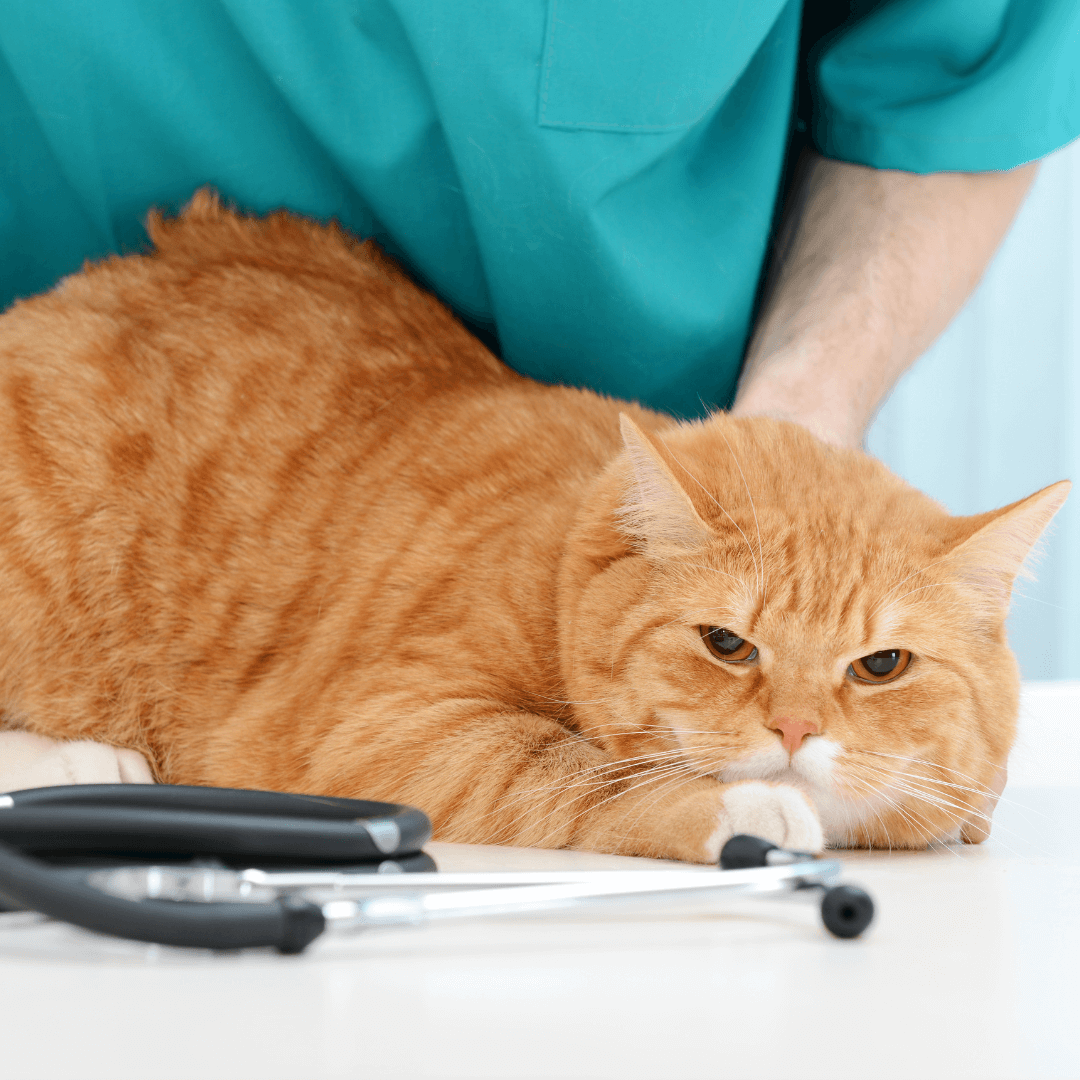
Scared cat with learned helplessness at the vet clinic, too fearful to move
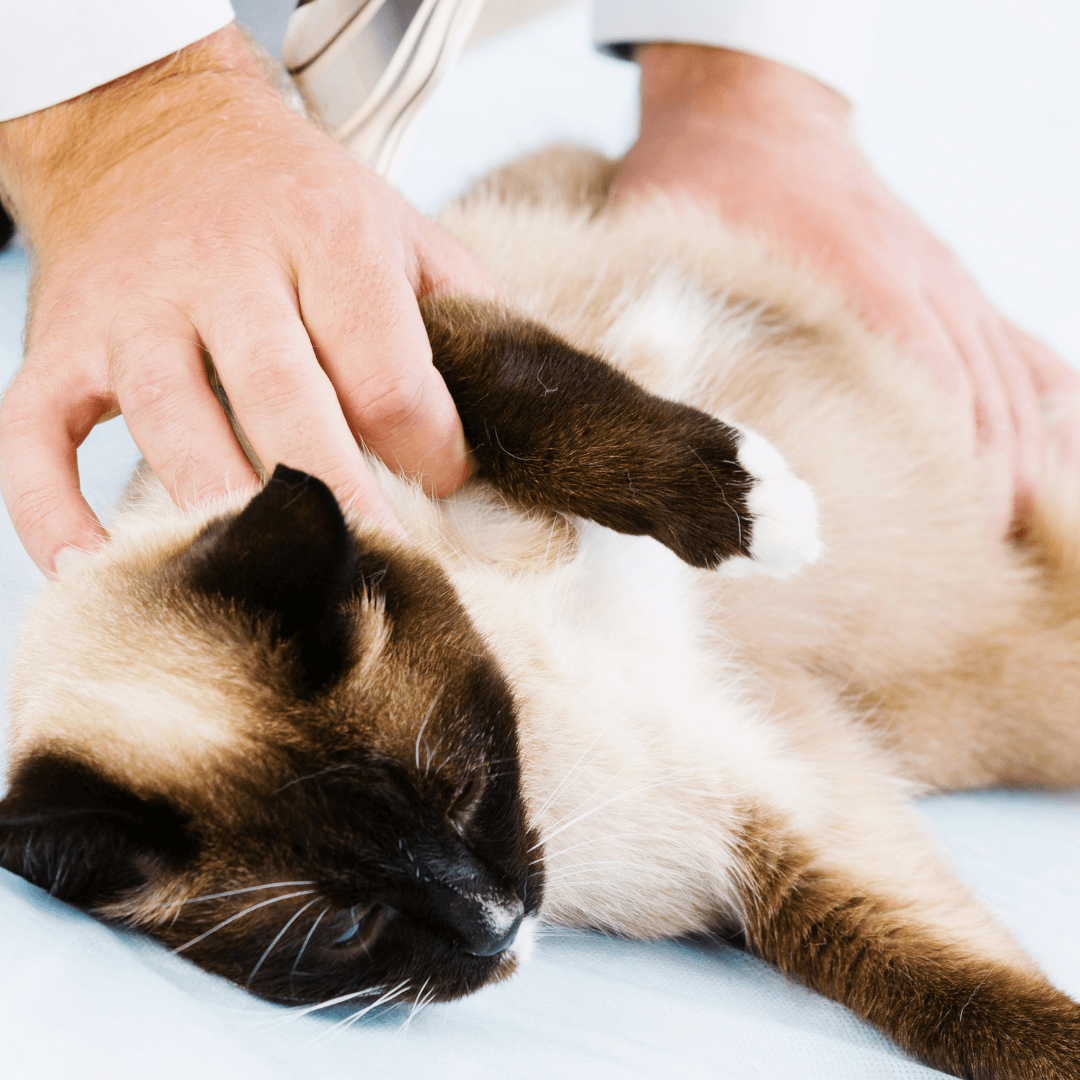
Scared cat showing learned helplessness at the vet clinic during her exam
Fidget
This is a sign of feline fear, anxiety, and stress that may be the most unfamiliar to cat parents and vet professionals. Fidget can have several different presentations in cats.
Hyperactivity and restlessness, as if someone pressed the fast forward button on your cat’s normal behavior. At the vet clinic, I see fidget in cats who are pacing on the floor one moment, then the next moment they’re on the exam table, then jumping down a moment later. They’re ramped up and can’t settle.
Hypervigilance, a state of high alert and arousal where your cat is hyperattuned to and hyperfixated on the slightest noise or movement. At a housecall earlier this year, I had a hypervigilant feline patient startle and flee when I used my fingertips to lightly separate the layers of a plastic bag. I’ve had other hypervigilant patients run away when I stood up slowly from a sitting position.
Displacement behaviors. These are behaviors that a cat shows when they’re feeling internal conflict or frustration. The ones I see most often in cats are:
Sudden grooming, when your cat abruptly stops what they’re doing and starts grooming themselves. If you have two cats who don’t get along, you may see this during or after an altercation.
Lip licking, where your cat’s tongue darts out briefly to lick their lip. This often only happens in a brief second so if you’re not making an effort to observe your cat or your patient, you’ll miss it.

Scared cat in a state of hypervigilance
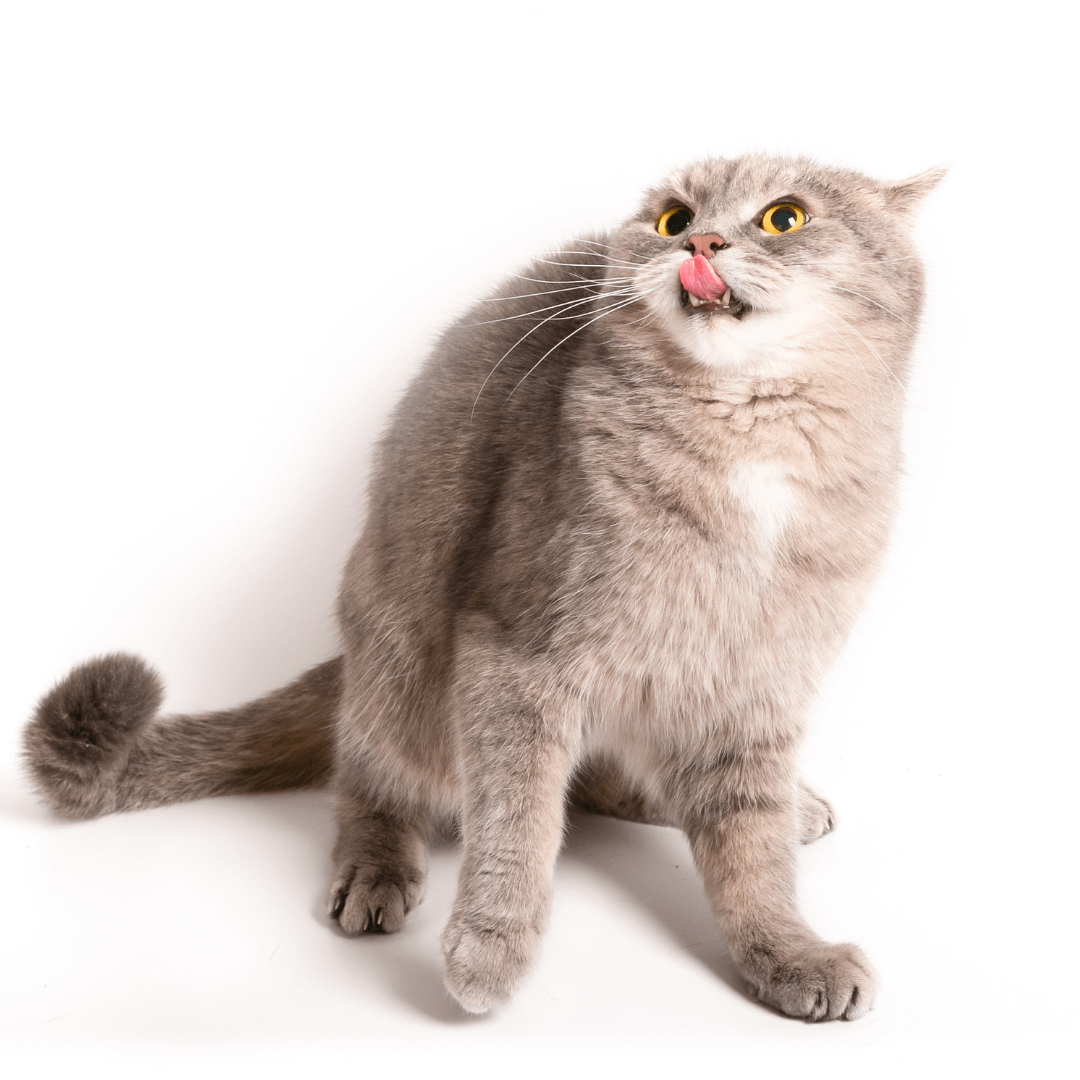
Scared cat showing flight (leaning back) and fidget (lip licking) stress responses
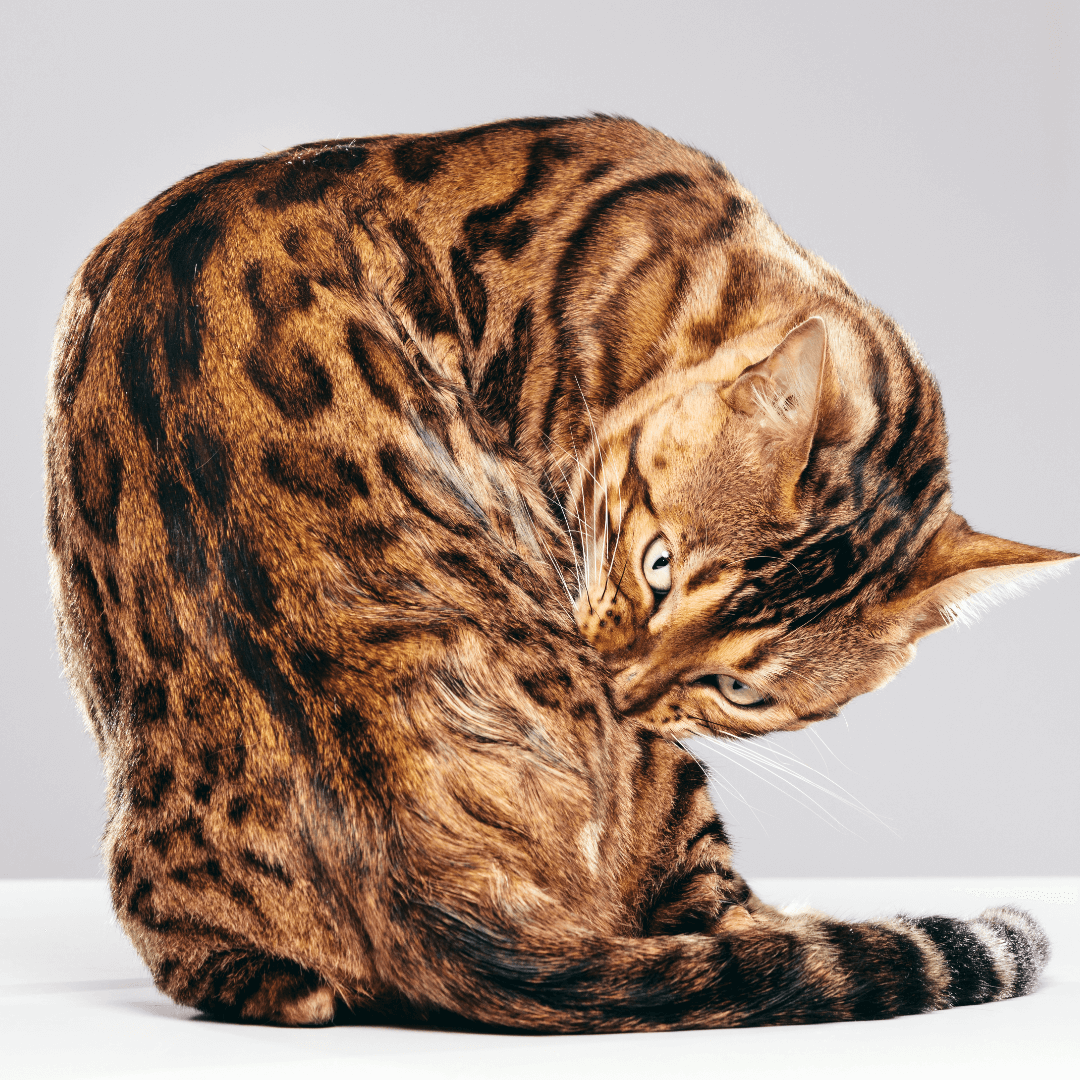
Stressed cat showing sudden grooming, a displacement behavior
More resources on cat body language
Ready to dive deeper into the body language of felines? Here are some more resources to get you started on the journey to cat communication.
Kitty Language by Lili Chin. I love this book! I recommend it to all of my housecall clients. It’s perfectly illustrated to capture cat expressions, and fun to read for all ages. Lili Chin has also created some of my other favorite cat body language resources that I share with clients during their initial cat behavior housecall, such as this Body Language of Feline Anxiety handout from CattleDog Publishing or Cat Language. For dog parents or vet or pet professionals who work with dogs, I recommend her companion book to Kitty Language, Doggie Language.
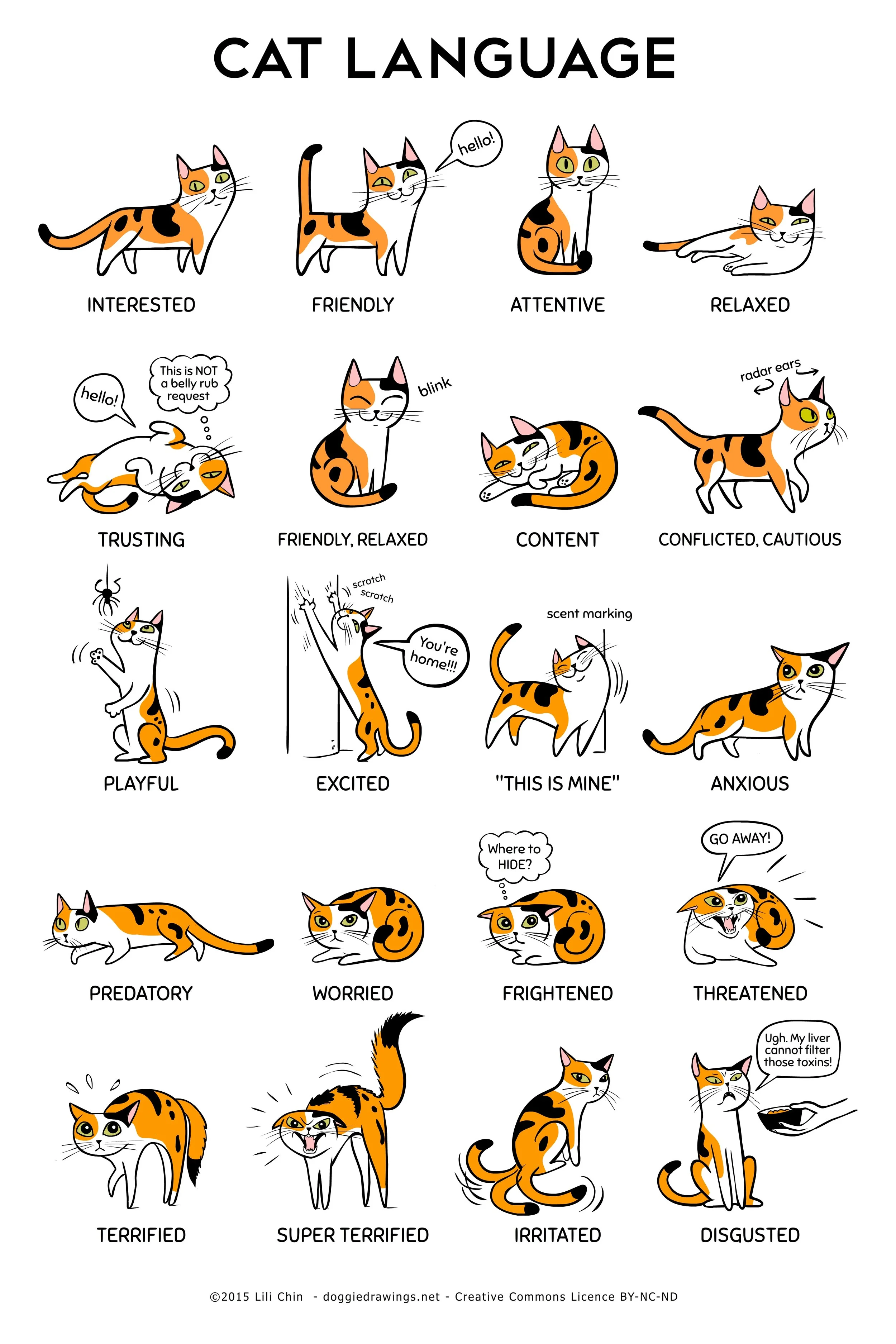
Another wonderfully illustrated resource by Lili Chin
Fear Free Cat Body Language 101 video and Fear Free Spectrum of Feline Fear, Anxiety, and Stress. More resources illustrated by Lili Chin! As a Cat Friendly Veterinarian and Fear Free Certified Professional, my medical records always include a fear, anxiety, and stress rating for each feline patient according to the FAS scale, as well as a description of their behavior during the visit.
Documenting a cat’s behavior is just as vital as information about their skin health, mobility, and other aspects of their health. It also helps me monitor a patient’s emotional health over subsequent housecalls. As you can see on the guide, cats showing aggression are at the highest levels of FAS.
How to Read a Cat’s Body Language by Alison Gerken, DVM, DACVB. Written by a veterinary behaviorist (a veterinarian who has received advanced specialization and board certification in behavior), Dr. Gerken outlines feline body language and what your cat’s eyes, ears, and tail could be expressing.
Cat Communication by iCatCare. As I’ve mentioned in the cat behavior and cat health resources section of my site, I’m a huge fan of the cat parent information on iCatCare. Their resource approaches feline communication from the perspective of each of the different senses, including a discussion of cat pheromones.
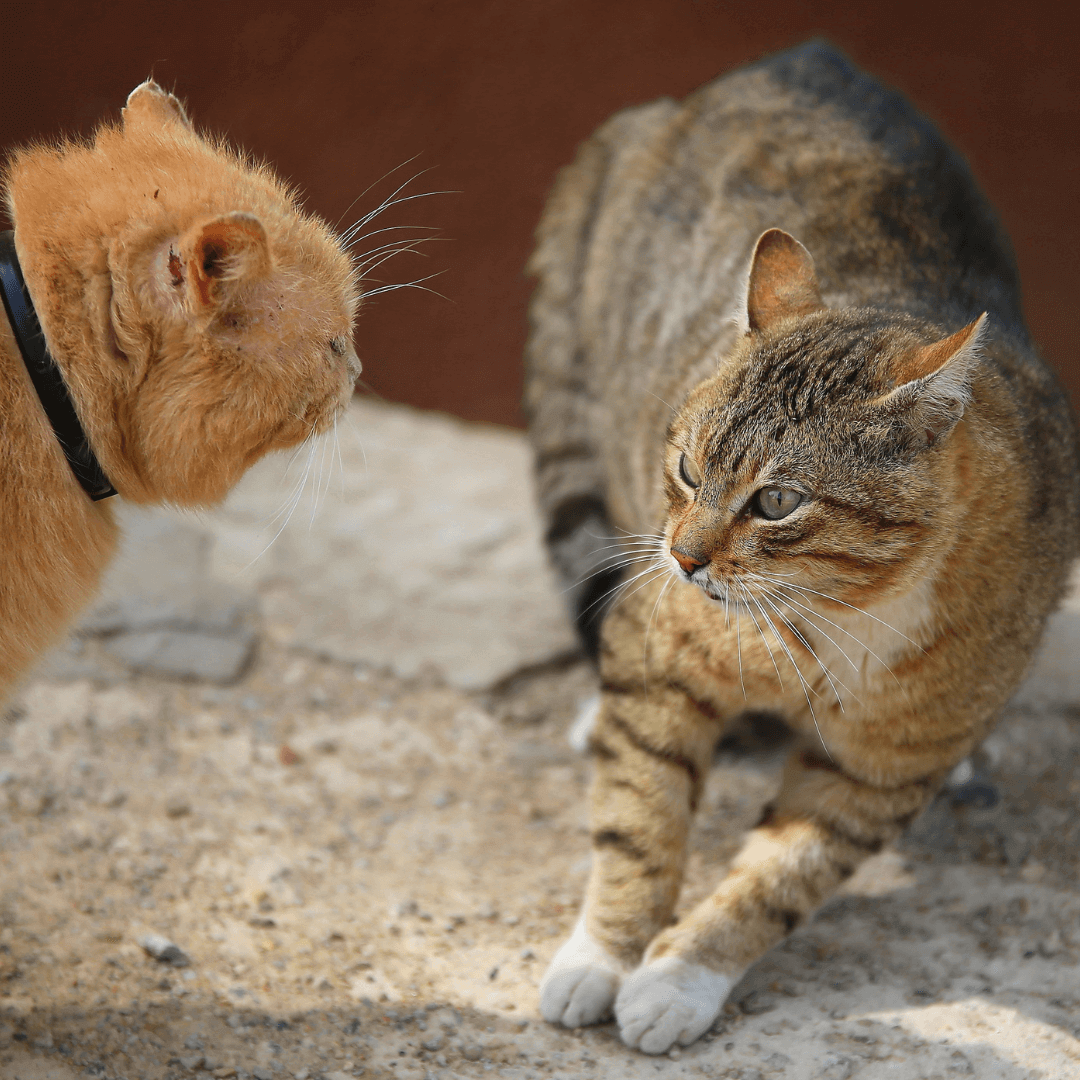
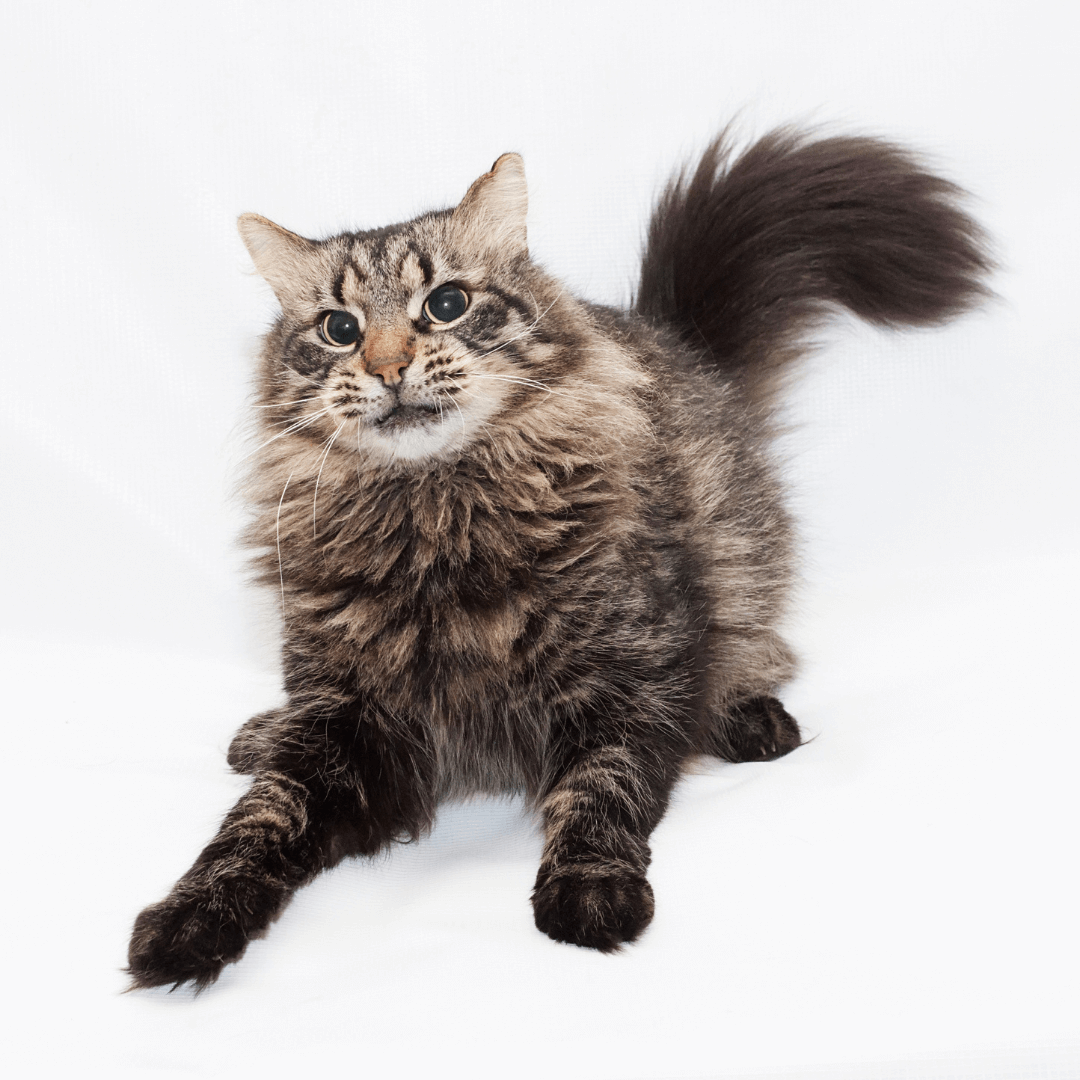
Which F of stress is this tabby cat showing?
Hope you enjoyed this blog!
To learn more about the emotional health of cats, follow My Family Cat on Instagram and Facebook. For cat parents in the Austin TX area struggling with a behavior concern or who simply want general behavioral coaching for their cat, check out our veterinary behavior services and book an initial cat behavior consultation today!