
Stress Matters—the Emotional Toll of Feline Vet Visits
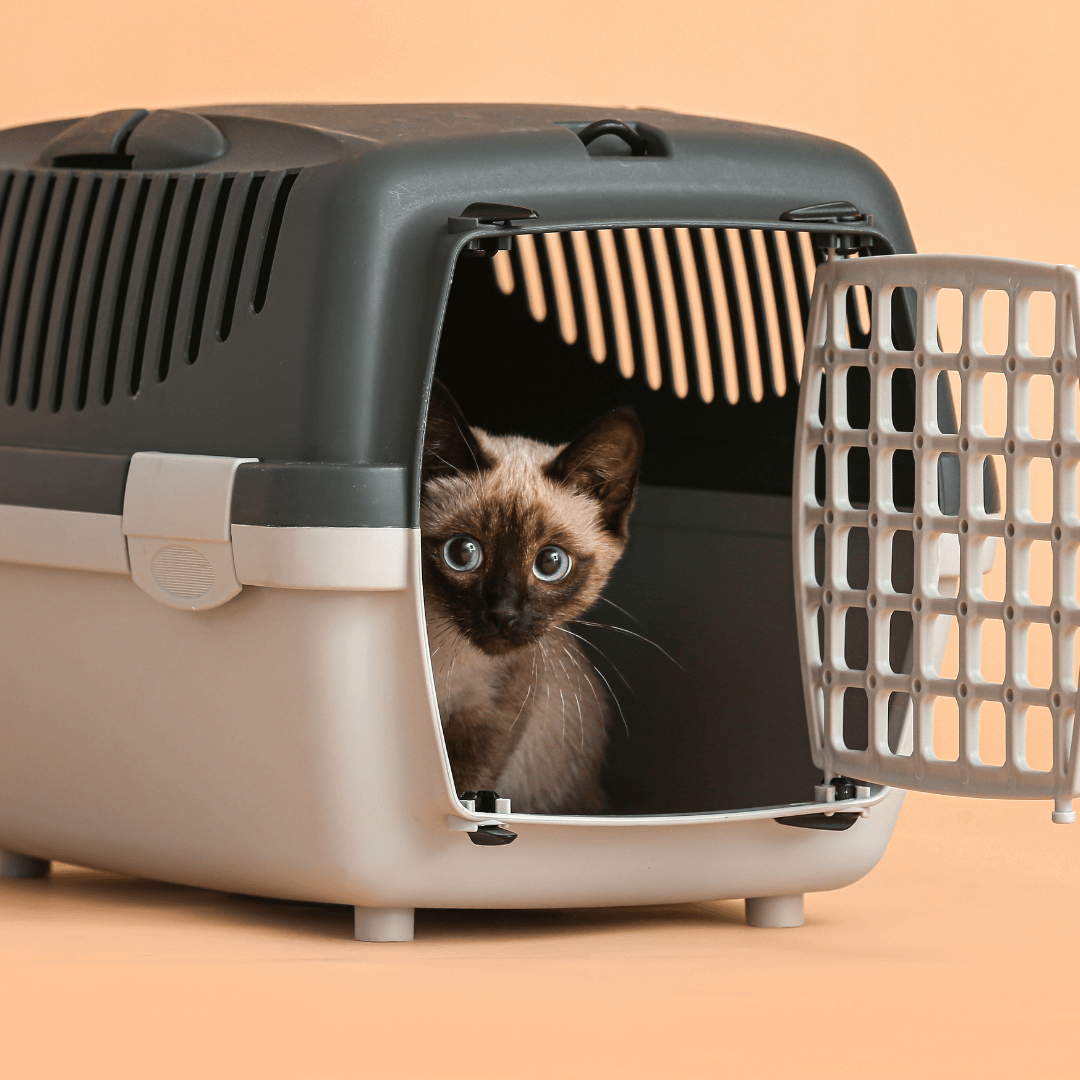
Do you have to whisper the word “vet” at home in case your cat overhears and disappears for 3 days? Do you need to engage in CIA-level subterfuge to get them into their carrier? You’re not alone! As a house call vet who also routinely sees feline patients in the clinic as well, I can tell you that a lot of cats are scared of going to the vet. Like a lot. And even cats who aren’t that stressed at the vet overall will often show transient signs of stress during their visit through their subtle and not-so-subtle body language cues. So what’s the big deal if they feel a little fear, frustration, anxiety, or stress? As long as you get the exam/ vaccines/ (X service) done, does it really matter?
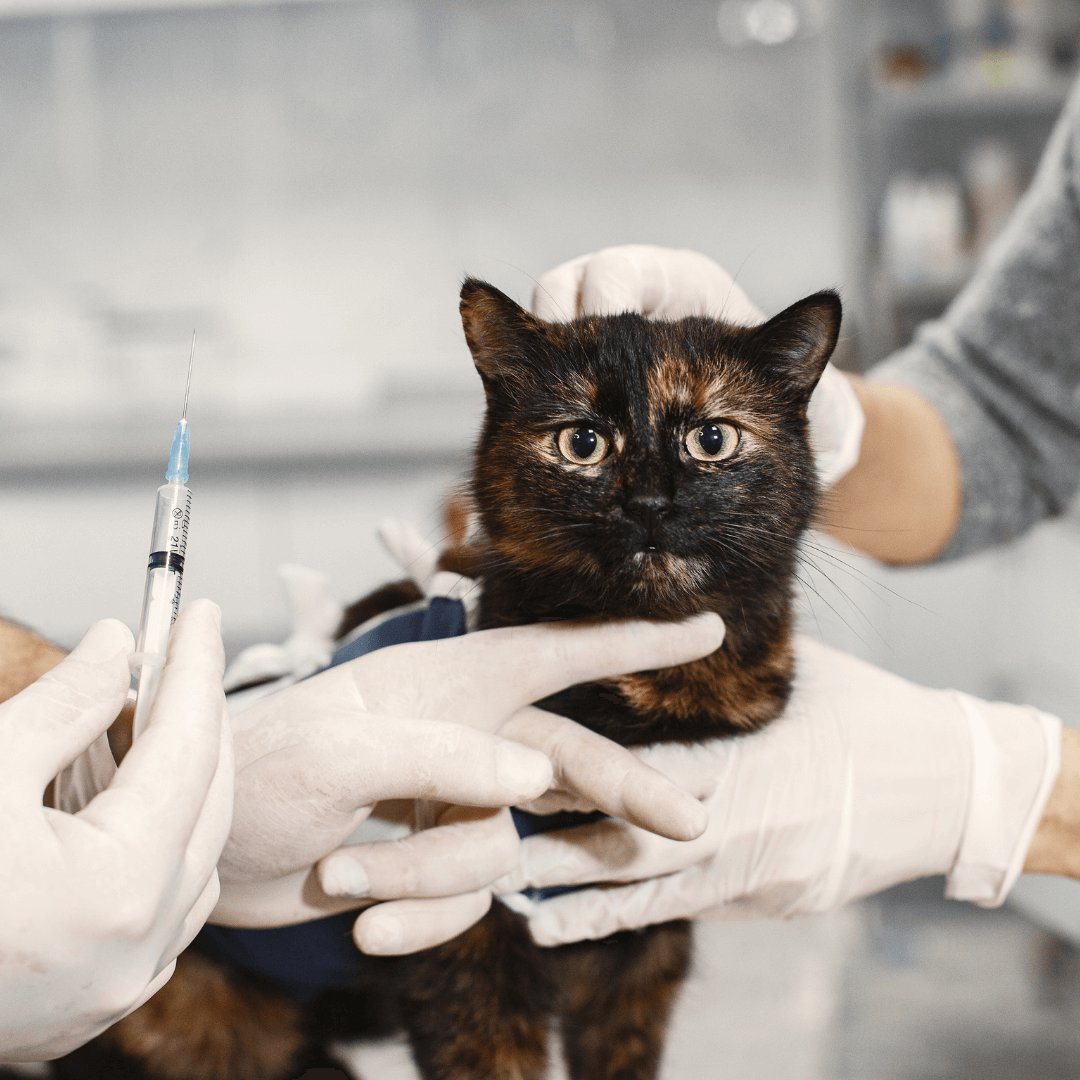
Cat showing signs of stress during vaccination including dilated pupils and a furrowed brow
I’ve had numerous vet professionals and pet parents tell me matter-of-factly that their kid acted exactly the same way at the pediatrician, screaming and crying, but they just held them down and got the shots done and when it was over they were perfectly fine. But were they? Some of them became adults who were so traumatized by those early immunization experiences that they’re needle-phobic to this day, adding another challenge when we discuss why their newly diagnosed diabetic pet needs to start insulin injections.
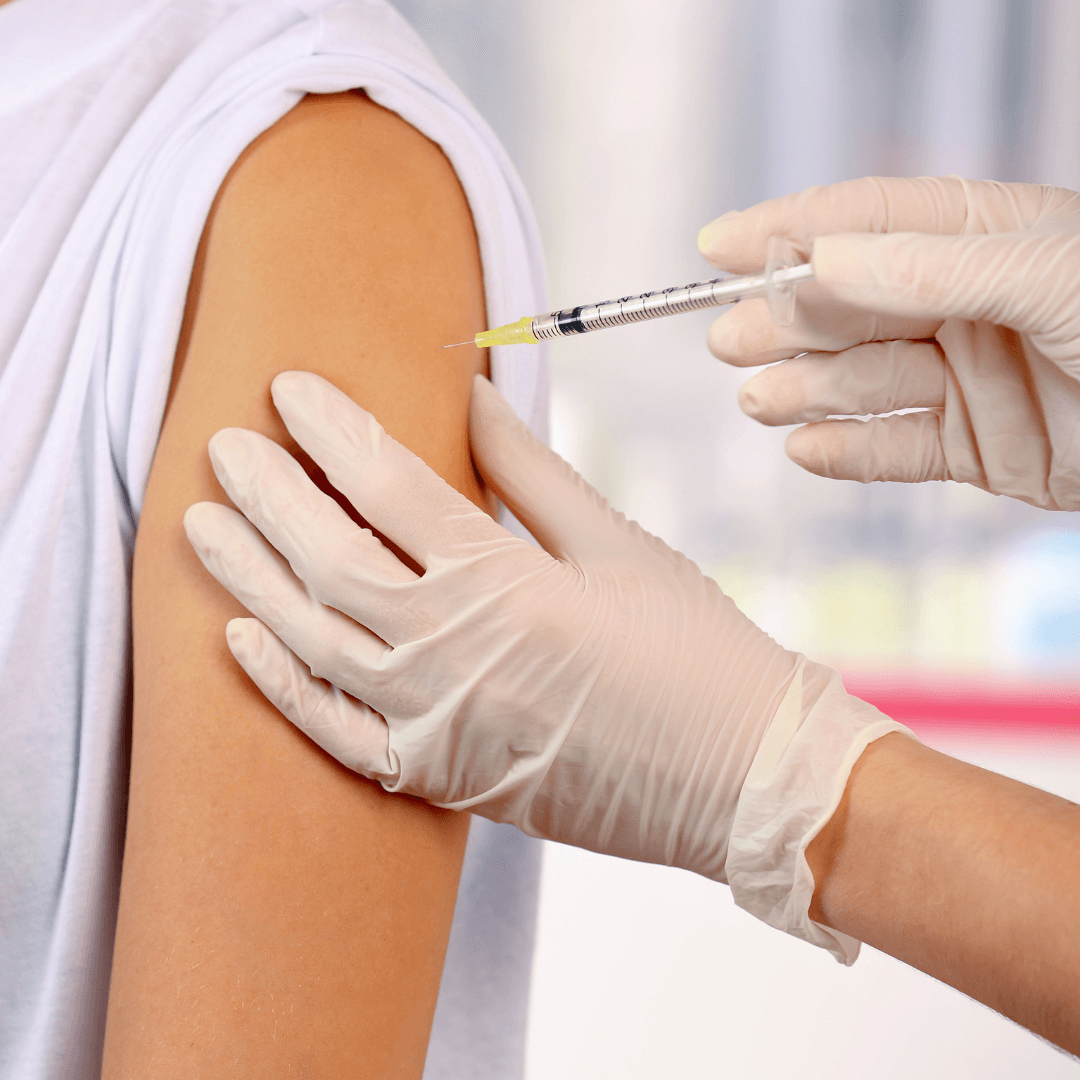
324 allergy injections and counting
And as someone who’s been gritting their teeth through three allergy shots a month for the past nine years (324 injections and counting!), I can tell you that it’s not always fine. It’s uncomfortable. It’s painful. My heart starts pounding as soon as the nurse calls me back and I see the syringes with their thick, amber liquid sitting on the counter waiting for me. I dig my nails into my palm while she’s injecting to distract myself from the seemingly minutes (actually seconds) it takes for her to give each injection into my upper arms. So why do I keep doing it? Because my allergies have improved by 90% since starting immunotherapy, and I can actually breathe through my nostrils during cedar season.
Cats don’t have that same awareness, even though they all need veterinary care. They don’t know why they need a rabies vaccine, or why a giant stranger is palpating their sensitive abdomen, or that they have chronic kidney disease that necessitates regular monitoring with blood pressure checks, bloodwork, and urine testing. They’re often dismissed as “spicy”, the f-word (“fractious”), “stubborn”, or “just being a baby” when it’s completely normal for a terrified cat to jump away from a needle, hiss, growl, swat, or try to bite at the vet. Thinking about what your cat is experiencing at the clinic, and what level of comprehension they have with what’s happening, will help you understand part of the impetus for this blog.
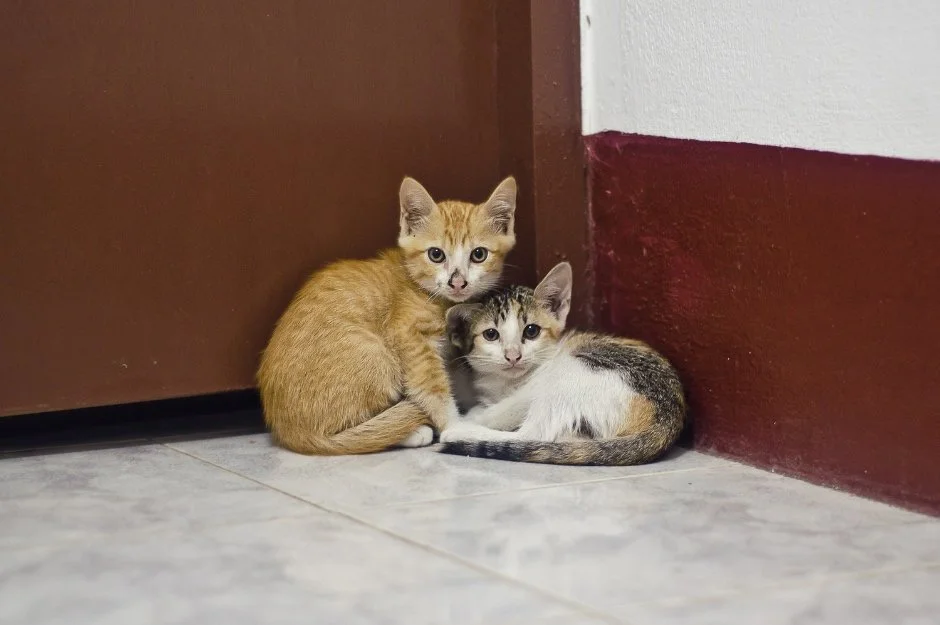
Kittens showing fear at the vet, with dilated pupils and frozen body posture
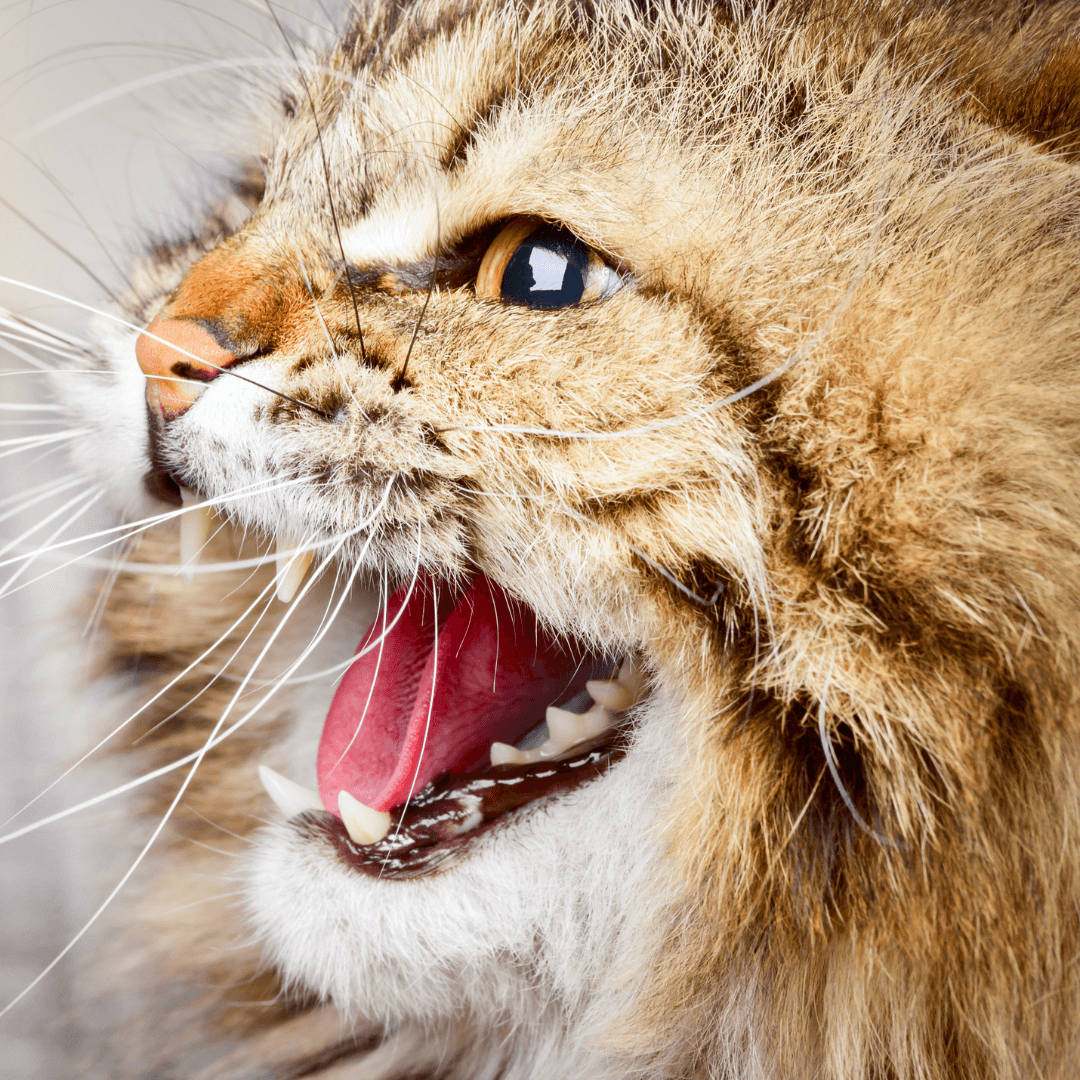
Fear-based aggression can look like hissing, growling, swatting, trying to bite
From your cat’s human family members to every single veterinary staff member who participates in your cat’s visit, we all have an ethical imperative to minimize fear and stress in whatever way we can. That means collaborating as a team to identify when your cat is stressed, discuss possible individualized solutions, and put these solutions into play. Simply put, this is a welfare issue for your cat, and we all need to work together on behalf of their emotional health.
Beyond ethics, there are other reasons for reducing stress for your cat during vet visits. In 2011, the Journal of the American Veterinary Medical Association released their Bayer veterinary usage study that surveyed roughly 2200 cat and dog owners. 58% of the cat parents surveyed reported that their cat “hates going to the vet” (compared to 38% of dog parents), and 38% of cat parents said “just thinking about [going to the vet] is stressful” (vs. 26% of dog parents). I can totally relate! My now 17 year old cat Puff has always been scared of the vet, and even though he goes to a clinic with an ultra compassionate staff, I still feel some anxiety and stress leading up to his appointment.
The danger when both cats and their caregivers find it too stressful to go to the vet is that routine and urgent veterinary care can get delayed, resulting in missed diagnoses or an illness (and thereby its prognosis) worsening. In the same survey, 41% of cat parents stated they wouldn’t take their cat to the vet if vaccines weren’t needed (vs. 33% of dog parents), and 39% reported they would only take their cat to the vet if their cat was sick (vs. 24% of dog parents).
As much as Puff would love to avoid going to the vet, proactive vet visits have improved his quality of life in innumerable ways, from alleviating oral pain through dental extractions to senior labwork to screen for medical causes for his increased appetite to an internist consult to discuss how to improve his comfort from his chronic feline idiopathic cystitis. Minimizing Puff’s stress at the vet has allowed him to have better medical care because the vet staff can actually do things with him, including an exam, sample collection, and imaging.
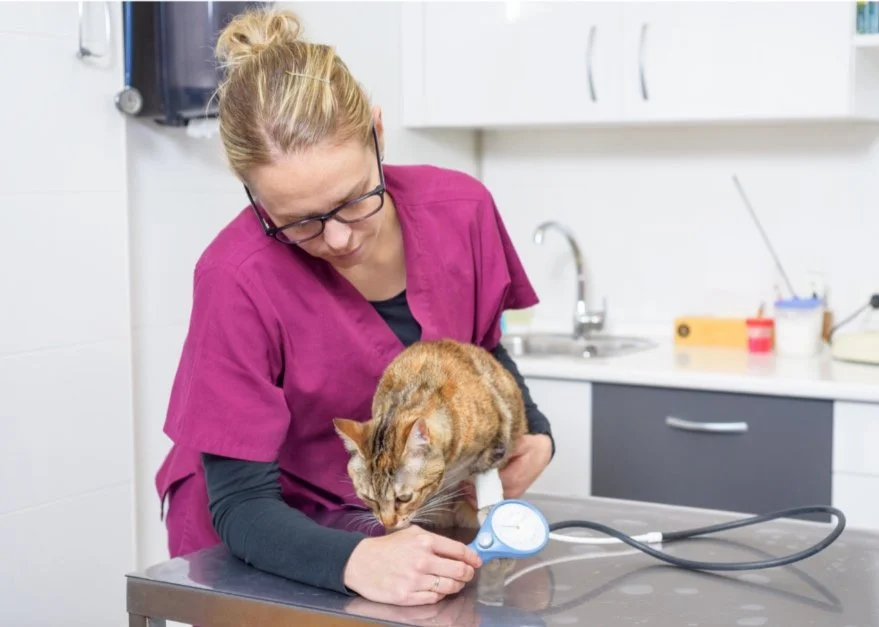
Feline Doppler blood pressure measurement
Along those same lines, cats with lower stress levels can have more accurate medical assessments. A 2017 study in the Journal of Feline Medicine and Surgery centering on a group of 30 cats found that compared to readings at home, cats in the vet clinic had significantly higher Doppler blood pressures, heart rates, and respiratory rates. When might your cat need a blood pressure check? As part of a semiannual senior wellness screening starting at age 10, when they have chronic diseases such as kidney disease, heart disease, or hyperthyroidism that can lead to secondary hypertension, and when your cat is exhibiting other changes such as sudden blindness or howling at night. Unfortunately, I see so many stressed and scared cats at the vet that it’s often very difficult for me to truly tell whether a high blood pressure number is real.
Hopefully you’re starting to understand why it’s important for all cat parents to consider the impact of veterinary stress on felines. I encourage you to even take the next step for your kitty’s emotional health and search for a Cat Friendly Practice or a Fear Free Certified Practice. Both types of certifications require vet clinics to complete a multipronged process designed to minimize stress for their patients via a calming environment and more compassionate patient handling, leading to better care. A 2023 study in the Journal of Feline Medicine and Surgery found that compared to non-Cat Friendly Practices, CFPs proportionately had more feline clinical visits per year and had a significantly greater percentage of feline patients who underwent diagnostics. CFPs also had lower workers comp claims, highlighting the safety benefits–when cats are scared, anxious, and stressed, they’re more likely to escalate to aggression. (Disclosure: I’m a volunteer on the Cat Friendly Practice committee).
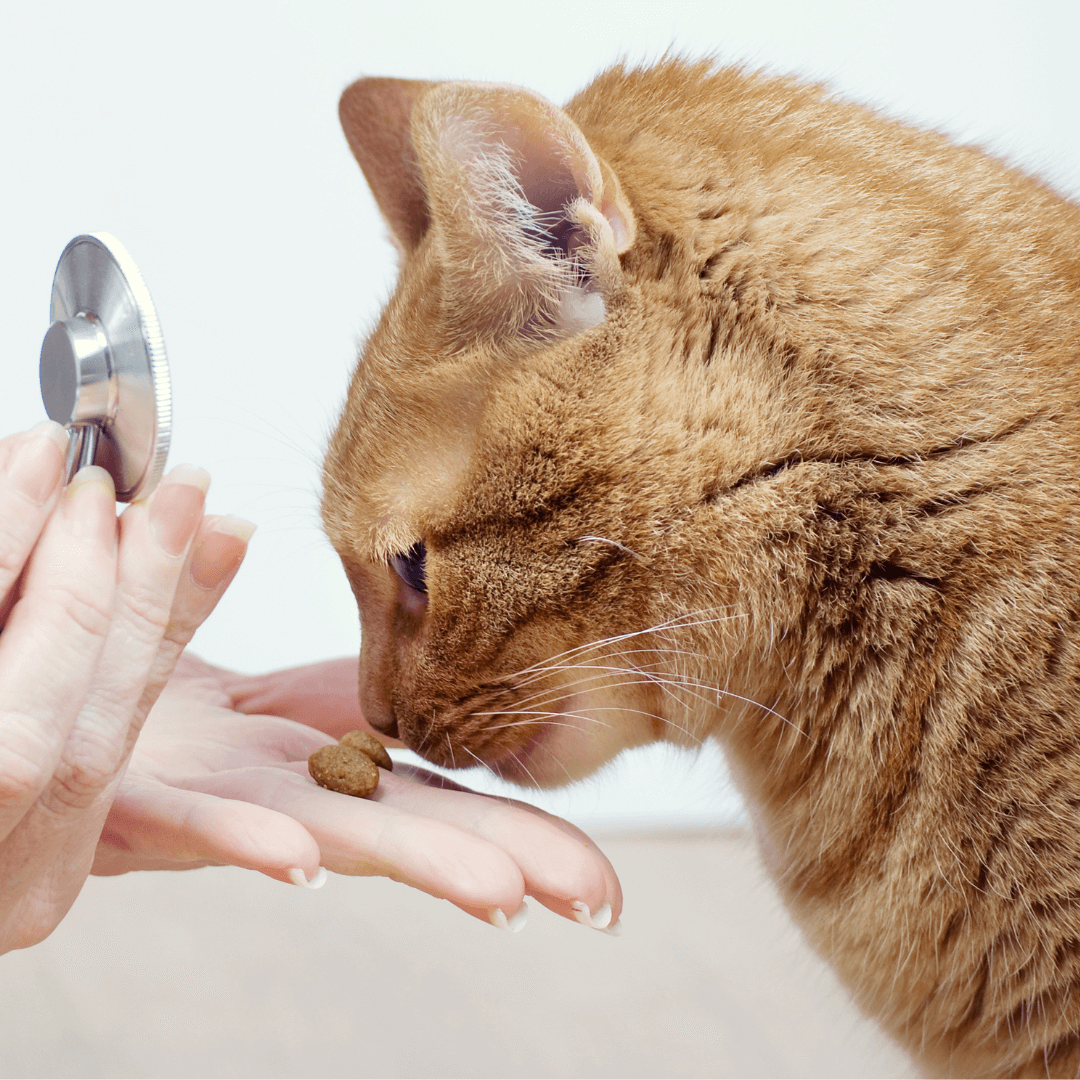
Vet professionals can use treats and a gentle approach to help lower stress for their feline patients
If you live in an area where certified practices are not available, search for certified veterinarians and vet staff members because vet professionals can undergo individual certification through both programs. This type of training matters–to the vet team member, to the cat parent, and most of all to the cat.
For more help with your cat’s fear of the vet, book a veterinary house call with us in the Austin area and stay tuned for an upcoming blog on our top tips for reducing stress!