
Cat Behavior Consultant Case Study: M’s Housesoiling Story!
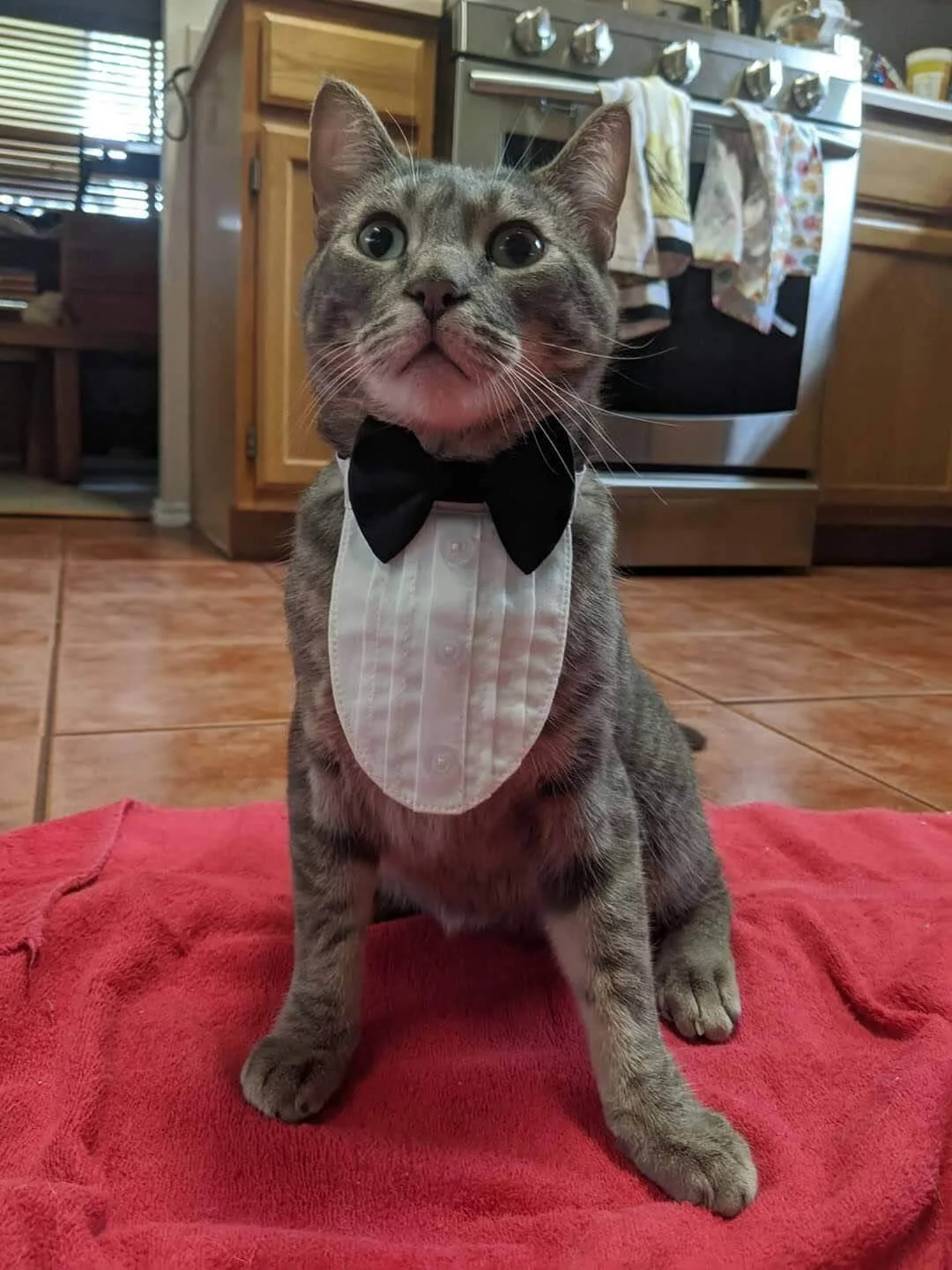
No autographs, please
M’s behavioral and medical history
M is a 7 year old neutered male, grey tabby cutie I saw for a housecall cat behavior consult for concerns about peeing outside the litterbox. He's part of a large multicat household, and in addition to his housesoiling concerns he was also routinely trying to bust into the microchip-activated auto feeders of his feline housemates. When I reviewed his behavior history form and medical records, I learned that M has cerebellar hypoplasia (a.k.a. wobbly cat syndrome), a condition that can result from feline panleukopenia viral infection in the womb late in gestation or shortly after being born. Cats with cerebellar hypoplasia have clinical signs of balance problems and ataxia (moving like they’re drunk), but these signs are not progressive and cats with CH can lead perfectly normal lives otherwise with some adaptations. M’s cat dad noted that he was the smartest cat in the house who loved snuggling with his cat parents.
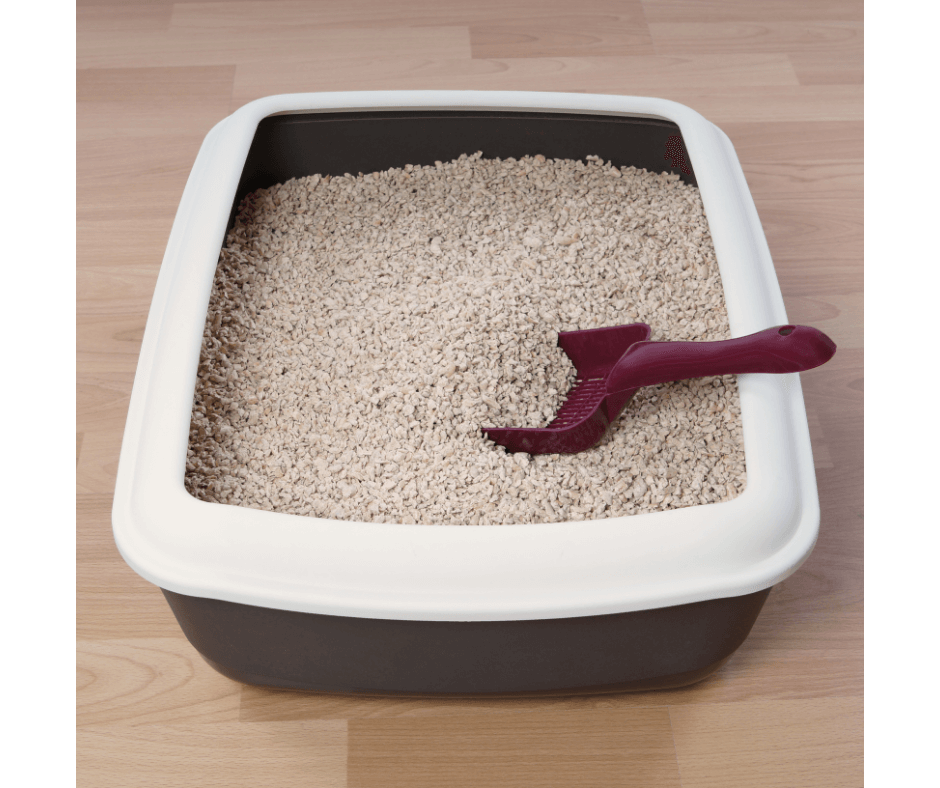
Due to his CH, M always had some degree of incoordination around the litterboxes and resulting unintentional housesoiling that was accepted by his cat parents. However, his balance issues seemed to have gotten worse over the preceding year by about 10-15% from his baseline, which was concerning. The nature of his housesoiling also changed because M’s cat parents thought it had become more intentional. The incidents seemed to coincide with one of M’s senior housemates peeing outside the litterbox in the kitchen.
A litterbox was added to the kitchen and eventually moved a few feet away to the backdoor, and while this had become the favorite litterbox for all the cats, M’s cat parents were continuing to find urine next to the box. Via the detailed, pre-consult behavioral questionnaire, I learned that M’s urinary housesoiling was toileting (depositing large volumes of urine on horizontal surfaces, as if he were emptying his bladder) rather than urine marking (which is typically small volumes of urine on vertical surfaces, usually on prominent locations like near doors or windows).

Cat in typical toileting posture while urinating—squatting low and leaving urine on a horizontal surface

Cat in typical urine marking posture—tail up high, standing, spraying urine against a vertical surface
In addition, M’s cat parents described his housesoiling as severe, but wanted to do as much as possible to keep him in their home. Perceived severity is an important question because there’s quite a range in how someone might respond to their cat’s behavior concern, and it helps give me a sense for how much emotional and physical capacity the cat parent may have to try to address the behavior. I find as well that two partners/ spouses may rate the concern differently. Some clients reach the point where their cat’s behavior is so severe they’re considering rehoming or euthanasia. This is not a position that anyone takes lightly, and I think it’s important to maintain compassion not only for the feline but for the humans in the home when they are struggling with their cat’s behavior.
M’s cat parents had tried a number of solutions to try to fix the housesoiling. I was happy to see that M had first seen his veterinarian. Whenever any cat has a change in behavior, the first step should be making an appointment with a vet to ensure there isn’t an underlying medical issue, and over a few trips to the clinic that included unremarkable bloodwork and urine testing, his housesoiling was attributed to behavioral cause.
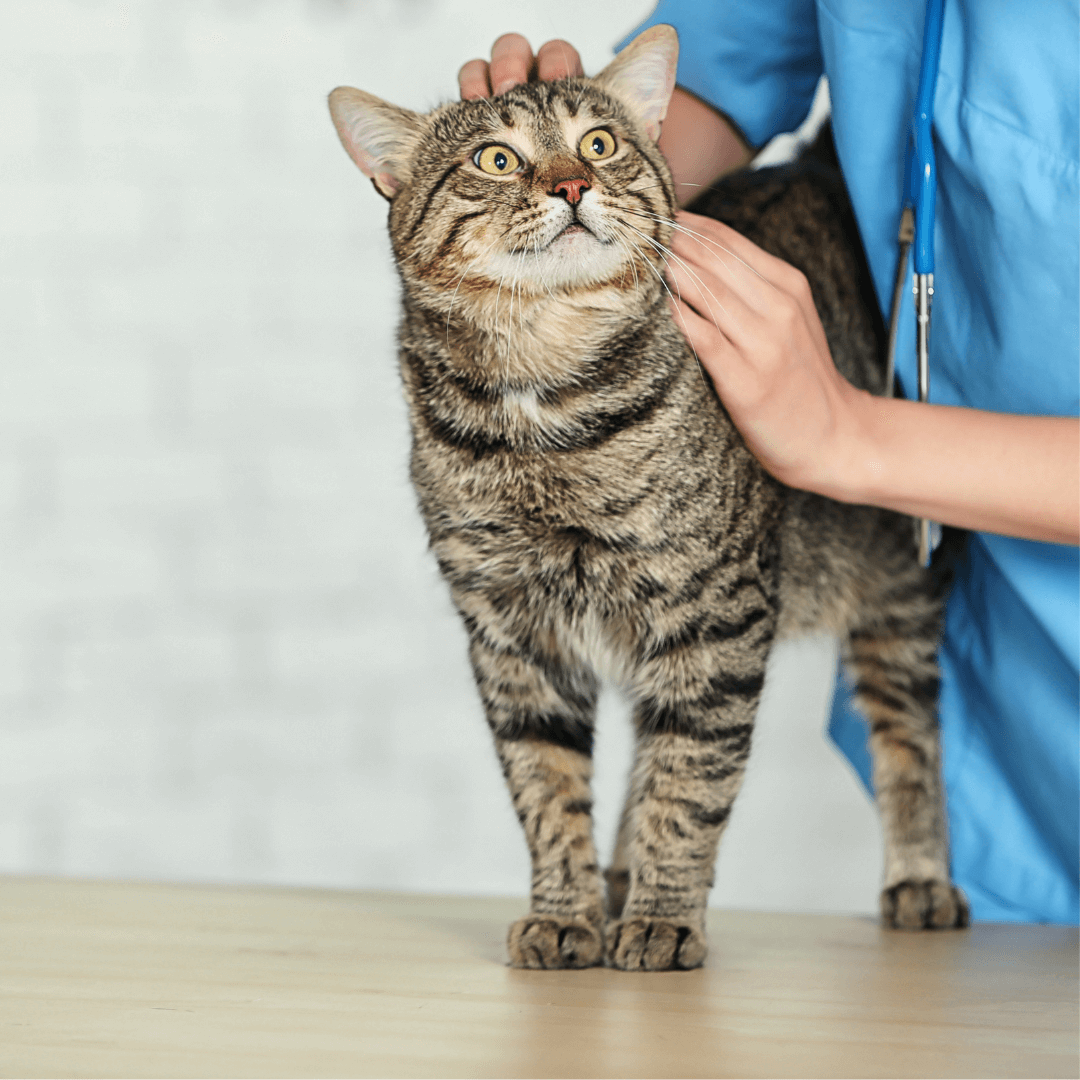
If your cat doesn’t see a vet regularly, add it to your to-do list ASAP! Regular vet visits and exams help ensure that your cat stays as healthy as possible.
In addition to seeking help from his vet, M’s cat parents had initially had a litterbox placed in the kitchen that became the favorite litterbox for all of the cats. However, due to M’s incoordination that led to him falling out of the box and urinating on the floor, this led to the urine soaking into the grout. The litterbox was moved to the back door and the kitchen was blocked off with a baby gate, a behavioral strategy called management. However, M continued to pee and poop next to his litterboxes.
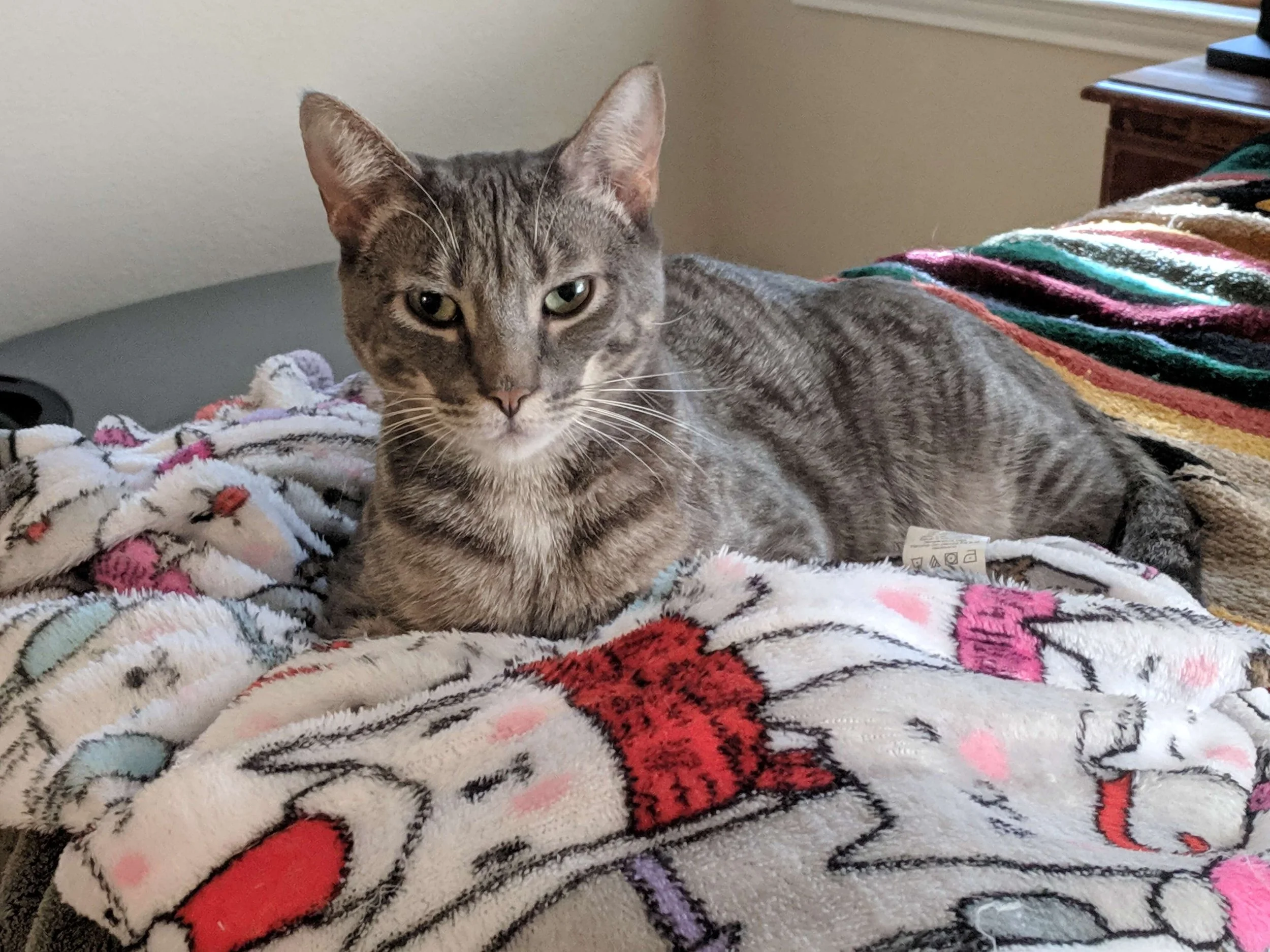
Who, me?
M had already been on a calming supplement for a few years, but due to ongoing housesoiling, a behavioral medication was prescribed by his vet. Unfortunately M experienced side effects of decreased appetite, lethargy, and acting “out of it”. While behavioral meds are generally well tolerated, it is important to have a conversation with your vet about what effects you can expect to see, and possible side effects that may occur. I don’t prescribe meds for all of my patients, but when I do, I typically start off with dosing on the lower end of the range to ensure that the drug is well tolerated before increasing the dosage if needed. M’s behavioral meds were discontinued and he was restarted on his calming supplement.
After a further deep dive into M’s medical records, I noticed another concerning finding: unplanned weight loss of 1.4 pounds over the 11 months prior to his consult. This may not sound like a lot for a human, but if you think about the size of a cat, even ¼ pound can be significant. In M’s case, this weight loss represented 15% of his body weight. If a 150 pound person mysteriously lost 23 pounds, their doctor would be alarmed. As a cat doctor, I began wondering if M had some new medical issues going on that could be contributing to the weight loss, worsening loss of balance, and worsening housesoiling.
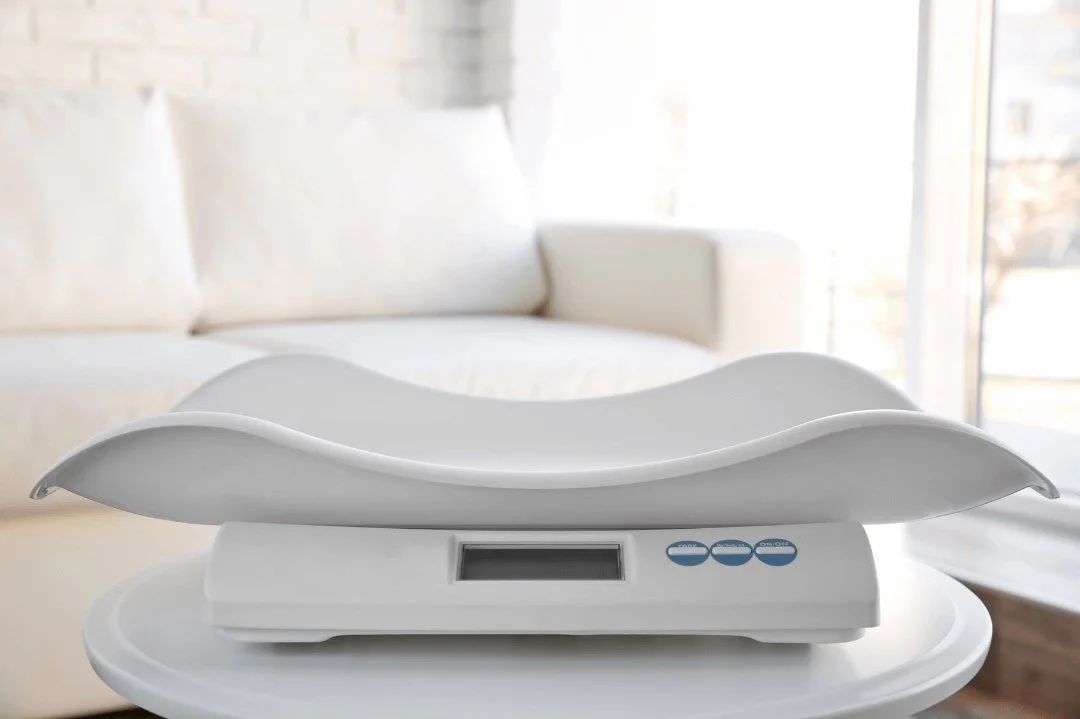
Baby scales are a great way to track weight trends in your cat! Depending on the size of your cat, a weight change of as little as 0.2 pounds can be significant and may indicate an underlying health problem.
Behavior consult time!
M was snoozing when I arrived for his housecall, so I took the opportunity to complete my environmental tour and assessment. I noticed that there were numerous litterboxes in the home, and they were a nice large size (at least 1.5X the length of the cat from nose to base of tail, and especially important due to M’s CH-related mobility challenges to allow him the extra room to maneuver in the box). However, 4 of the boxes were side by side in one room. If possible, we want to avoid grouping all boxes together because cats can see that as one litterbox.
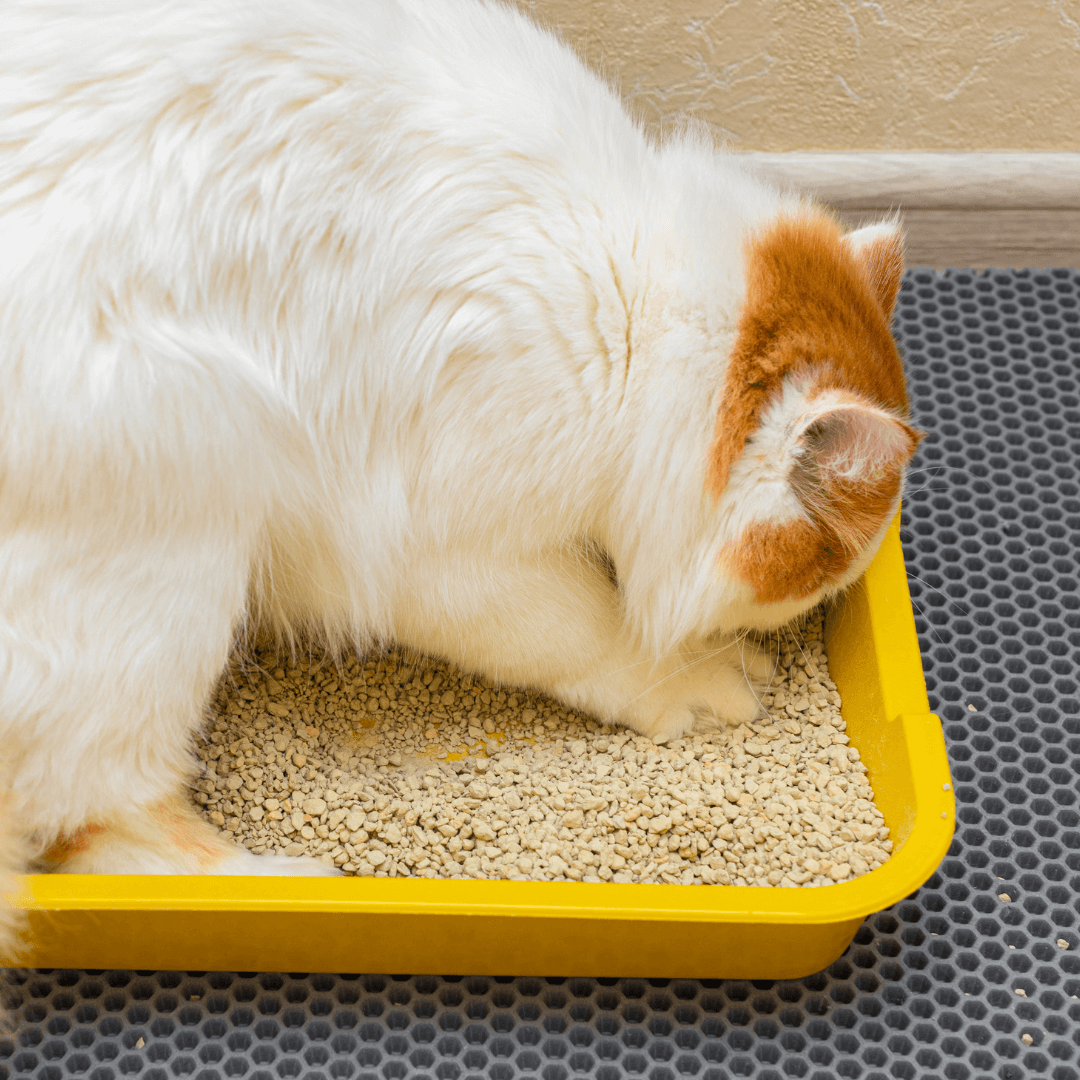
Maybe if I dig hard enough I can make this tiny little litterbox big enough for me.
In addition, since there was some conflict between the cats, providing multiple, separated resources can reduce stress from competition and prevent one cat from blocking access to the group of boxes by being in the doorway. M’s cat dad had already started a litterbox trial that’s recommended where he was trying different types of litters in identical boxes, and had gathered some data.
Upon seeing that treats were being offered to his housemates (in addition to CH, M has deafness), he quickly mobilized to approach and get some treats of his own. I have a favorite non-slip mat I use for patients during my house call to provide warmth, comfort and stability during the exam and weighing-in, which M absolutely LOVED. In fact, he ended up spending almost the entire 2 hour house call either sitting or lying down on the mat.
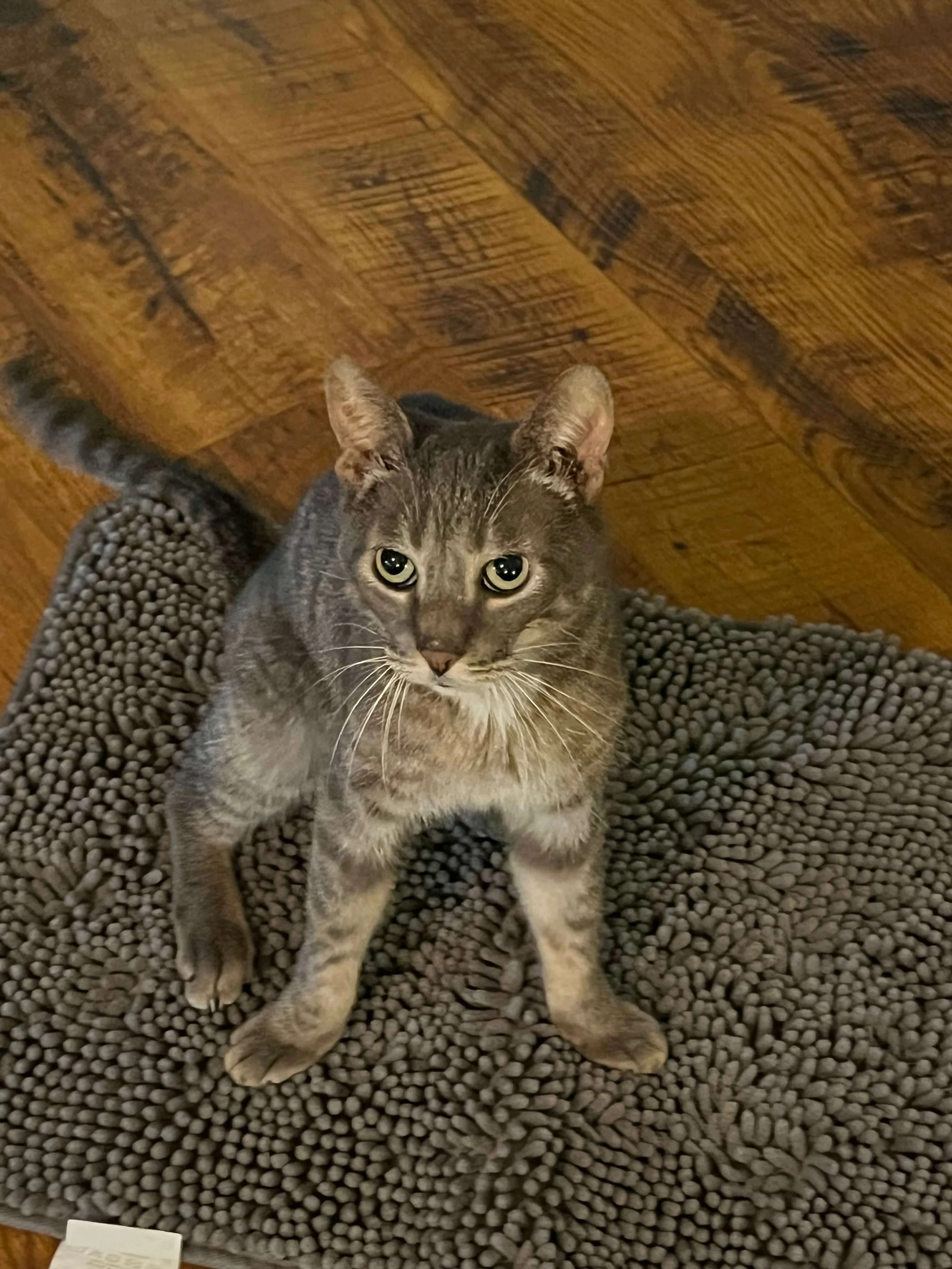
I look mad because I want more treats, but I’m loving this mat!
On M’s exam, he appeared overall healthy, with mild tartar and gingivitis (gum inflammation). However, in addition to the unplanned weight loss uncovered during his medical history review, I found that he was about 10% underweight during assessment of his Purina body condition score. We discussed his diet, and I asked M’s cat dad to show me his food–another huge benefit of examining my patients in their home environment. When I saw the bag, I uncovered what was one of the biggest data points of the consult: while M had been eating the regular calorie prescription urinary food historically, 2 years ago he’d been inadvertently switched to the moderate calorie (“light”) version of his prescription urinary diet. The plot thickened!
Post-Consult Recommendations
After M’s cat behavior consult, M’s cat caregivers and primary vet received a comprehensive behavior plan detailing my extensive medical and behavioral recommendations. While my primary focus is on feline behavior problems, there are nearly always medical concerns that I address during my consults, both long-standing problems (e.g., chronic intermittent vomiting, arthritis, chronic kidney disease, or M’s cerebellar hypoplasia) as well as new health issues that haven’t been uncovered (e.g., being overdue for rabies vaccination, pain, unplanned weight loss, broken teeth). Medical factors can contribute to behavioral problems in your cat, and should be addressed in conjunction with behavioral recommendations.
For example, while M’s weight loss could certainly have been attributed to accidentally eating a diet food, there are numerous other causes for weight loss despite a good appetite in cats such as diabetes, hyperthyroidism, and GI parasites, which need to be assessed with labwork and fecal testing. Due to M’s sudden behavior change of an increase in urinary housesoiling, the first step was going to his regular vet to try to rule out medical causes. I recommended bloodwork and more comprehensive urine testing called a urine culture, where the lab checks for bacteria by placing the urine sample onto a growth plate. M’s labwork looked great with no signs of diabetes, a urinary or kidney infection, or parasites. He also had chest X-rays done that were unremarkable. As a housecall vet who focuses on feline behavior, I’m truly grateful for the brick-and-mortar vets and other mobile vets in the Austin area because our collaboration allows us to provide comprehensive care for these wonderful cats.
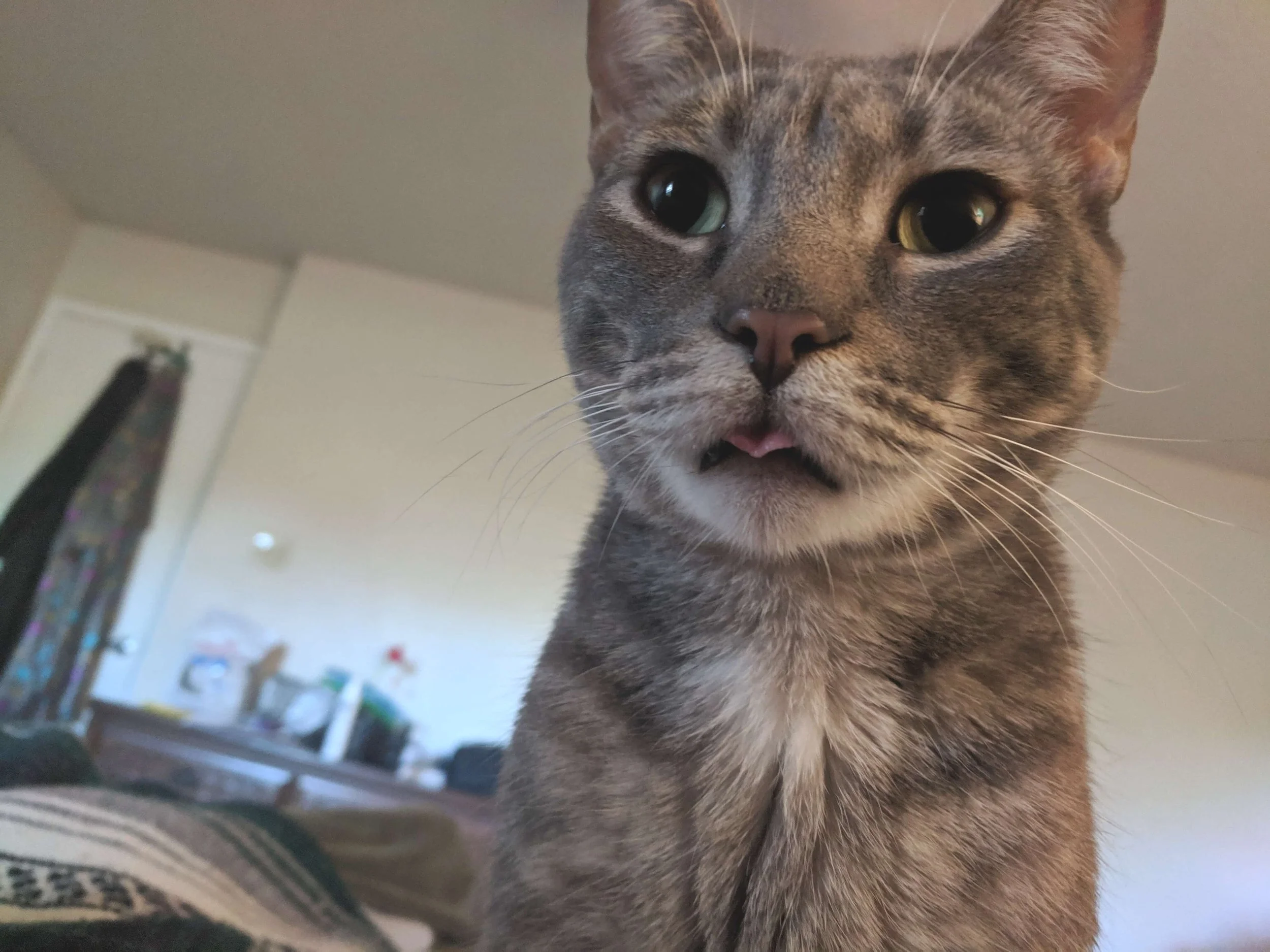
I heard someone say food.
After M’s medical workup, I recommended that he go back to eating his normal-calorie prescription urinary food and have regular weigh-ins at home with a baby scale to ensure that he was trending upward. If no progress with weight gain and no improvement with the urinations outside the litterbox, imaging via an abdominal ultrasound followed by referral to a neurologist would be the next medical steps.
Among his numerous other recommendations were:
Setting up cat cameras to ensure that it was truly M who was housesoiling. In a multicat home, there may be more than one culprit, and you may also catch medical issues on the cam such as signs of pain during elimination
Adding non-slip area rugs and elevating his food/ water bowls to help him feel more stable with his CH
Adding and separating environmental resources to reduce competition between cats (the microchip feeders and beds in the home were also all grouped side by side)
Increasing the size of the litterboxes even more and creating low entry points so he could easily enter/ exit the box while having more room to move around
Adding additional large litterboxes around the home
Monitoring for and addressing any underlying conflict between M and the other cats, which could be contributing to stress/ anxiety-induced housesoiling
Positive reinforcement based interactions to support the human-animal bond
Completing a guided litterbox trial to find his ideal litterbox setup
Cat Behavior Consult Results
Over the 6 weeks following M’s consult, his housesoiling began returning back to baseline. He loved spending time on his new non-slip mat, cuddling up to his cat parents, and was no longer trying to break into the microchip feeders. He also began gaining weight and his balance issues even returned to baseline.
M’s case highlights how behavior concerns are complex, and often have a medical as well as a behavioral component that I assess as an experienced veterinarian. My cat behavior plans are similarly complex, and I appreciated that M’s cat parents' goal was to get him back to baseline since we know that cerebellar hypoplasia is not curable.
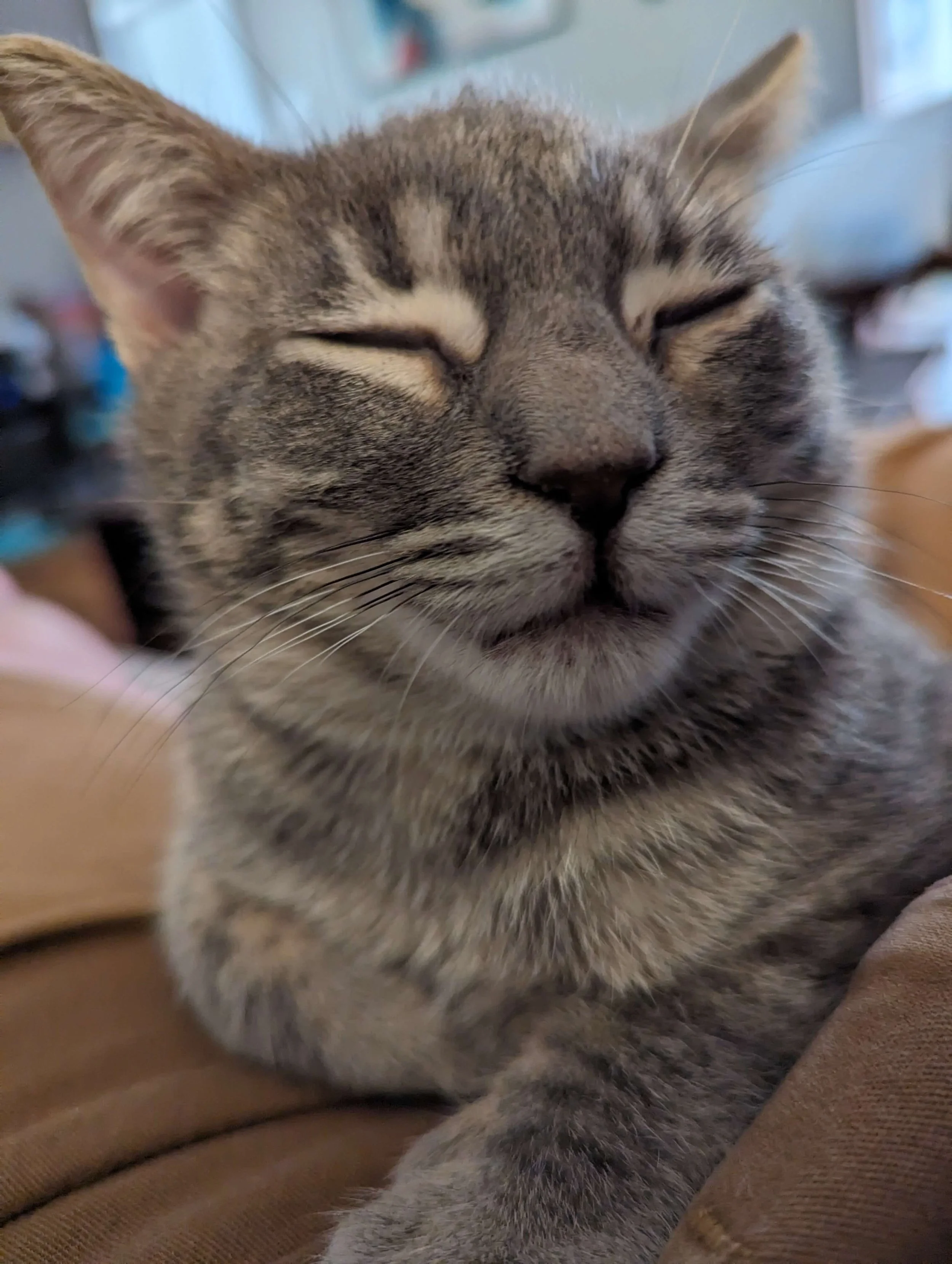
I ended up seeing M again about 4 months after his original visit for another spike in peeing outside the litterbox, which had started a few weeks after losing a senior feline housemate in the home. He’d fully gained back 1.4 pounds since his initial visit (18% of his body weight–amazing progress!), and his body condition was looking so much better!
Whether his increase in housesoiling was due to increased stress in the home after the loss of his housemate or due to a different behavioral or medical cause, similar to his first consult I discussed medical as well as behavioral recommendations. These included the possibility of needing to go back to the vet to have diagnostics repeated. M’s behavior plan from his second consult is currently a work in progress, but I’m secure in the knowledge that his caregivers are amazing cat lovers who want to provide the best care and home environment for their kitties.
Hope you enjoyed reading this case study as much as I loved helping M and his family!
If your cat has been peeing or pooping everywhere except their litterbox and you need a cat behavior veterinarian, My Family Cat would love to help. Visit My Family Cat’s services page where you can see what each service entails, pricing, and purchase an initial cat veterinary housecall in the Austin area. Don’t forget to check out My Family Cat’s resources page for even more cat health and cat behavior info, and follow on Instagram!
Every cat’s favorite spot: an empty laundry basket